The Best Ottomans for Small Living Rooms: Storage, Style, and Value (Canada)
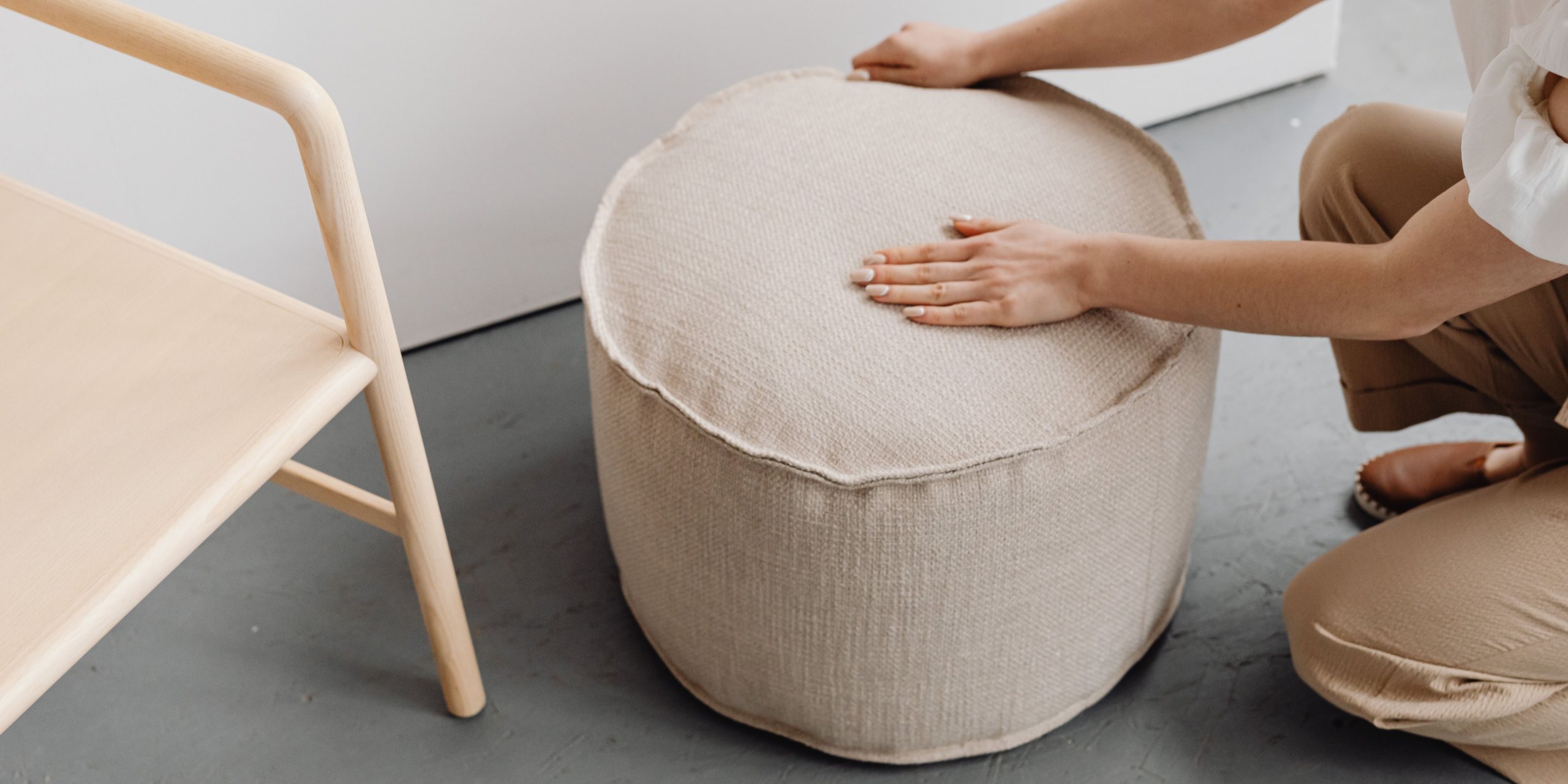
If you’re furnishing a small Canadian living room and you could only add one piece beyond a sofa, the storage ottoman would win every time. Not a coffee table. Not a side table. Not an accent chair.
An ottoman.
Here’s why: a coffee table holds things on its surface. A storage ottoman holds things on its surface, inside its body, doubles as a footrest, and becomes extra seating when guests arrive. That’s four functions in a footprint that’s often smaller than a standard coffee table. In a 600-square-foot Toronto condo or a compact apartment anywhere in Canada, that kind of versatility isn’t just convenient — it’s a fundamentally smarter use of floor space.
This guide covers everything you need to know to choose the right ottoman for your living room — size, shape, style, storage capacity, and how to use it as a genuine coffee table alternative — plus the best options available at Furniture Flip right now.
Why an Ottoman Often Beats a Coffee Table in a Small Space
The conventional living room formula is sofa plus coffee table. It works. But in a small space it has a specific limitation: a coffee table is a single-purpose piece. It holds things. That’s it.
A storage ottoman, used well, does the following:
As a coffee table: Add a tray on top — a wooden or metal tray from any home goods store — and the ottoman becomes a stable, defined surface for drinks, books, and remotes. The tray is the key detail: it gives the ottoman a flat, coffee-table-like surface while keeping the top organized and easy to lift when you want to access the storage below.
As a footrest: The original function and still the most comfortable one. After a long day, a padded ottoman at sofa height is categorically more comfortable than resting your feet on a hard coffee table surface.
As extra seating: When guests arrive and you need one or two more seats than your sofa provides, a large storage ottoman handles the overflow without requiring a folding chair from the closet. A well-built ottoman supports adult weight without flex or creak.
As hidden storage: This is the function that coffee tables simply don’t offer. A storage ottoman hides whatever you most need to hide — throws, cushions, board games, charging cables, magazines, kids’ toys — in a container that looks like intentional furniture rather than a storage solution.
The trade-off is that ottomans offer less stable surface area than a coffee table — which is why the tray is non-negotiable if you want the coffee table functionality. With a tray, the trade-off largely disappears.
How to Choose the Right Ottoman for Your Living Room
Size: Bigger Than You Think
The most common ottoman sizing mistake is the same as the most common rug sizing mistake: buying too small. An ottoman that’s too small for the sofa looks like an afterthought — visually and functionally undersized.
The sizing rule: An ottoman used as a coffee table should be approximately two-thirds the length of the sofa it sits in front of. For a 200 cm sofa, that’s an ottoman roughly 130 cm wide. For a loveseat at 150 cm, something in the 90–100 cm range.
The clearance rule: Leave 35–45 cm between the front of the sofa and the ottoman — enough to reach it comfortably from a seated position and enough to move around it without constantly navigating it. This is the same clearance rule that applies to coffee tables.
Height: Should sit at or just below sofa seat height — typically 40–45 cm. An ottoman that’s too low requires you to lean forward uncomfortably to reach it. Too high and it doesn’t function as a footrest.
Shape: Rectangular, Square, or Round?
Rectangular ottomans are the most versatile and the best coffee table substitute. The rectangular surface accommodates a tray naturally and provides the most usable surface area relative to footprint. Best for most living rooms with a standard sofa or sectional.
Square ottomans work well in front of loveseats or in smaller seating arrangements where a rectangle would feel oversized in one dimension. Also a strong choice for the foot of a bed as a bedroom accent piece.
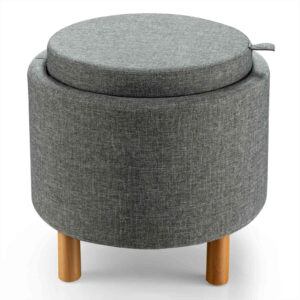
Round ottomans are the most visually lightweight option — their curved edges make a room feel more open and are genuinely safer in tight spaces where sharp corners create navigation hazards. The limitation is that a tray sits less naturally on a round surface and the storage capacity is lower for the overall footprint. Best as a footrest or accent piece rather than a primary coffee table substitute.
Storage vs. No Storage
For a small living room, always choose storage. The price difference between an ottoman with and without a storage compartment is usually minimal, but the functional difference is significant. In a space where every square foot counts, an ottoman that hides a season’s worth of throw blankets is pulling double duty that a decorative ottoman never can.
What to check:
- The hinge mechanism — does the lid open smoothly and stay open while you retrieve things, or does it require one hand to hold it up?
- The interior depth — shallow storage is fine for flat items like magazines and throws; deeper storage handles bulkier items like cushions and board games
- The lid stability — can an adult sit on the lid without flex or creak? A lid that gives under weight is a quality red flag
Fabric and Finish
Velvet is the most popular ottoman upholstery in the Canadian market right now — and for good reason. It’s softer than most people expect, holds its shape well under regular use, and has a richness of appearance that elevates a living room without requiring a large investment. Neutral velvet tones — grey, ivory, navy, blush — pair with virtually any sofa colour.
Faux leather and PU leather are the most practical choice for households with young children or pets. Easy to wipe clean, resistant to liquid penetration, and more forgiving of daily wear than fabric options. The limitation is that cheap bonded leather peels and cracks within a few years — look for high-quality PU leather rather than bonded leather if you go this route.
Woven fabric and linen blends offer the most casual, relaxed aesthetic — good for transitional and farmhouse-influenced spaces. Less stain-resistant than velvet or leather and require more attentive cleaning.
Buffalo leather is the premium natural option — develops a patina over time, cleans easily with a damp cloth, and improves with age in a way synthetic materials don’t.
The Best Ottomans at Furniture Flip
FurnitureFlip carries ottomans — here are the standout options across different use cases, styles, and budgets:
Best for: Classic Living Room Storage — Storm Grey Tufted Storage Ottoman
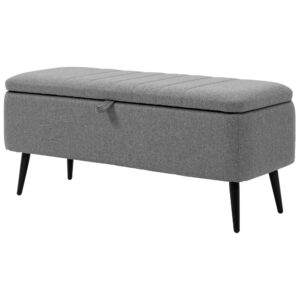
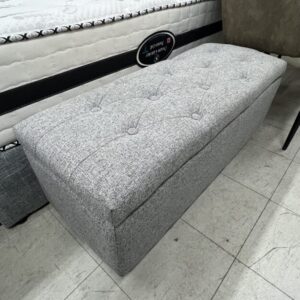
The Storm Grey Tufted Storage Ottoman is the strongest all-rounder in the collection for a small Canadian living room. Grey velvet upholstery with silver studded detailing, tufted lid, sturdy black legs, spacious hidden storage compartment, and a hinged lid that opens cleanly. The grey velvet is the most versatile colour in the range — it pairs with warm neutrals, cool whites, deep jewel tones, and practically everything in between.
The tufted lid adds visual weight and a sense of quality that plain-top ottomans lack. The silver studded edge detail keeps it from feeling too conventional. This is the ottoman that looks more expensive than it is — which is exactly what you want in a living room centrepiece.
Use it as: A coffee table with a wooden tray on top, a footrest for daily use, and extra seating for up to two people when guests arrive. The storage handles throws, cushions, and anything else that would otherwise pile up around the sofa.
Shop the Storm Grey Tufted Storage Ottoman
Best for: Bright or Neutral Spaces — Ivory Luxe Tufted Storage Ottoman
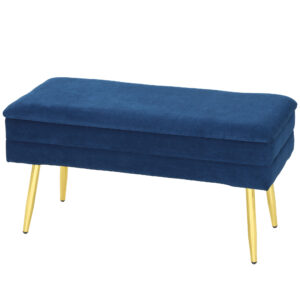
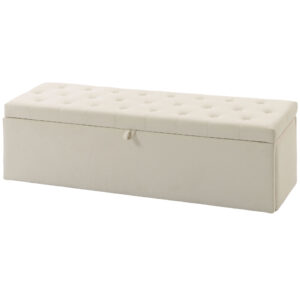
The Ivory Luxe Tufted Storage Ottoman brings a lighter, more refined energy to a living room — creamy ivory finish, classic tufting, sturdy black legs, and the same hidden storage compartment as the Storm Grey. The black leg detail creates a strong contrast against the ivory that reads as considered rather than plain.
Ivory is the right choice if your sofa is a deep, saturated colour — navy, forest green, charcoal, or dark brown — where a grey ottoman might blend too closely. It’s also the natural choice for all-white or neutral-toned rooms where a grey piece might feel unnecessary. The product description notes it develops a beautiful patina over time — the premium ivory finish deepens slightly with use in a way that adds character rather than showing wear.
Use it as: The visual counterpoint to a dark sofa, a bedroom foot-of-bed piece that brings lightness to a heavier furniture arrangement, or a living room ottoman in a cream-and-white palette.
Shop the Ivory Luxe Tufted Storage Ottoman
Best for: Square Format and Pull-Ring Access — Grey Mist Square Tufted Ottoman
The Grey Mist Square Tufted Ottoman is distinguished from the Storm Grey by two things: its square format and its pull-ring lid mechanism. The pull ring makes one-handed access to the storage compartment genuinely easy — no need to grip the edge or balance the lid while reaching inside. Small detail, meaningful in daily use.
The square format works particularly well in front of a loveseat or a compact two-seater sofa where a full rectangular ottoman would be proportionally oversized. It also works exceptionally well at the foot of a queen or king bed as a storage and seating accent — square proportions sit more naturally across the bed width than a rectangle.
The soft grey velvet with silver studded detailing is consistent with the Storm Grey in quality and aesthetic — it’s a matter of format preference and placement more than style difference between the two.
Use it as: A coffee table alternative for a loveseat or compact sofa arrangement, a bedroom foot-of-bed piece with internal linen storage, or a standalone accent seat in a reading nook or entryway.
Shop the Grey Mist Square Tufted Ottoman
Best for: Natural Materials and MCM Styling — Tan Buffalo Leather Footstool
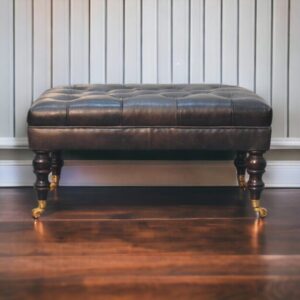
The Tan Buffalo Leather Footstool on solid mango wood legs occupies a different design category from the tufted velvet storage ottomans above — it’s a smaller, more refined accent piece rather than a primary coffee table substitute. Buffalo leather seat, chestnut mango wood legs with a hand-turned profile, and the kind of material quality that improves with age rather than deteriorating.
It doesn’t have internal storage, which puts it in a different category functionally. But as a footrest alongside a sofa or accent chair, as a bedside step stool, or as a small standalone seat in a reading nook, it’s the most premium-feeling piece in the ottoman collection — natural material, solid wood construction, and a warm tan tone that pairs naturally with the MCM and transitional interiors that dominate Canadian homes right now.
If you’ve read our guide on mid-century modern on a budget, this piece fits directly into that aesthetic — the combination of natural leather and hand-turned mango wood legs is the MCM formula in compact, functional form.
Use it as: A footrest paired with an accent chair, a bedroom step or seating accent, a reading nook side piece, or an entryway accent seat.
Shop the Tan Buffalo Leather Footstool
Browse all ottomans — including additional velvet, fabric, and leather options — in the complete ottomans collection at Furniture Flip.
How to Style an Ottoman as a Coffee Table
The one thing standing between most storage ottomans and successful coffee table duty is a tray. Here’s exactly how to do it:
Choose the right tray. A rectangular tray that’s roughly two-thirds the width of the ottoman works proportionally. Wood trays add warmth — a mango wood or acacia tray on a grey velvet ottoman creates a material contrast that looks considered. Metal trays (brass, black matte, or brushed nickel) work in more contemporary and MCM-influenced rooms.
Style the tray with three items maximum. A candle, a small plant or succulent, and a coaster stack or small book. Three items styled in varying heights. Leave the rest of the tray surface open — a cluttered tray on an ottoman looks chaotic, not curated.
Leave the ottoman top partially bare. An ottoman that’s entirely tray doesn’t invite you to put your feet up. Position the tray to one side or in the centre but leave enough surface that it still reads as a footrest rather than a display shelf.
Use a firm tray. A flimsy tray that flexes when you set a drink on it defeats the purpose. The stability of the surface is what makes it functional as a coffee table — look for wood, metal, or thick acrylic rather than thin plastic or wicker.
Where Else an Ottoman Works Beyond the Living Room
The storage ottoman’s versatility extends well beyond the living room — which makes it one of the highest-return purchases in any small Canadian home.
Foot of the bed: A square or rectangular storage ottoman at the foot of the bed stores extra duvets and seasonal bedding without requiring a separate blanket box. It also provides a place to sit while putting on shoes — a small but genuinely useful daily convenience.
Entryway: A firm-topped ottoman in the entryway provides a seat for putting shoes on and off — one of the most practical pieces of furniture in a Canadian home where footwear changes are a daily winter ritual. Pair with a hook rail above for a complete mudroom-style entryway in a single wall.
Home office: A small ottoman in a home office provides a surface to rest a laptop while you recline, a footrest during long desk sessions, and a quick seat for a colleague or visitor without adding a second chair.
Children’s rooms: An ottoman with internal storage in a child’s bedroom or playroom hides toy chaos in seconds — the easiest tidying solution in a room that gets disordered fastest.
Ottoman vs. Coffee Table: Which Should You Choose?
The honest answer is that it depends on how you use your living room.
Choose an ottoman if:
- You want storage in your living room without a separate storage unit
- You regularly need extra seating for guests
- You have children or pets for whom a hard coffee table edge is a hazard
- Your living room is under 4 x 4.5 metres and every square foot counts
- You want maximum versatility from a single piece
Choose a coffee table if:
- You regularly eat from the coffee table and need a stable flat surface without a tray setup
- You want open display space for books, objects, and décor at the centre of the room
- Your living room is large enough that the additional function of storage isn’t a priority
The combination approach: Some living rooms work best with both — a storage ottoman as the primary footrest and soft seating option, with a small side table or narrow coffee table alongside it for surface stability. This gives you the best of both without sacrificing either function. Browse our coffee tables if you’re considering a paired approach.
The Bottom Line
In a small Canadian living room, a storage ottoman is the highest-value single piece of furniture you can add after a sofa. It stores what would otherwise create clutter, seats what a sofa can’t accommodate, rests feet where a hard table surface can’t, and functions as a coffee table with the addition of a tray.
The tufted velvet storage ottomans in Furniture Flip’s collection — particularly the Storm Grey and Ivory Luxe — deliver that full range of function at a mid-range price point, with the kind of visual quality that makes the living room feel finished rather than furnished-by-function.
Browse all options in the complete ottomans collection at Furniture Flip — with exact dimensions on every listing so you can size against your sofa and room before ordering.
For more on building a small living room that works as hard as this one piece, read our guide on how to furnish a Toronto condo without it feeling cramped — where the ottoman is one of the first recommendations for exactly the reasons covered above.
For independent guidance on furniture construction quality — including what to look for in ottoman frame and hinge quality specifically — our post on how to tell if furniture is actually good quality before you buy it covers everything you need to assess any upholstered piece before committing.
Also worth reading: How to furnish a Toronto condo or apartment without it feeling cramped — the ottoman is one of the first recommendations in that guide, and it covers every other small-space furniture decision that makes a cramped room feel intentional.
Take a look at these picks!