How to Set Up an Outdoor Living Space on a Small Deck or Balcony
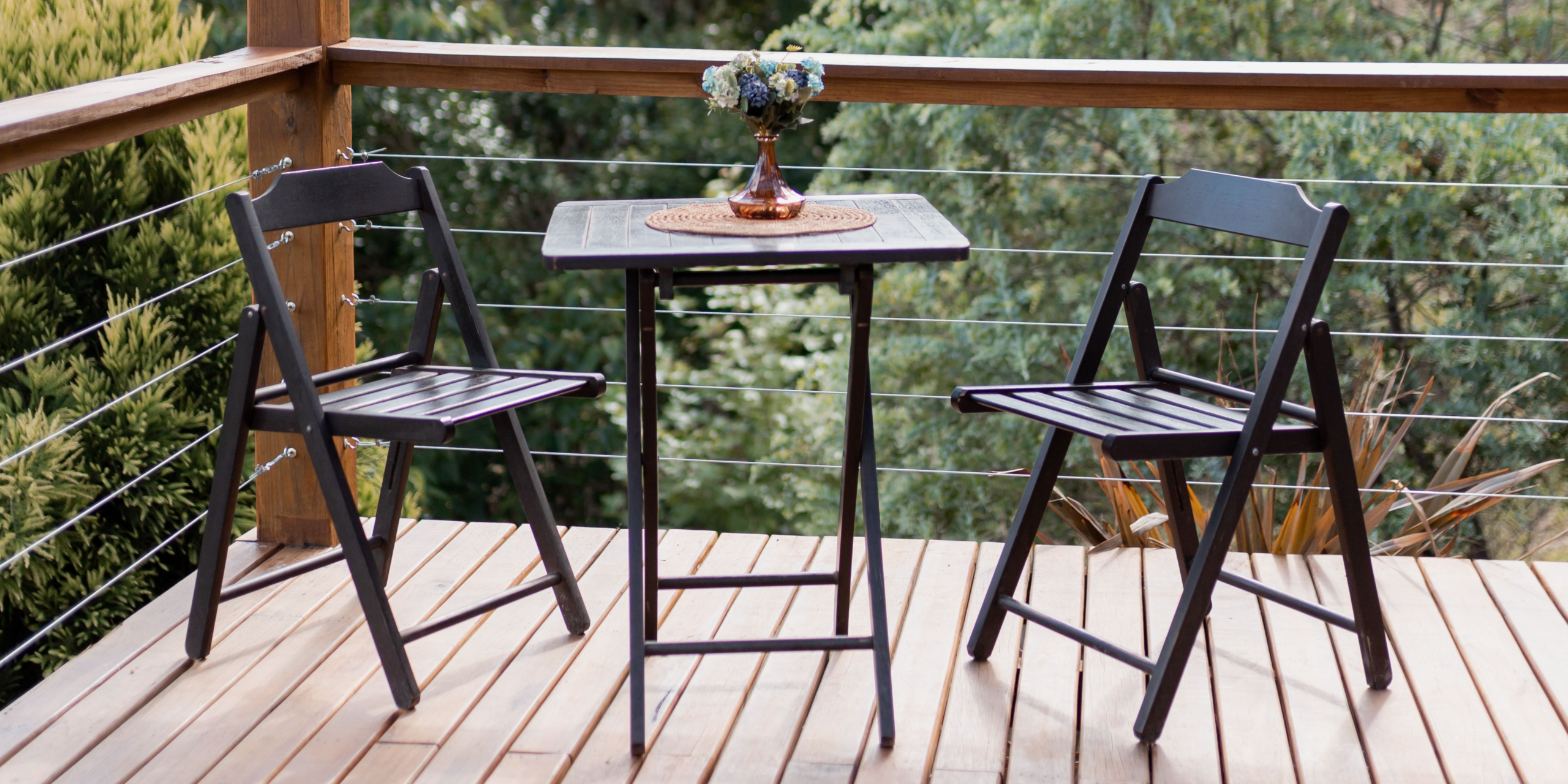
Most Canadians with a small balcony or deck use it the same way: as a place to store things they don’t want inside. A folding chair that comes out twice a summer. A plant that struggles through July and dies by August. Maybe a BBQ wedged against the railing that makes the whole space feel like a utility corridor.
That’s not an outdoor living space. That’s an outdoor storage problem.
The difference between a balcony that gets used and one that doesn’t comes down to one thing: intention. A small deck or balcony set up with the right furniture, a clear layout, and a few considered accessories becomes a genuine extension of your living space — a place to have morning coffee, eat dinner outside, read on a summer evening, or just decompress after work with some air and sky around you.
In Canada, where outdoor season runs from roughly May to October depending on where you live, that’s five months of usable space you’re leaving empty if you haven’t set it up properly. This guide covers exactly how to do it — from measuring and planning to furniture selection, layout, lighting, and seasonal care.
Step 1: Know Your Constraints Before You Buy Anything
Small outdoor spaces have three constraints that don’t apply indoors: weight limits, building rules, and weather. Understanding all three before you spend anything prevents expensive mistakes.
Weight limits
Condo and apartment balconies in Canada are engineered to a specific load capacity — typically between 1.5 and 4.8 kN/m² (roughly 150–490 kg per square metre) depending on the building and its age. Concrete balconies in newer Toronto and Vancouver condos are generally at the higher end of that range. Older buildings and wood-frame construction can be significantly lower.
The practical implication: heavy materials like solid stone, concrete planters, and cast iron furniture add up faster than most people realize. A pair of cast iron chairs, a stone-top table, and several large terracotta pots can approach or exceed load limits on older balconies without the occupant being aware of it.
What to do: Check your condo documents or contact building management for your balcony’s rated load capacity. For furniture, favour lightweight materials — powder-coated aluminium, synthetic resin wicker, polypropylene — over heavy alternatives. As a general rule, anything you can lift and move easily is unlikely to create a structural concern.
Building rules
Many Canadian condo corporations have rules about what can and cannot go on balconies. Common restrictions include:
- Prohibition on gas BBQs (electric or propane permitted to a certain tank size in some buildings)
- Restrictions on enclosed structures, pergolas, or shade sails attached to the building
- Rules about the height of planters and objects visible above the railing
- Restrictions on the type or colour of furniture visible from the exterior
Check your condo corporation’s rules or strata bylaws before buying anything structural or permanently installed. Breaking these rules can result in fines and required removal — making it a genuinely expensive mistake.
Sun, wind, and rain exposure
Canadian balconies and decks vary enormously in exposure. A south-facing balcony on the 25th floor of a Toronto condo gets full sun and significant wind. A north-facing ground-floor deck in Ottawa gets shade most of the day and minimal wind. A west-facing balcony in Vancouver gets afternoon sun and significant rain.
Your exposure profile determines:
- Shade needs: Full-sun balconies benefit enormously from an umbrella or shade sail. Shaded balconies need none.
- Wind management: High-floor balconies may need furniture that’s heavier or can be secured against wind. Lightweight folding chairs on a 30th-floor balcony without weights or tethering can become a safety issue.
- Material selection: High-rain exposure (Vancouver, most of BC) makes material durability and drainage even more important than in drier Ontario climates.
Step 2: Measure the Space and Plan the Layout
The single most important step before buying any outdoor furniture is measuring your balcony or deck accurately — not estimating, measuring.
What to measure:
- The total length and width of the usable floor space
- The distance from the door to the railing (the depth)
- The width of the door opening (for moving furniture in and out)
- The height of the railing (relevant for whether a table will block the view seated)
- Any protrusions — gas line access points, drain locations, structural columns
The clearance rules for outdoor spaces:
Leave at least 90 cm of clear walkway from the door to the railing. You need to be able to move around the furniture comfortably and access the railing without navigating an obstacle course.
Leave at least 35–45 cm between any seating and a table — the same clearance rule that applies indoors applies outside.
Common Canadian balcony sizes:
- Studio/1-bedroom condo balcony: Typically 2 x 3 metres to 2.5 x 4 metres — enough for two chairs and a small table, or a narrow lounger
- 2-bedroom condo balcony: Typically 2.5 x 4 metres to 3 x 5 metres — enough for a bistro set and two loungers, or a small conversation set
- Townhouse deck or ground-floor patio: Typically 3 x 4 metres to 4 x 6 metres — enough for a full dining set or conversation set with a lounger
Tape out your furniture footprint on the balcony floor using painter’s tape before ordering anything. A piece that looks right in dimensions can feel entirely wrong in the actual space until you’ve mapped it out physically.
Step 3: Choose the Right Furniture for the Space
The One-Zone vs. Two-Zone Decision
The first layout decision for any small outdoor space is whether you’re creating one zone or two.
One zone: A single purpose — either a seating/dining area or a lounging area. Best for balconies under 3 x 4 metres where trying to do both creates a cramped, cluttered result.
Two zones: A seating area and a lounging area, physically separated on the deck or balcony. Possible on larger decks and patios of 3 x 5 metres or more. Requires deliberate separation — a small side table, a change in flooring material, or even just a clear gap between zones.
For most Canadian condo balconies under 2.5 x 4 metres, one zone done well beats two zones done poorly every time.
Furniture That Works in Small Outdoor Spaces
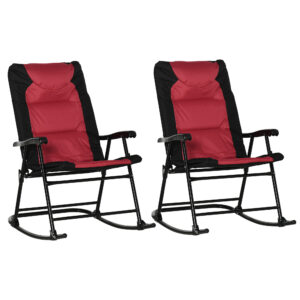
Folding and stackable furniture is the most practical category for small Canadian balconies. Pieces that fold flat when not in use can be stored inside through winter, brought out for the season, and rearranged or removed when you need the balcony for something else. The Folding Garden Chairs — Set of 2 Zero Gravity Recliner with Cushion and Headrest at Furniture Flip is a strong example — powder-coated steel frame for weather resistance, folds flat for easy storage through winter, reclines to five positions, and comes with a cushion and headrest. At 65 x 90 x 110 cm upright, a pair of these on a 2.5 x 4 metre balcony leaves enough room for a small side table and clear walkway to the railing.
Bistro sets — a small round table and two chairs — are the classic small balcony solution and remain the best choice for balconies where having a proper surface for meals and drinks matters. A round table in particular wastes no corner space and allows two people to sit comfortably across from each other without a rectangular table creating dead corners. Look for powder-coated aluminium frames with weather-resistant seating — the round table format is the most space-efficient dining configuration for any outdoor space under 3 x 3 metres.
Loungers are the highest comfort-per-square-metre outdoor furniture choice for balconies where relaxation rather than dining is the priority. The 2-Person Outdoor Chaise Lounge at Furniture Flip is built for exactly this — a powder-coated metal frame supporting up to 528 lbs, Texteline fabric that cleans easily, five recline positions, and wheels for repositioning without lifting. At 190 x 118 x 33 cm, it’s a genuine two-person lounger that fits on most Canadian condo balconies of 2.5 metres or wider. Pair it with the UV50+ Patio Lounge Cushion — 198 x 65 cm, slow-rebound fill, UV50+ protection, water-repellent fabric, and securing straps — and you have a lounger setup that’s genuinely comfortable through a Canadian summer.
Small side tables are the most overlooked piece of outdoor furniture for small spaces. A surface for a drink, a book, a phone, and sunscreen means you don’t have to get up every time you need something — and it makes any seating arrangement feel more complete. Look for tables with lower shelves that hold a small basket or tray, doubling the storage without adding footprint.
Browse the complete outdoor furniture collection at Furniture Flip for all available options with exact dimensions.
Step 4: Layer in the Details That Make It Feel Like a Room
The difference between a balcony with furniture and an outdoor living space is the same difference that exists indoors: accessories, lighting, and greenery. These are the elements that turn a functional arrangement into a place you actually want to spend time.
Outdoor Rugs
An outdoor rug is one of the single highest-impact additions to a small balcony or deck. It defines the seating zone, adds warmth underfoot, and makes the space feel like a room rather than a concrete platform. On balconies with cold, hard flooring — concrete, composite, or tile — the difference between bare floor and a rug underfoot is significant, particularly in the shoulder seasons when you’re outside in the morning or evening with bare feet.
What to look for: Polypropylene or synthetic fibre with drainage holes or a breathable backing — water needs to drain rather than pool under the rug. Flat-weave or low-pile constructions are more practical than high-pile outdoor rugs, which trap debris and take longer to dry after rain.
Sizing: Apply the same rule as indoors — the rug should fit under or frame the seating arrangement, not float in the middle of it. On a typical 2.5 x 3.5 metre balcony with two chairs and a table, a 150 x 200 cm outdoor rug positions all furniture legs on the rug and leaves clear walkway to the railing.
Outdoor Lighting
Nothing extends outdoor season like good lighting. A well-lit balcony at 9 p.m. on a September evening in Toronto is genuinely usable. The same balcony with no lighting sends you inside when the sun goes down regardless of the temperature.
String lights are the most effective and most versatile outdoor balcony lighting solution — warm, soft, and transformative. Run them along the railing, overhead between anchor points, or around the perimeter of the ceiling if your balcony has one above. Solar-powered string lights eliminate the need for an outdoor outlet. Battery-operated versions work anywhere.
Lanterns — battery or candle-powered — add warm accent light on tables and along the floor. A cluster of three lanterns at different heights on a side table or in a corner creates a focal point that makes the space feel considered.
What to avoid: Overhead LED fixtures with cool-white bulbs. They make an outdoor space feel like a parking lot. Warm white (2700K) is the only appropriate colour temperature for an outdoor living space.
Greenery and Planters
Plants do more for a small balcony than any other single addition. They add life, texture, scent, and the visual softness that hard urban balcony surfaces lack. They also create privacy — a row of tall planters along a railing or the edges of a deck screens neighbours effectively without requiring any structural modification.
What grows well on Canadian balconies:
For sun-exposed balconies: lavender, rosemary, petunias, geraniums, ornamental grasses, tomatoes, and herbs. All handle sun and moderate wind well and either come back seasonally or are inexpensive enough to replace annually.
For shaded or north-facing balconies: hostas, ferns, impatiens, begonias, and most leafy herbs (basil excepted). These prefer the cooler, shadier conditions that south-facing balconies can’t offer.
Container selection: Lightweight fibreglass and resin planters are the best choice for balconies — they look like ceramic or concrete, weigh a fraction as much, and don’t crack in freeze-thaw cycling if left outside through shoulder seasons. Heavy terracotta and concrete planters add unnecessary load to balcony structures.
Privacy Screens
Urban balconies in Canada often face other buildings, other balconies, or busy streets. A privacy screen — whether a freestanding panel, a railing planter with dense greenery, or an outdoor curtain on a tension rod — can transform how comfortable and usable a balcony feels.
Freestanding bamboo or composite screens are the most versatile option — moveable, no installation required, and available at most Canadian home improvement stores. Position them to block the specific sightline that matters (a neighbouring balcony, a street-level view) without blocking the open view you want to keep.
Outdoor curtains on a tension rod between anchor points create the most room-like effect on a balcony — they billow slightly in a breeze and can be drawn open or closed depending on sun angle and privacy needs.
Step 5: Small Balcony Layouts That Actually Work
Here are four layout approaches that work specifically for the most common Canadian balcony and deck sizes:
Layout 1: The Compact Bistro — 2 x 2.5 metres and under
Furniture: One bistro table (60–70 cm round), two folding chairs
What it does: Creates a proper outdoor dining and coffee spot for two without overfilling the space
Key detail: Keep furniture against the outer wall or railing to maximize the floor area near the door. A wall-mounted fold-down table is the most space-efficient option if even a bistro set feels tight.
Layout 2: The Lounging Balcony — 2.5 x 3.5 metres
Furniture: Two zero-gravity or folding recliners with cushions, one small side table between them
What it does: Prioritizes relaxation over dining — the most popular balcony use pattern in Canadian condos where dining happens inside and the balcony is for decompression and sunshine
Key detail: The Folding Garden Chairs Set of 2 fits this layout well — two chairs side by side with a small table between them, clear walkway to the railing, and both fold flat for off-season storage inside
Layout 3: The Two-Person Lounger Setup — 2.5 x 4 metres
Furniture: One double chaise lounger, one small side table, potted plants along the railing
What it does: Creates the most comfortable outdoor lounging experience for two people in a single compact footprint
Key detail: The 2-Person Outdoor Chaise Lounge at 190 x 118 cm fits comfortably on a 2.5-metre wide balcony with room on either side. Pair with the UV50+ Lounge Cushion for full-day comfort
Layout 4: The Full Outdoor Room — 3 x 5 metres and above
Furniture: Conversation set or sofa with coffee table (zone 1), two chairs or loungers (zone 2), planters along perimeter, string lights overhead
What it does: Creates a full two-zone outdoor living space with dedicated seating/social area and a lounging area
Key detail: Define the two zones clearly with an outdoor rug under the conversation set. Leave at least 90 cm of clear walkway between zones and around the perimeter.
Step 6: Seasonal Care for Canadian Outdoor Spaces
A well-set-up Canadian outdoor space needs two seasonal transitions — opening in spring and closing in fall. Both take a few hours and dramatically extend the life of everything you’ve invested in.
Spring Opening (May)
- Wipe down all furniture surfaces with mild soap and water to remove winter dust and debris
- Check metal frames for any rust initiation points and touch up with rust-inhibiting paint if needed
- Bring out cushions that were stored inside through winter
- Sweep or hose down the balcony floor before placing outdoor rugs
- Check planter drainage holes are clear before replanting
Fall Closing (October)
- Bring all cushions inside — including UV-resistant ones like the UV50+ Patio Lounge Cushion — to a dry indoor location. No cushion benefits from a Canadian winter outdoors.
- Fold and store folding furniture inside if space allows. The zero gravity chairs fold flat specifically for this — they store in a closet or under a bed without taking significant space.
- Cover furniture that’s staying outside with breathable furniture covers — not plastic tarps, which trap moisture and accelerate corrosion
- Empty and store lightweight planters; leave heavyweight planters in place if they’re frost-resistant
- Roll up and store outdoor rugs inside — polypropylene rugs handle moisture well but last longer stored dry through winter
For a complete breakdown of which outdoor furniture materials hold up best through Canadian winters, read our guide on best patio furniture materials for Canadian winters.
The Bottom Line
A small Canadian balcony or deck is five months of outdoor living space that most people leave underused. The fix isn’t complicated — it’s intentional. Measure the space, choose furniture sized to it, add lighting and greenery, and follow the seasonal transition protocol.
Done right, a 2.5 x 4 metre condo balcony becomes a morning coffee spot, an evening decompression zone, and a summer dining area — all in a footprint that most people are currently using to store a folding chair and a dead plant.
Browse the outdoor furniture collection at Furniture Flip — including the 2-Person Chaise Lounge, Zero Gravity Folding Chairs, and UV50+ Lounge Cushion — with exact dimensions on every listing so you can map pieces against your specific balcony or deck before ordering.
For authoritative guidance on balcony load limits and structural safety in Canadian residential buildings, the National Building Code of Canada published by the National Research Council covers the engineering standards that govern residential balcony construction — useful reference if you have questions about what your specific building can support.
Also worth reading: Best patio furniture materials for Canadian winters — the material decisions you make when setting up your outdoor space determine how long everything lasts through Canadian seasons. And the complete guide to furnishing a new home on a budget in Canada — for buyers furnishing indoors and out simultaneously, the same spend-smart framework applies across every category.
Take a look at these picks!