Best Patio Furniture Materials for Canadian Winters (What Actually Holds Up)
Canadian winters are not kind to outdoor furniture. We’re talking about temperature swings from +35°C in August to -30°C in January in some parts of the country. Freeze-thaw cycles that crack wood and split welds. Snow loads that stress frames. Ice that works its way into every joint, gap, and seam. UV exposure in summer that bleaches and degrades materials that seemed fine in the store.
Most outdoor furniture sold in Canada is marketed with vague promises — “weather resistant,” “durable,” “built for outdoor use.” What those phrases rarely specify is whether the piece is built for Canadian outdoor use, which is a meaningfully different standard than what passes for weather resistance in California or Florida.
This guide cuts through the marketing and gives you a direct, material-by-material breakdown of what actually holds up through a Canadian winter — and what doesn’t.
Why Canadian Winters Are Harder on Outdoor Furniture Than Almost Anywhere
Before the material breakdown, it helps to understand exactly what Canadian weather does to outdoor furniture — because not all climate challenges are the same.
Freeze-thaw cycling is the most destructive force. When temperatures cross the freezing point repeatedly — which happens dozens of times per winter in most Canadian cities — any moisture trapped in a material expands and contracts. Wood splits. Paint peels. Welds crack. Unsealed metals corrode from the inside out. A single Canadian winter can do more damage to poorly chosen outdoor furniture than five years of use in a milder climate.
Snow and ice load adds compressive stress to frames and surfaces. A cushion left outside under wet snow becomes a mould and mildew incubator. A glass tabletop left under a snow load and then hit with a freeze-thaw cycle is a liability.
Road salt and moisture — particularly relevant for ground-level patios and urban balconies in Ontario and Quebec — accelerates corrosion on metals and degrades finishes faster than clean rainfall alone.
UV exposure in summer is more intense than most Canadians expect. Canada’s summer UV index regularly hits 8–10 in southern Ontario and BC — the same range as many subtropical climates. Fabrics fade, plastics degrade and become brittle, and wood dries and cracks without proper UV-protective finishing.
The result: outdoor furniture in Canada needs to survive at both ends of the extreme — harsh UV and heat in summer, and hard freezes, moisture, and ice in winter. Most materials handle one or the other reasonably well. The best ones handle both.
Material by Material: The Honest Canadian Assessment
1. Powder-Coated Aluminium — The Best All-Around Choice for Canada
Winter rating: ⭐⭐⭐⭐⭐
Overall durability: Excellent
Price range: Mid to high
Powder-coated aluminium is the single best overall material for outdoor furniture in Canada, and it’s not particularly close. Here’s why it wins on every dimension that matters in a Canadian climate:
It doesn’t rust. Aluminium doesn’t contain iron, so it cannot rust regardless of how much moisture, salt, or ice it’s exposed to. This is a fundamental advantage over steel and wrought iron — the two metals most commonly used in budget outdoor furniture — which both rust when their protective coating is compromised.
It’s lightweight. Aluminium furniture can be moved inside for winter storage, repositioned on a deck or patio easily, and won’t leave rust marks on your concrete or wood decking. At comparable structural strength to steel, aluminium is roughly one-third the weight.
Powder coating survives freeze-thaw cycles. Unlike liquid paint, powder coating is applied electrostatically and cured under heat, creating a finish that bonds chemically to the metal rather than sitting on top of it. It doesn’t chip, peel, or crack under freeze-thaw stress the way painted steel does. A quality powder-coated aluminium frame that’s properly cared for should last 15–20 years in a Canadian environment.
It handles UV well. Powder coating provides UV resistance that prevents the chalking and fading that uncoated or painted metals show after several summers.
What to watch for: Not all aluminium outdoor furniture is created equal. Cast aluminium (poured into moulds) is heavier and more intricate in design — typically higher-end dining and conversation sets. Extruded aluminium (pushed through a die) is more common in budget and mid-range pieces. Both perform well if the powder coating is quality — look for a consistent, thick finish with no thin spots around welds and joints, which is where coating failures typically start.
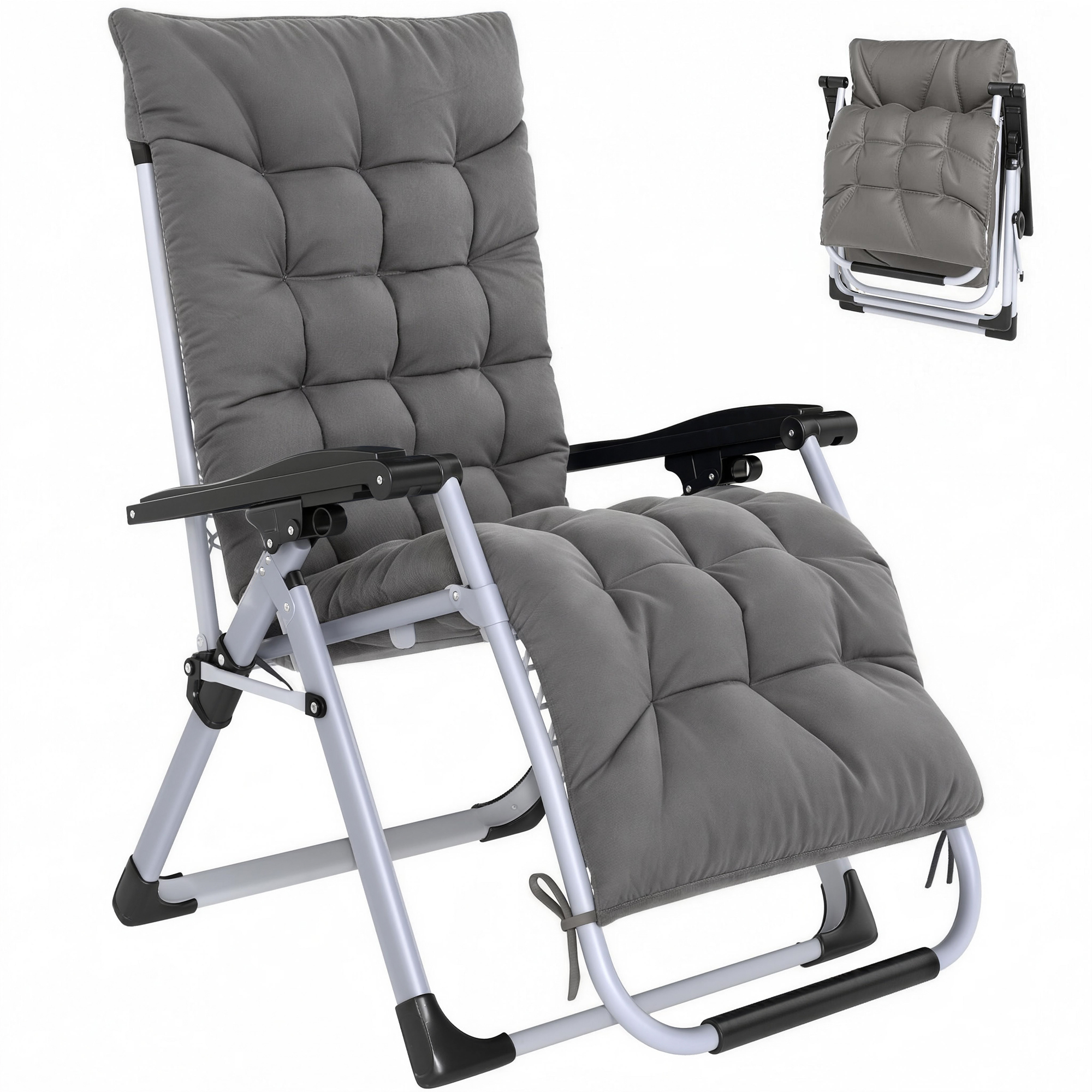
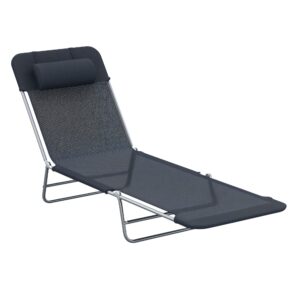
The 2-Person Outdoor Chaise Lounge Chair at Furniture Flip uses a robust powder-coated metal frame rated to support up to 528 lbs — a direct example of the kind of metal construction that handles Canadian outdoor conditions. The Texteline fabric is easy to clean and designed for outdoor exposure.
Best for: Dining sets, conversation furniture, lounge chairs, frames for any outdoor seating intended to stay outside through shoulder seasons.
2. HDPE (High-Density Polyethylene) Lumber — The Low-Maintenance Champion
Winter rating: ⭐⭐⭐⭐⭐
Overall durability: Excellent
Price range: Mid to high
HDPE lumber — also sold under brand names like Polywood and Trex — is recycled plastic that’s been processed and formed into boards that mimic the profile of wood. It’s become increasingly common in Canadian outdoor furniture for very good reasons.
It is impervious to moisture. HDPE doesn’t absorb water, which means freeze-thaw cycles have zero effect on it. No splitting, no cracking, no warping — the material is completely inert to water regardless of temperature.
It never needs sealing, staining, or painting. Unlike wood, HDPE doesn’t need annual maintenance. No sanding, no re-staining, no sealing. Wash it with soap and water once a season and it looks the same as it did when you bought it.
UV-stabilized formulations don’t fade. Quality HDPE lumber includes UV inhibitors in the material itself, not just as a surface coating. Colour is consistent through the full thickness of the board, which means scratches and surface wear don’t reveal a different colour underneath.
It handles Canadian temperature extremes. HDPE furniture has been tested and performed well from -40°C to +60°C — well beyond the range of any Canadian climate.
What to watch for: The primary complaint about HDPE furniture is that it can feel plasticky or cheap in lower-quality formulations. The weight (heavier than wood) also means it’s less easy to move. Look for thick board profiles and a weight that suggests density rather than hollow construction.
Best for: Adirondack chairs, outdoor dining sets, benches, and any piece intended to stay outside year-round with minimal maintenance. Particularly popular in cottage country across Ontario, Quebec, and BC.
3. Teak — The Premium Wood That Actually Survives
Winter rating: ⭐⭐⭐⭐
Overall durability: Very good with maintenance
Price range: High
Among natural wood species, teak is the only one that performs well enough in Canadian outdoor conditions to recommend without significant caveats. Its high natural oil content — which is what gives teak its distinctive golden-brown colour when new — provides inherent moisture resistance that other woods simply don’t have.
Teak doesn’t rot easily, resists warping better than most woods in freeze-thaw conditions, and is dense enough (Janka hardness around 1,155) to handle the compressive stress of snow loads without deforming.
The maintenance reality: Teak weathers to a silver-grey colour over time when left untreated outdoors — a look that many buyers actually prefer, and which doesn’t compromise the wood’s structural integrity. If you want to maintain the original warm golden tone, you’ll need to apply teak oil or a specialized teak sealer annually. Without treatment, the colour changes but the wood holds up.
What to watch for: Grade matters significantly in teak furniture. Grade A teak (from the heartwood of mature trees) is dense, consistent, and performs as described above. Grade B and C teak contain more sapwood — lighter in colour, less oil-rich, and less weather-resistant. Budget “teak” furniture often uses Grade C or misidentified species. If the price seems remarkably low for solid teak, it probably isn’t Grade A.
The Canadian winter protocol for teak: Teak handles Canadian winters best when covered with a breathable outdoor furniture cover or stored in a garage or shed. It will survive uncovered, but a cover dramatically extends its life and appearance.
Best for: Buyers who want the warmth and aesthetics of natural wood and are willing to pay the premium and provide minimal annual care. Dining tables and chairs where teak’s surface hardness handles dish and cutlery impact well.
4. All-Weather Wicker (Synthetic Rattan / Resin Wicker) — Good if You Know What You’re Buying
Winter rating: ⭐⭐⭐
Overall durability: Good with proper care
Price range: Mid-range
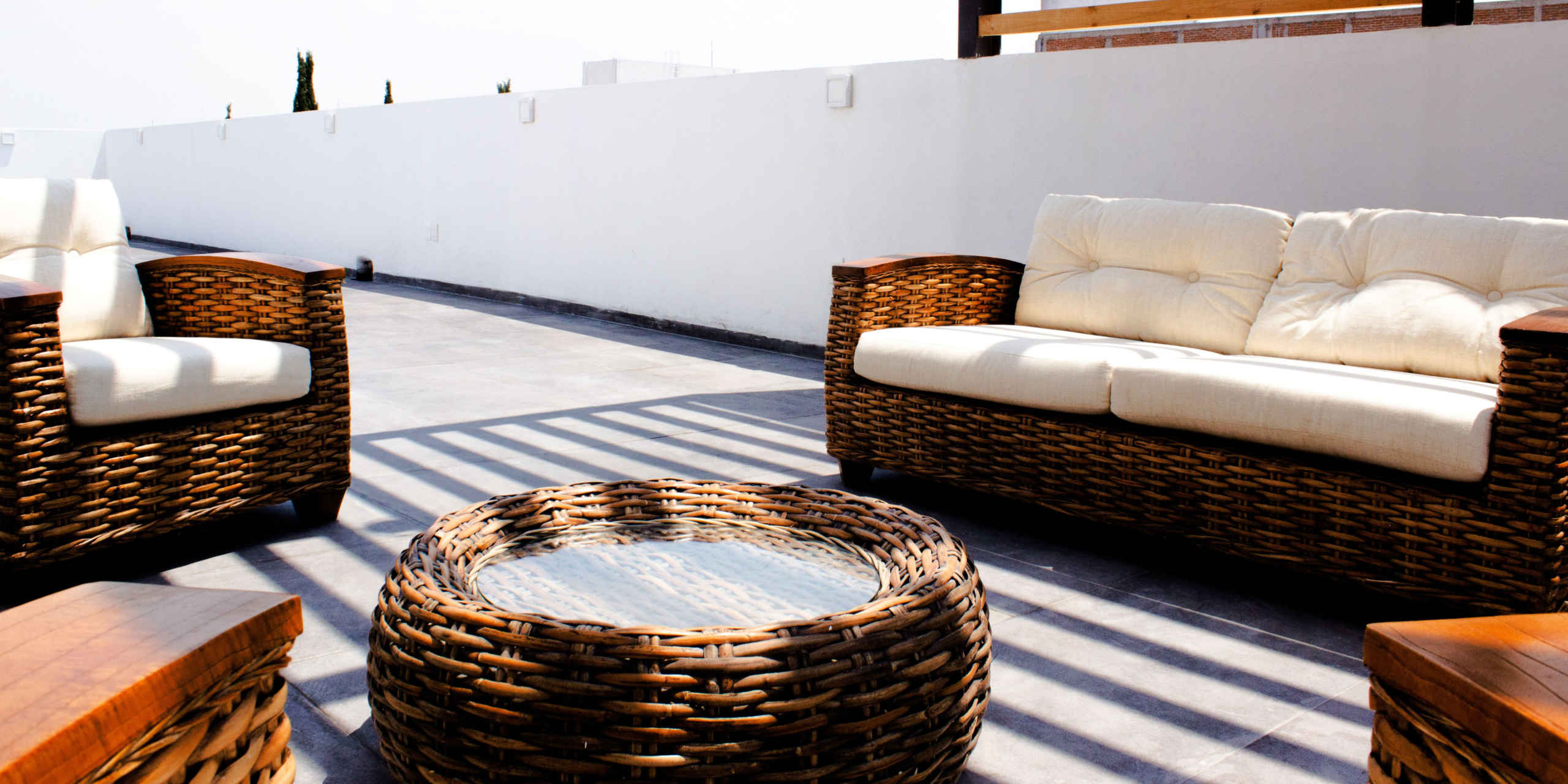
“Wicker” is where the most consumer confusion exists in Canadian outdoor furniture shopping. Natural wicker — made from rattan, bamboo, or other plant fibres — has no business being left outside through a Canadian winter. It absorbs moisture, swells and contracts with freeze-thaw cycling, and deteriorates rapidly. If a piece is described as “wicker” without the qualifier “all-weather” or “synthetic,” assume it’s for indoor or covered outdoor use only.
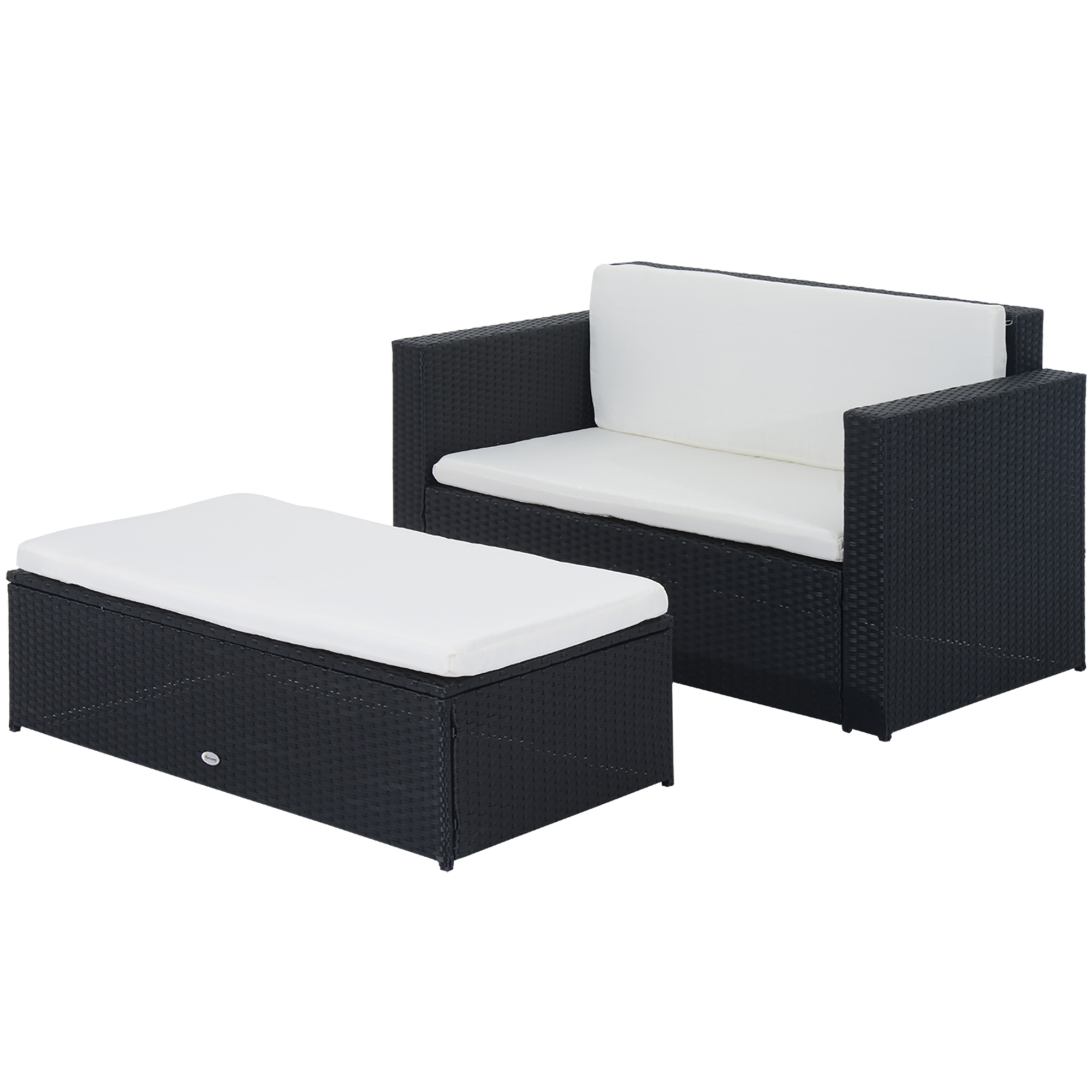
All-weather wicker (also called resin wicker or synthetic rattan) is a completely different material — high-density polyethylene or PVC fibre woven over an aluminium or powder-coated steel frame. It’s designed specifically for outdoor use and handles Canadian conditions meaningfully better than natural wicker.
What all-weather wicker handles well:
- Moisture — the synthetic fibre doesn’t absorb water
- UV exposure — quality resin wicker includes UV inhibitors
- Temperature swings — the plastic fibre is flexible enough to handle freeze-thaw without cracking
What to watch for:
The weakest point in all-weather wicker furniture is almost always the frame, not the weave. An aluminium frame under synthetic wicker will outlast a steel frame significantly in wet Canadian conditions. Ask or check the product specifications for frame material before buying — “metal frame” in a product description can mean steel or aluminium, and it makes a meaningful difference.
Also watch for weave quality. Tight, consistent weave with no loose ends or visible gaps is a quality indicator. Loose or uneven weaving unravels faster under UV exposure and use.
The UV50+ Patio Lounge Chair Cushion at Furniture Flip is a good example of outdoor-appropriate fabric construction — UV50+ protection, water-repellent polyester fabric, and securing straps that keep it properly positioned. The right cushion choice matters almost as much as the frame material in Canadian outdoor conditions.
Best for: Covered patios, screened porches, and buyers who want the aesthetic of wicker with outdoor-grade performance. Better stored or covered through the harshest winter months.
5. Galvanized or Stainless Steel — Strong But Requires Attention
Winter rating: ⭐⭐⭐
Overall durability: Good if coating is maintained
Price range: Mid-range
Steel is strong — stronger than aluminium at equivalent cross-sections — and is commonly used in outdoor dining sets, lounge frames, and accent furniture. The problem in Canada is rust.
Standard steel rusts. Period. Any chip, scratch, or wear point in a painted or powder-coated steel frame is a rust initiation point, and once rust starts in a Canadian environment — with its freeze-thaw cycling and road salt exposure — it spreads faster than it would in a drier climate.
Galvanized steel (steel coated in zinc) resists rust significantly better than plain powder-coated steel because the zinc provides sacrificial corrosion protection — it corrodes preferentially to the steel underneath. Galvanized outdoor furniture handles Canadian conditions reasonably well, particularly if kept covered through winter.
Stainless steel (grades 304 and 316) is genuinely rust-resistant and performs well in Canadian outdoor environments. Grade 316 (marine-grade stainless) is the better choice for high-humidity or coastal environments. The limitation is cost — stainless steel outdoor furniture is expensive, and the finish requires periodic cleaning to maintain its appearance.
What to avoid: Generic “metal” or “iron” outdoor furniture with a thin painted coating. This is the category that looks fine in the showroom and is showing rust spots by its second Canadian winter.
Best for: Buyers who can commit to annual inspection and touch-up of any coating damage, and who store furniture properly through winter. Not recommended for buyers who want completely maintenance-free outdoor pieces.
6. Cedar and Acacia Wood — Decent Budget Options With Annual Commitment
Winter rating: ⭐⭐⭐
Overall durability: Moderate
Price range: Budget to mid-range
Among natural woods beyond teak, western red cedar and acacia are the two most commonly recommended for Canadian outdoor use — for different reasons.
Cedar has natural oils and resins that resist moisture and insect damage better than most softwoods. It’s lightweight, works easily, and is domestically produced across much of Canada. Its Janka hardness is low (350 lbf) — it dents and scratches easily — but for chairs, benches, and raised garden planters where surface hardness isn’t critical, cedar performs adequately.
The requirement: annual oiling or sealing. Cedar that’s maintained properly can last a decade or more outdoors in Canada. Cedar that’s left unsealed will grey, crack, and degrade meaningfully faster — still not catastrophic in two years, but noticeably diminished.
Acacia is denser (Janka around 1,700) and naturally oilier than cedar, giving it better moisture resistance and surface durability. It’s commonly used in mid-range outdoor dining tables and chairs and handles Canadian seasons better than pine, eucalyptus, or rubber wood alternatives often found in similarly priced outdoor sets.
Like cedar, acacia benefits from annual sealing — without it, the natural oils deplete over time and the wood’s weather resistance diminishes.
What to avoid: Pine outdoor furniture. Pine’s low oil content and high porosity make it a poor choice for Canadian outdoor exposure. It absorbs moisture rapidly, is extremely susceptible to freeze-thaw splitting, and deteriorates faster than almost any other commonly used outdoor wood. The low price point is the only thing pine outdoor furniture has going for it.
Best for: Budget-conscious buyers who are committed to annual maintenance and who store or cover furniture through the winter months.
7. Plastic and Polypropylene — Practical and Honest
Winter rating: ⭐⭐⭐⭐
Overall durability: Good
Price range: Budget
Cheap plastic patio chairs get dismissed in design conversations, but from a pure durability standpoint for Canadian winters, they’re more capable than their price suggests. Polypropylene doesn’t rot, rust, crack in freeze-thaw cycling, or absorb moisture. It can be left outside through a Canadian winter without structural consequences.
The limitations are aesthetic and physical — plastic furniture shows UV degradation (yellowing and brittleness) faster than other materials, feels light and insubstantial, and has none of the visual character of metal, wood, or wicker alternatives. It’s also not particularly comfortable for extended sitting without cushions.
Quality polypropylene outdoor furniture — thicker moulded pieces from reputable brands — performs better than cheap injection-moulded alternatives and can last many years in Canadian conditions. The category has improved significantly as recycled and UV-stabilized formulations have become more common.
Best for: Practical, budget-driven buyers who prioritize function and low maintenance over aesthetics. Also a legitimate choice for secondary seating — extra chairs for large gatherings — where style matters less than having enough seats.
What to Do With Your Outdoor Furniture Before a Canadian Winter
The best material in the world lasts longer with proper seasonal care. Here’s the end-of-season protocol regardless of what your outdoor furniture is made of:
Clean everything thoroughly before storing. Dirt, debris, and organic material left on furniture through winter creates mould, stains, and accelerates surface degradation. Soap and water handles most materials; teak and cedar benefit from a mild wood cleaner.
Store cushions indoors. No outdoor cushion — regardless of how weather-resistant the fabric — should be left outside through a Canadian winter. Bring them inside to a dry location. The UV50+ cushion at Furniture Flip is water-repellent and UV-protected for outdoor use — but like all cushions, it stores better indoors through winter.
Cover what you can’t store. Breathable outdoor furniture covers — not plastic tarps, which trap moisture — protect frames from snow load, ice accumulation, and freeze-thaw damage through the winter months. A good cover extends the life of any outdoor furniture material meaningfully.
Bring aluminium and wicker inside if you have room. Both are lightweight enough to be practical to store in a garage or shed. Even materials that handle Canadian winters well last longer with the additional protection.
Inspect and treat wood annually. Cedar, acacia, and teak should be inspected and resealed or oiled every spring before going back into use. A couple of hours of maintenance once a year is the price of wood outdoor furniture in Canada.
The Summary: What to Buy for a Canadian Patio
| Material | Winter Durability | Maintenance | Best Application |
|---|---|---|---|
| Powder-coated aluminium | Excellent | Very low | All outdoor furniture — the safest choice |
| HDPE lumber | Excellent | Almost none | Adirondack chairs, dining sets, year-round pieces |
| Teak | Very good | Annual oiling | Dining tables, premium pieces with care |
| All-weather wicker | Good | Low | Covered patios, conversation sets |
| Galvanized/stainless steel | Good | Low-moderate | Dining sets, accent pieces |
| Cedar/acacia | Moderate | Annual sealing | Budget pieces with maintenance commitment |
| Plastic/polypropylene | Good | Very low | Budget seating, secondary chairs |
| Natural wicker/rattan | Poor | N/A | Indoor or fully covered use only |
| Pine | Poor | N/A | Not recommended for Canadian outdoor use |
Shop Outdoor Furniture at Furniture Flip
Browse the outdoor furniture collection at Furniture Flip — including the 2-Person Outdoor Chaise Lounge with its powder-coated metal frame and Texteline fabric built for outdoor exposure, and the UV50+ Patio Lounge Cushion with water-repellent fabric and UV protection rated to 50+.
For authoritative material testing standards on outdoor furniture, the Canadian Standards Association (CSA) publishes testing protocols for outdoor furniture durability — worth referencing if you’re making a significant outdoor investment and want to verify manufacturer claims against an independent standard.
Also worth reading: The complete guide to furnishing a new home on a budget in Canada — for buyers furnishing both indoors and out, the same spend-smart principles apply across every category. And if you’re working with a small deck or balcony, our upcoming guide on setting up a small outdoor living space covers how to make the most of limited square footage.
Take a look at these picks!