
How to Choose a Rug Size for Every Room in Your Home (Canada Guide)
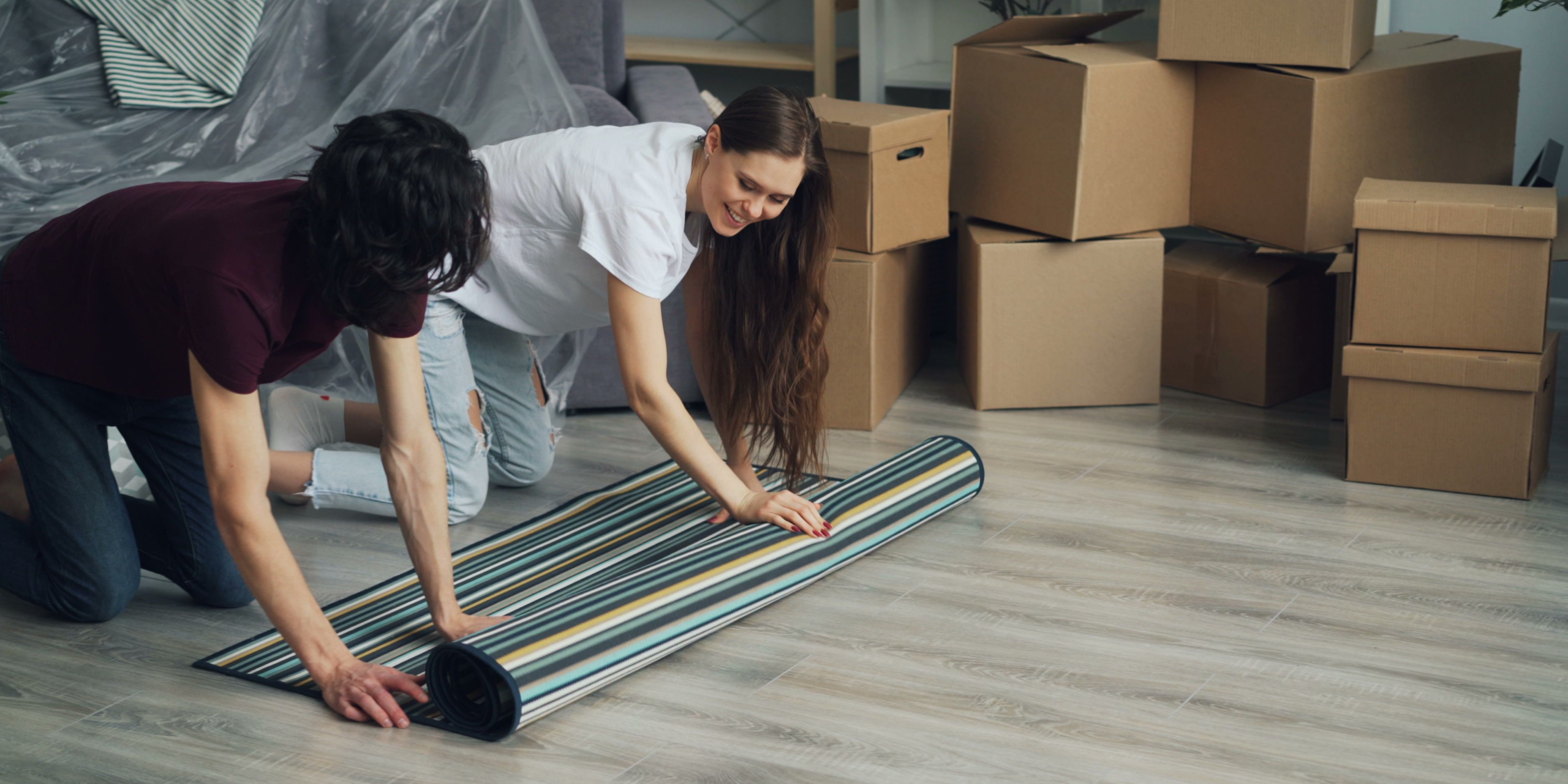
There is one decorating mistake that shows up more than any other in Canadian homes, and it has nothing to do with colour, style, or furniture quality.
It’s rug size.
Walk into almost any furnished living room, dining room, or bedroom in Canada and there’s a reasonable chance the rug is too small. A postage stamp of textile floating under a coffee table while the sofa legs sit on bare floor. A dining rug that causes chairs to scrape off the edge every time someone stands up. A bedroom rug that doesn’t reach the sides of the bed.
It looks wrong. Most people can feel that it looks wrong. Very few people know exactly why — or what size would actually fix it.
This guide gives you exact sizing for every room in your home, the layout rules that make each size work, and the practical checks to do before you order anything. No guesswork, no vague advice about “leaving a border.” Just the numbers and the logic behind them.
Why Getting Rug Size Right Matters More Than Getting the Pattern Right
Before the room-by-room breakdown, it’s worth understanding why size is more important than almost any other rug decision.
A correctly sized rug — even a plain, inexpensive one — grounds a room and makes the furniture arrangement look intentional. An incorrectly sized rug — even a beautiful, expensive one — makes the whole room feel off in a way that’s hard to articulate but impossible to ignore.
The reason is visual: a rug defines the boundary of a seating or activity zone. When the rug is large enough, the furniture arrangement looks anchored — like it belongs together. When the rug is too small, the furniture looks like it’s floating around a decorative mat rather than occupying a defined space.
Rug size is also where people consistently underestimate in-store. Rugs look significantly larger on a showroom floor with nothing around them than they do in a furnished room. A 160 x 230 cm rug on a warehouse floor looks enormous. The same rug in a living room with a sofa and two chairs around it looks like it was bought for a smaller apartment.
The rule of thumb that solves this problem almost universally: when in doubt, go up a size.
The Painter's Tape Test: Do This Before You Order
Before buying any rug for any room, do this:
Get a roll of painter’s tape and mark out the rug dimensions on your floor. Tape all four corners and the edges. Step back and live with it for an hour — walk around it, sit in the furniture arrangement around it, look at it from different angles and from the doorway.
If the taped outline looks small, the rug will look small. If the taped outline looks right, the rug will look right. This test takes ten minutes and prevents one of the most common and most expensive decorating mistakes there is.
Living Room Rug Sizing
The living room is where rug sizing mistakes are most visible and most impactful. It’s also the room with the most layout variation — which is why most rug sizing advice for living rooms comes with conditions.
The core rule
All legs of the primary seating pieces on the rug, or at minimum the front two legs of every piece. This is the standard that makes a living room rug look correct. Furniture legs on the rug connect the pieces visually to each other and to the space. All legs off the rug disconnects them. It’s the difference between a room that looks designed and one that looks assembled.
Layout option 1: All legs on the rug
The most generous and most resolved option. Every leg of every seating piece sits fully on the rug. This requires a large rug — typically 270 x 370 cm or larger in a standard Canadian living room — but produces the most cohesive result.
Best for: Larger living rooms, open-plan spaces where the rug defines the seating zone, rooms with sectionals.
Layout option 2: Front legs on the rug
The most practical option for mid-sized Canadian living rooms and condos. The front two legs of the sofa, loveseat, and accent chairs sit on the rug. The back legs sit on bare floor. This still connects all the furniture visually — the rug acts as a unifying platform — without requiring the largest rug size.
Best for: Most Toronto condos and apartments, living rooms in the 3.5 x 4.5 metre range, buyers working with a rug budget rather than a rug-as-statement-purchase.
Layout option 3: Rug under the coffee table only
This is the option that looks wrong. It’s the option most people end up with when they buy the size they thought was right. A rug that fits only under the coffee table with furniture legs floating on either side reads as a decorative accent, not a room-defining element. It makes the space feel underfurnished regardless of what’s in it.
Avoid this unless the room is very small and a properly sized rug genuinely won’t fit — in which case a runner or a smaller accent rug used deliberately is better than a mid-sized rug used incorrectly.
Living room rug size by room width
| Room Width | Minimum Rug Size | Recommended Rug Size |
|---|---|---|
| Under 3 metres | 160 x 230 cm | 200 x 290 cm |
| 3–3.6 metres | 200 x 290 cm | 240 x 300 cm |
| 3.6–4.5 metres | 240 x 300 cm | 270 x 370 cm |
| Over 4.5 metres | 270 x 370 cm | Custom or layered rugs |
The shape question: Rectangular rugs work in most living rooms. Round rugs work well in smaller sitting areas, reading nooks, or in front of a fireplace — but rarely in a full living room seating arrangement. Square rugs work in square rooms. When in doubt, rectangular.
Browse our sofas collection — every listing includes exact sofa dimensions so you can calculate the right rug size relative to your specific piece before ordering.
Dining Room Rug Sizing
The dining room has the most precise sizing requirement of any room in the home — because the functional test is binary. Either the chairs stay on the rug when pulled out, or they don’t. If they don’t, the rug is too small.
The core rule
The rug must extend at least 60 cm beyond the table edge on all sides. This gives a seated person approximately 45–50 cm of rug behind them when they push their chair back — enough to remain on the rug rather than catching the edge and creating the scrape-and-tip hazard of a chair leg catching the rug border mid-pull.
This 60 cm per side requirement means the rug needs to be significantly larger than the table itself:
Dining rug size by table size
| Table Size | Minimum Rug Size |
|---|---|
| 90 x 150 cm (seats 4) | 210 x 270 cm |
| 90 x 180 cm (seats 6) | 210 x 300 cm |
| 100 x 210 cm (seats 6–8) | 220 x 330 cm |
| 120 x 240 cm (seats 8+) | 240 x 360 cm |
| Round table, 120 cm diameter | 240 cm round |
| Round table, 150 cm diameter | 270 cm round |
The shape rule for dining rooms: Match the rug shape to the table shape. A rectangular rug under a rectangular table. A round rug under a round table. Mismatching shapes — a round rug under a rectangular table — creates visual tension that the room never quite resolves.
Practical check: Before ordering, pull a dining chair out from the table to the position someone would sit in while eating. Measure from the table edge to the back legs of the chair. Add 15 cm as a buffer. That’s the minimum extension you need on each side. Most people discover it’s more than 60 cm when they account for how far back they actually sit.
Bedroom Rug Sizing
The bedroom is the room where rug sizing is most personal — because the functional requirements are simpler and the aesthetic options are wider. There are three approaches that all work, and the right one depends on your bed size, room size, and budget.
Option 1: Large rug under the entire bed
The most cohesive approach. A large rug placed under the bed with 50–60 cm extending beyond the bed on the sides and foot. The headboard end can sit off the rug — typically the rug starts just under where the nightstands sit or at the top of the mattress.
This approach works best when the rug is positioned so that when you step out of bed on either side, your feet land fully on the rug — one of the best morning-quality-of-life decisions in home decorating, particularly in a Canadian winter.
Bedroom rug size by bed size
| Bed Size | Rug for Full Coverage | Rug Starting from Foot of Bed |
|---|---|---|
| Single / Twin | 160 x 230 cm | 120 x 180 cm |
| Double / Full | 200 x 290 cm | 160 x 230 cm |
| Queen | 240 x 300 cm | 200 x 290 cm |
| King | 270 x 370 cm | 240 x 300 cm |
Option 2: Two runners alongside the bed
Two runners placed on each side of the bed — typically 60–90 cm wide and long enough to extend from the nightstand to beyond the foot of the bed. This is a practical option for smaller bedrooms where a full-sized rug would leave no floor space, and it has a deliberate, considered aesthetic when the runners are well-chosen.
Runner sizing: Length should be the bed length plus at least 30–45 cm. For a queen bed (203 cm), a runner of 240–250 cm works well.
Option 3: Rug at the foot of the bed only
A smaller rug — typically 120 x 180 cm or 150 x 240 cm — placed across the foot of the bed. This is the most budget-friendly option and works well in rooms where the majority of the floor is hardwood you want to show. It defines the sleeping area without covering the full footprint.
The one to avoid: A small rug placed only under the nightstands, with the bed legs floating on bare floor. Like the coffee-table-only living room rug, this reads as decorative accent rather than room element.
Home Office Rug Sizing
The home office rug is primarily functional: it protects the floor from chair movement and defines the work zone in a room that might otherwise double as a guest room or secondary living space.
The core rule
The rug must be large enough that the office chair remains on the rug at all positions — fully tucked under the desk and fully rolled back to a standing position. A chair that catches on the rug edge every time you stand up is a daily frustration that negates any aesthetic benefit.
Office rug sizing
For a standard desk and chair setup, a minimum of 120 x 180 cm is needed — and only if the desk is against a wall. For a freestanding desk, 160 x 230 cm gives adequate coverage in most positions.
The hardwood caveat: In a home office on hardwood or LVP flooring, a rug with a proper non-slip underlay is particularly important — chair movement on a bare rug without backing can shift the rug across hard floors daily. Make sure any rug chosen for an office either has a non-slip backing built in or is paired with a separate gripper pad.
Hallway and Entryway Runner Sizing
Runners in hallways and entryways are primarily practical — they protect high-traffic flooring, reduce noise, and add warmth to spaces that often feel cold and transitional.
The core rule
Leave 10–15 cm of bare floor visible on each side of the runner. A runner that goes wall-to-wall looks like failed wall-to-wall carpet. A runner that’s centred with consistent bare floor on either side looks intentional and proportional.
Runner sizing by hallway width
| Hallway Width | Runner Width |
|---|---|
| Under 90 cm | 60 cm wide |
| 90–120 cm | 60–75 cm wide |
| 120–150 cm | 80–90 cm wide |
Length: Leave 15–30 cm of bare floor at each end of the runner. In a long hallway, a runner that runs the full length of the hall looks considered. In a shorter entryway, a runner that starts just inside the door and extends to the transition point of the next room defines the space cleanly.
Rug Material Considerations for Canadian Homes
Choosing the right size is step one. Choosing the right material for where you live is step two — and in Canada, it matters.
Living rooms: Wool is the most durable and cleanest-looking natural option. Polypropylene (synthetic) is the most stain-resistant and the best choice for homes with young children or pets. Jute and sisal add organic texture but aren’t the best choice for high-traffic areas — they’re rough underfoot and difficult to clean.
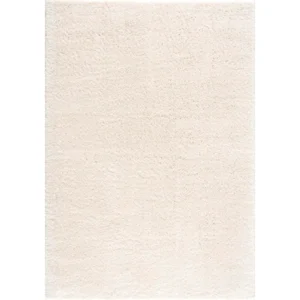
Bedrooms: Softness underfoot matters here more than anywhere else. High-pile shag, plush wool, or a thick synthetic are all appropriate. The Puffy Light Grey Shag Area Rug at Furniture Flip — thick high-pile construction in a versatile cool grey — is built for exactly this kind of bedroom comfort application. High-pile in a bedroom makes cold winter mornings meaningfully more bearable.
Dining rooms: Flat-weave is the most practical choice under a dining table — easier to clean, no pile for chair legs to catch on, and holds up better under constant chair movement. Low-pile synthetic is the next best option.
Entryways: The highest-traffic zone in any Canadian home, particularly in winter. Choose a low-pile synthetic or polypropylene that cleans easily — mud, salt, and wet boots are a year-round reality in Canadian entryways.
Browse the complete rugs and carpets collection at Furniture Flip — 10 options across pile heights and finishes, with exact dimensions listed on every product page so you can match against your room measurements before ordering.
The Five Most Common Rug Sizing Mistakes
1. Buying the size that looks right in the store. Rugs always look larger on an empty showroom floor than they do in a furnished room. Go up a size from what looks right in isolation.
2. Centering the rug without accounting for furniture. A rug centred in the room isn’t the same as a rug centred in the seating arrangement. Measure from furniture, not from walls.
3. Choosing a round rug for a rectangular room. Round rugs are excellent in the right context — a reading nook, a round dining table, a small sitting area. In a standard rectangular living room with a rectangular sofa arrangement, they rarely work without looking deliberate in a self-conscious way.
4. Forgetting the underlay. A rug without a non-slip underlay on hardwood or LVP flooring is a safety hazard and will shift constantly. Underlay also adds cushioning that makes any rug feel more substantial underfoot. Budget for it alongside the rug.
5. Buying a rug before the furniture. Rug size is determined by furniture size and arrangement. If you don’t yet have the furniture finalized, you can’t accurately size a rug for it. Finalize the main pieces first — particularly the sofa and dining table — then size the rug relative to them. Our sofa collection and coffee tables all list exact dimensions so you can calculate rug size before committing.
Quick Reference: Rug Size by Room
| Room | Common Sizes | Key Rule |
|---|---|---|
| Small living room | 160 x 230 cm | Front legs of all seating on rug minimum |
| Medium living room | 200 x 290 cm – 240 x 300 cm | Front legs of all seating on rug |
| Large living room | 270 x 370 cm+ | All legs on rug |
| Dining room (4 seats) | 210 x 270 cm minimum | 60 cm beyond table on all sides |
| Dining room (6 seats) | 210 x 300 cm minimum | 60 cm beyond table on all sides |
| Queen bedroom | 240 x 300 cm | 50–60 cm beyond bed sides and foot |
| King bedroom | 270 x 370 cm | 50–60 cm beyond bed sides and foot |
| Home office | 160 x 230 cm | Chair stays on rug at all positions |
| Hallway runner | 60–90 cm wide | 10–15 cm bare floor each side |
Also worth reading: How to mix wood tones in your home — because a correctly sized rug is one of the most effective tools for tying mixed wood tones together. And mid-century modern on a budget — where rug pattern and size are two of the most important decisions in getting the MCM aesthetic right.
Take a look at these picks!
- Select options This product has multiple variants. The options may be chosen on the product page
- Select options This product has multiple variants. The options may be chosen on the product page
- Select options This product has multiple variants. The options may be chosen on the product page
- Select options This product has multiple variants. The options may be chosen on the product page
- Select options This product has multiple variants. The options may be chosen on the product page