Best Dressers for Small Bedrooms in Canada: Storage Without Sacrificing Space
A small bedroom does not mean you have to compromise on storage. It means you have to be more deliberate about which dresser you choose and where you put it. The wrong dresser in a small bedroom takes over the room visually and physically. The right one disappears into the space while quietly solving your storage problem.
This guide walks you through everything to consider before buying a dresser for a small bedroom in Canada, from the dimensions that actually matter to the drawer configurations that give you the most usable storage per square foot of floor space.
Why Dresser Selection Matters More in a Small Bedroom
In a larger bedroom a dresser is one of several pieces competing for attention. In a small bedroom it is often the dominant storage piece and one of only two or three furniture items in the room. That means its proportions, its height, its depth, and its visual weight all have an outsized effect on how the room feels.
A dresser that is too wide eats into the walking space between the bed and the wall. A dresser that is too deep pushes into the room in a way that disrupts traffic flow. A dresser that is too short leaves vertical storage potential completely untapped. Getting these three dimensions right is the starting point for everything else.
The Three Measurements That Matter Before You Shop
Before you look at a single dresser, take these three measurements and write them down.
The wall width where the dresser will sit. This is your maximum dresser width and nothing should exceed it. Leave at least 6 inches of breathing room on either side of the dresser if possible, which keeps the wall from feeling completely consumed by the piece.
The room depth from the dresser wall to the opposite side, minus the space your bed and any other furniture takes up. This tells you how much walking clearance you will have in front of the dresser once it is in place. You need at least 24 inches of clearance in front of a dresser to open drawers comfortably and move past it. Anything less becomes a daily inconvenience.
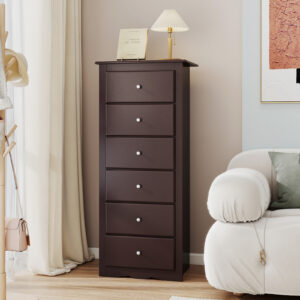
Your ceiling height. In a small bedroom, going tall with your dresser is almost always the right move. A narrow tall dresser with six or more drawers gives you significantly more storage than a wide short dresser of the same footprint, and it draws the eye upward which makes the room feel taller.
Tall and Narrow vs Wide and Low: Which Is Right for Small Bedrooms
This is the central question in small bedroom dresser selection and the answer is almost always tall and narrow.
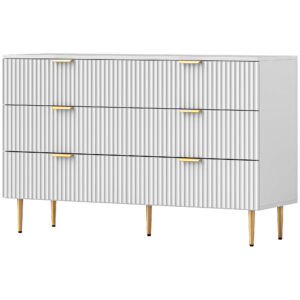
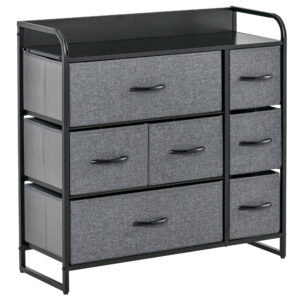
A wide low dresser in a small bedroom eats wall space horizontally and leaves the upper half of the wall empty, which compresses the visual height of the room. It also tends to require more floor clearance on either side, which further limits what else can go in the space.
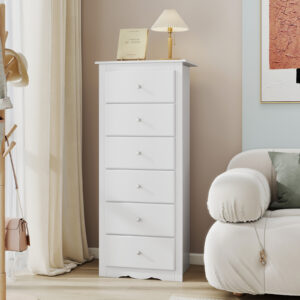
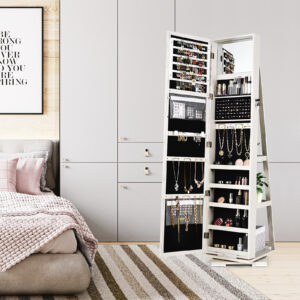
A tall narrow dresser uses vertical space efficiently, keeps its floor footprint compact, and visually elongates the room. In a bedroom under 150 square feet, a dresser in the 18 to 24 inch width range with 5 to 7 drawers stacked vertically will almost always serve the room better than a wider lower alternative.
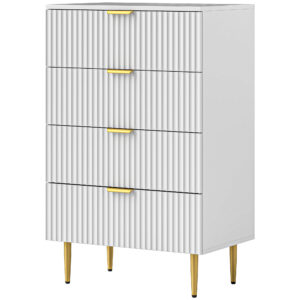
The practical advantage is also significant. A 6 drawer tall chest of drawers gives you as much or more storage capacity as a wide 6 drawer double dresser while occupying a fraction of the wall width. In a room where every inch of wall is in competition with a bed, a window, a door, and a closet, that difference matters enormously.
What to Look for in Drawer Quality
The drawers are what you interact with every single day. In a dresser you will use for a decade, drawer quality matters far more than the look of the piece from across the room.
Full extension drawer slides let you access the full depth of the drawer without reaching blindly into the back. Dressers with partial extension slides, meaning drawers that only open two thirds of the way, waste storage capacity you are paying for and make daily use more frustrating than it needs to be.
Soft close mechanisms prevent drawers from slamming and reduce wear on the joinery over time. This is not a luxury feature. On a dresser used multiple times daily it is the difference between a piece that still feels solid after five years and one that starts to rattle and catch within two.
Dovetail joinery on solid wood drawers is the quality indicator to look for on higher end pieces. Dovetail joints interlock mechanically rather than relying purely on glue and fasteners, which means the drawer box maintains its shape and rigidity under years of loading and unloading.
Dresser Depth: A Dimension Most People Ignore
Dresser depth is one of the most overlooked dimensions in small bedroom furniture buying and one of the most consequential.
Standard dressers run 16 to 20 inches deep. In a room where the clearance between the dresser and the bed is already tight, a dresser on the deeper end of that range can reduce your walking space to the point where the room becomes genuinely uncomfortable to move around in.
For very small bedrooms, look for dressers with a depth in the 15 to 16 inch range. These shallower profiles give you meaningful walking clearance without sacrificing drawer capacity significantly. Several Canadian furniture options in this range exist specifically for condo and apartment bedroom layouts where depth is the limiting constraint.
Browse the bedroom furniture collection at Furniture Flip for dressers suited to small Canadian bedrooms, and check the beds collection if you are furnishing the full room and want pieces that work together proportionately.
Material and Finish Choices for Small Bedrooms
In a small bedroom, the material and finish of your dresser affects how large or small the room feels as much as the physical dimensions do.
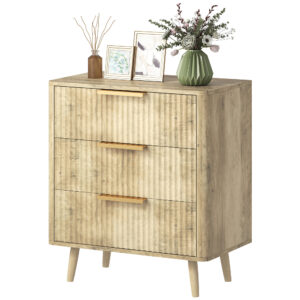
Light finishes, meaning natural wood tones, white, or pale grey, reflect light and keep the room feeling open. A dark dresser in a small bedroom with limited natural light can make the space feel heavier and more closed than it actually is. This is not a rule without exceptions but it is a useful starting point.
Solid wood dressers hold up better to daily drawer use over time than particle board alternatives, particularly at the joinery points where drawer slides and hardware attach. In a piece you plan to keep for a decade or more, the material investment pays off. In a guest room or a short term living situation, quality engineered wood is a perfectly reasonable call.
Avoid dressers with large decorative hardware or very ornate detailing in a small bedroom. Heavy visual elements on a dresser compete for attention in a room that does not have the space to absorb them. Clean simple hardware in a brushed metal or matte finish keeps the piece receding rather than demanding attention.
Pairing the Dresser With the Rest of a Small Bedroom
A dresser does not exist in isolation. In a small bedroom it needs to relate to the bed, the nightstands, and any other pieces in the room without making the space feel cluttered or mismatched.
The most straightforward approach is to match wood tone and finish across the main bedroom pieces. Your dresser, bed frame, and nightstands do not need to be from the same collection but they should share a colour temperature, either all warm toned woods or all cool toned, to create visual coherence in a room that is too small to absorb a lot of contrast.
Keep the top surface of the dresser clear or nearly clear. In a small bedroom a cluttered dresser top adds visual noise to a room that is already working hard to feel spacious. A single tray for jewelry or a small plant is fine. Everything else belongs inside the drawers.
For additional guidance on how to style and organize a small bedroom dresser top, JYSK Canada has a practical bedroom storage guide with specific advice on dresser organization and pairing storage pieces effectively in compact spaces.
For a broader look at dresser options and sizing guidance for Canadian buyers, Leon’s dresser buying resource covers the full range of drawer configurations and what suits different bedroom sizes across their Canadian lineup, and is worth reading alongside this guide before you finalize your decision.
The Bottom Line
In a small bedroom the dresser is one of the hardest working pieces of furniture you own. Getting it right means measuring first, choosing tall and narrow over wide and low, prioritizing drawer quality over surface aesthetics, and picking a finish that keeps the room feeling open rather than heavy.
Do those things and the dresser will not just store your clothes. It will make your bedroom feel more considered, more organized, and more like the room you actually want to be in.
Take a look at these picks!