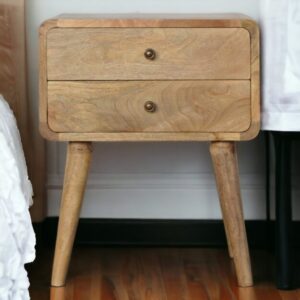
How to Choose the Right Nightstand for Your Bedroom (Size, Style, and Storage)
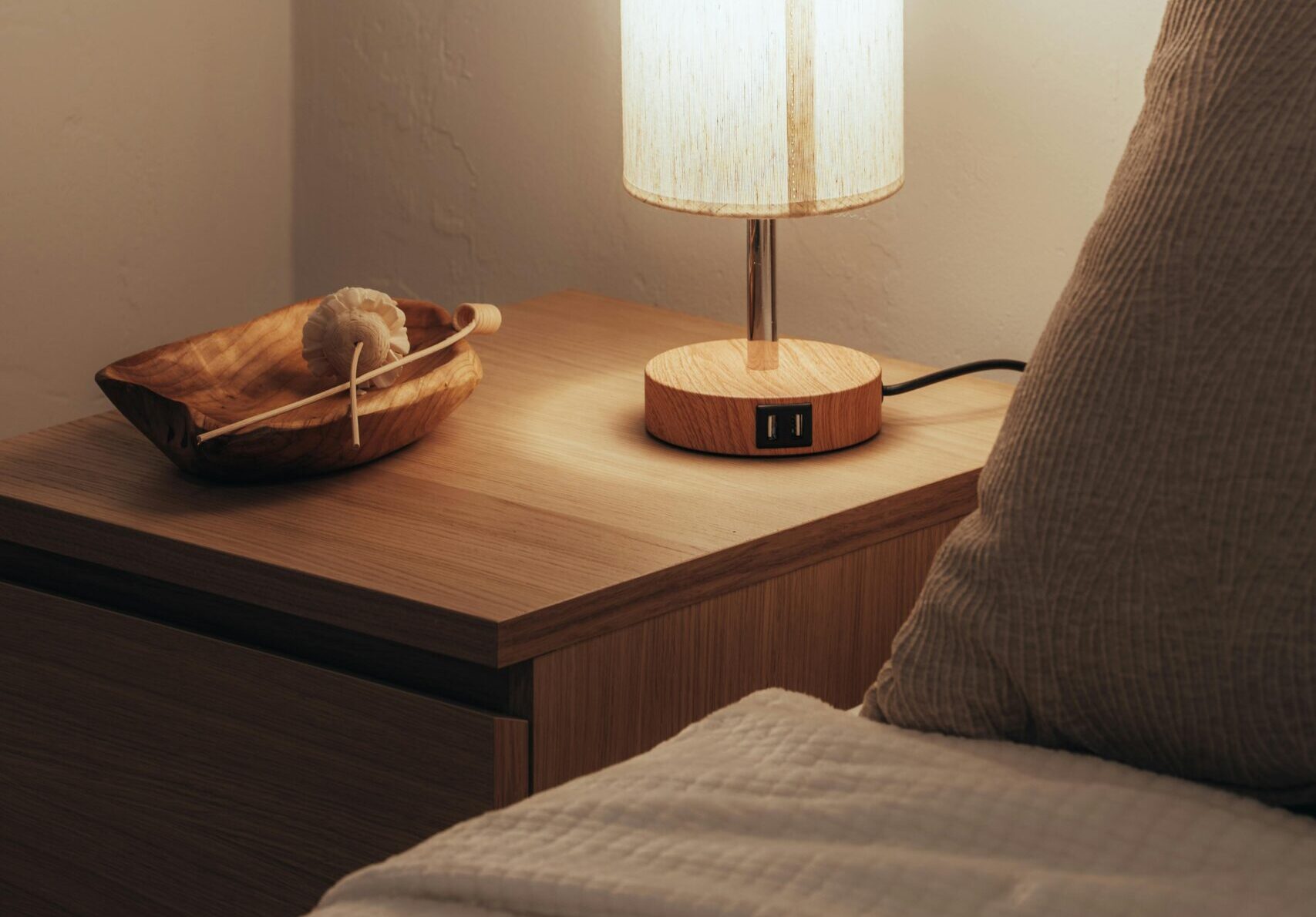
A nightstand seems like a small decision until you live with the wrong one. Too tall, and it feels awkward every time you reach for something. Too small, and it becomes useless. No storage, and your clutter just migrates somewhere else.
In a bedroom, details matter more than people think. The nightstand sits right beside your bed, which means if it is off, the entire room feels slightly wrong. This guide breaks down how to choose a nightstand that actually fits your space and how you use it.
Why Nightstand Choice Actually Matters
In most bedrooms, the nightstand is one of the few pieces you interact with every day. It holds your essentials, frames the bed visually, and affects how balanced the room feels.
A bad choice does three things. It disrupts the proportions of the bed, reduces usable space, and creates surface clutter. A good one blends in, supports your routine, and makes the room feel finished without drawing attention to itself.
Start With Height Before Anything Else
Height is the first filter. Everything else comes after.
Your nightstand should sit level with or slightly below the top of your mattress. Within a couple of inches is ideal. This keeps it comfortable to use and visually aligned with the bed.
Anything significantly higher feels bulky and intrusive. Anything lower feels disconnected and inconvenient. Most people ignore this and end up adjusting their habits around bad furniture, which is backwards.
Width Depends on Your Room, Not Your Taste
Nightstand width should be based on available space, not what looks good in isolation.
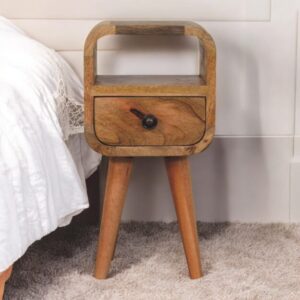
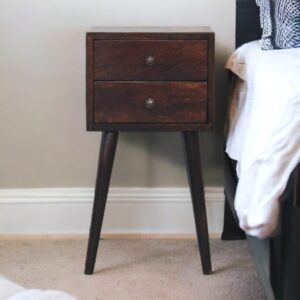
In smaller bedrooms or condos, a compact nightstand keeps movement around the bed easy. In larger rooms, a wider nightstand can balance a bigger bed and fill the space properly.
The mistake people make is choosing something oversized because it looks better online. Then it shows up and suddenly walking space disappears.
If you are furnishing a tighter layout, explore compact options here: Furniture Flip Nightstands
And if you are building out the full bedroom setup, keep proportions consistent with your bed and other pieces:
Furniture Flip Bedroom Furniture.
Storage: Be Honest About How You Live
Most people either underestimate or completely ignore storage needs.
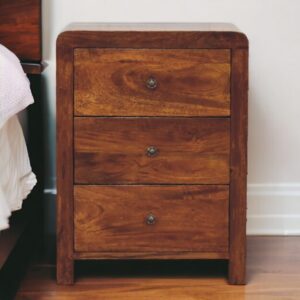
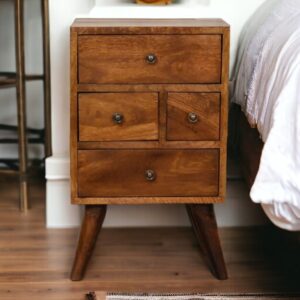
If all you keep beside your bed is a phone and maybe a lamp, a simple surface or single drawer is enough. If you keep books, chargers, and everything else within arm’s reach, you need drawers. Not later. Now.
Open shelves look clean but expose clutter. Drawers hide it. This is not a design decision as much as a lifestyle one.
Style Should Complement, Not Match Perfectly
Matching everything exactly makes a room feel staged and flat. But completely random choices make it feel unplanned.
The goal is alignment, not duplication.
A wooden bed works well with a slightly different wood tone nightstand. Upholstered beds pair well with wood or metal. Clean lines usually outperform overly decorative pieces in smaller spaces because they do not compete for attention.
Floating vs Traditional Nightstands
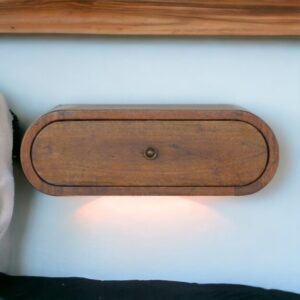
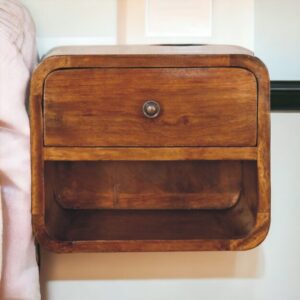
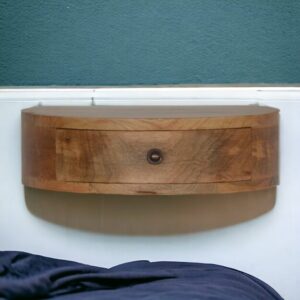
Floating nightstands are popular for a reason. They save floor space and make a room feel more open. But they come with less storage and require installation.
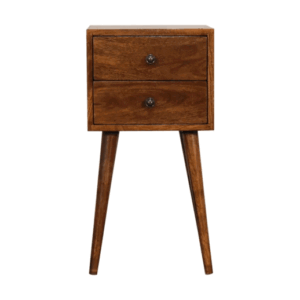
Traditional nightstands offer more flexibility, more storage, and are easier to move. They work in almost every setup.
If your room is tight, floating can help visually. If you need function, traditional usually wins.
Proportion Is What Makes It Look Right
Even if you get everything else correct, proportion is what determines whether the room feels balanced.
A small nightstand next to a large bed looks accidental. A bulky one in a tight room feels intrusive. The scale of your furniture needs to relate to each other, not just exist independently.
This is where most setups fall apart. Not because the pieces are bad, but because they were chosen without considering the whole room.