How to Tell If Furniture Is Actually Good Quality Before You Buy It

Most furniture looks fine in a showroom. The lighting is warm, the staging is perfect, and nothing has been sat on 10,000 times yet. The real test happens two years later — when the cushions have flattened, the drawer slides stick, the veneer has started to peel at the corners, and the frame creaks every time someone sits down.
By then, of course, it’s too late.
The difference between furniture that lasts a decade and furniture that falls apart in three years is almost never visible at first glance. It’s in the construction — the frame joints, the spring system, the foam density, the joinery — things you have to know to look for. And most people don’t, which is exactly how retailers get away with selling low-quality pieces at mid-range prices.
This guide gives you the complete framework for assessing furniture quality before you buy it — in-store or online. Work through it on any piece you’re considering and you’ll know within minutes whether you’re looking at something worth buying or something that will disappoint you.
Why Quality Assessment Matters More Than Brand Name
The first thing to understand is that brand name is not a reliable quality indicator in furniture. Unlike electronics or appliances, where brand reputation is fairly consistent across product lines, furniture quality varies dramatically even within the same retailer. A mid-range store can have outstanding pieces and terrible ones on the same showroom floor, often at similar prices.
What matters is the piece itself — its specific construction, materials, and finishing. A $900 solid mango wood coffee table from a lesser-known supplier will almost always outlast a $900 veneered particleboard table from a well-known chain. The price is the same. The quality is not. Knowing how to tell the difference puts you in control of that decision every time.
Part 1: The Frame — Start Here, Always
The frame is the skeleton of any furniture piece. Everything else — cushions, fabric, hardware, finish — can be replaced or repaired. A failed frame means the piece is done. This is where cheap furniture cuts corners most aggressively and where quality furniture earns its price most clearly.
For wood furniture: solid wood vs. engineered wood
Solid wood is cut directly from a tree. It’s strong, holds fasteners well, can be refinished, and improves with age. The best species for furniture are hardwoods — oak, maple, beech, walnut, and mango. Mango wood in particular has become a standout option in the Canadian mid-range market: it’s dense, sustainable (harvested from trees that no longer produce fruit), and has a rich, characterful grain that makes each piece unique.
Every piece of solid mango wood furniture at Furniture Flip — from the Amaya Light Walnut Coffee Table to the Curved Chestnut Writing Desk to the 4 Drawer Multi Chestnut Nightstand — is handcrafted from 100% solid mango wood. That’s not a marketing phrase here — it means the piece is built from the same material all the way through, not a thin layer over something cheaper underneath.
Engineered wood covers several materials that look like wood but aren’t:
- Plywood: Layers of wood veneer glued together with alternating grain direction. Actually quite strong and relatively stable — significantly better than the options below.
- MDF (Medium-Density Fibreboard): Wood fibres compressed with resin. Smooth surface, takes paint well, but heavy, weak at edges, and swells badly with moisture. Common in painted furniture and flat-pack pieces.
- Particleboard: Sawdust and resin pressed into boards. The weakest option — poor screw-holding, swells easily, deteriorates fastest. Found in the cheapest flat-pack furniture.
- Veneer over engineered wood: A thin slice of real wood applied over MDF or particleboard. Looks like solid wood in photos and in showrooms but performs entirely differently. Chips, peels, and cannot be refinished.
How to check in person: Knock on the piece. Solid wood sounds dense and muted. Hollow or thin-walled engineered wood sounds hollow and resonant. Check the underside and back of pieces — manufacturers often use lower-quality materials on surfaces that aren’t visible. If the back panel of a cabinet is thin cardboard-like material stapled into a groove, that tells you something about the overall construction philosophy.
How to check online: Read the product description carefully. “Solid wood” should specify the species. “Wood,” “wood composite,” “engineered wood,” or “wood-effect” without further specification almost always means particleboard or MDF. If the listing doesn’t clearly state what the wood is, assume it’s not solid.
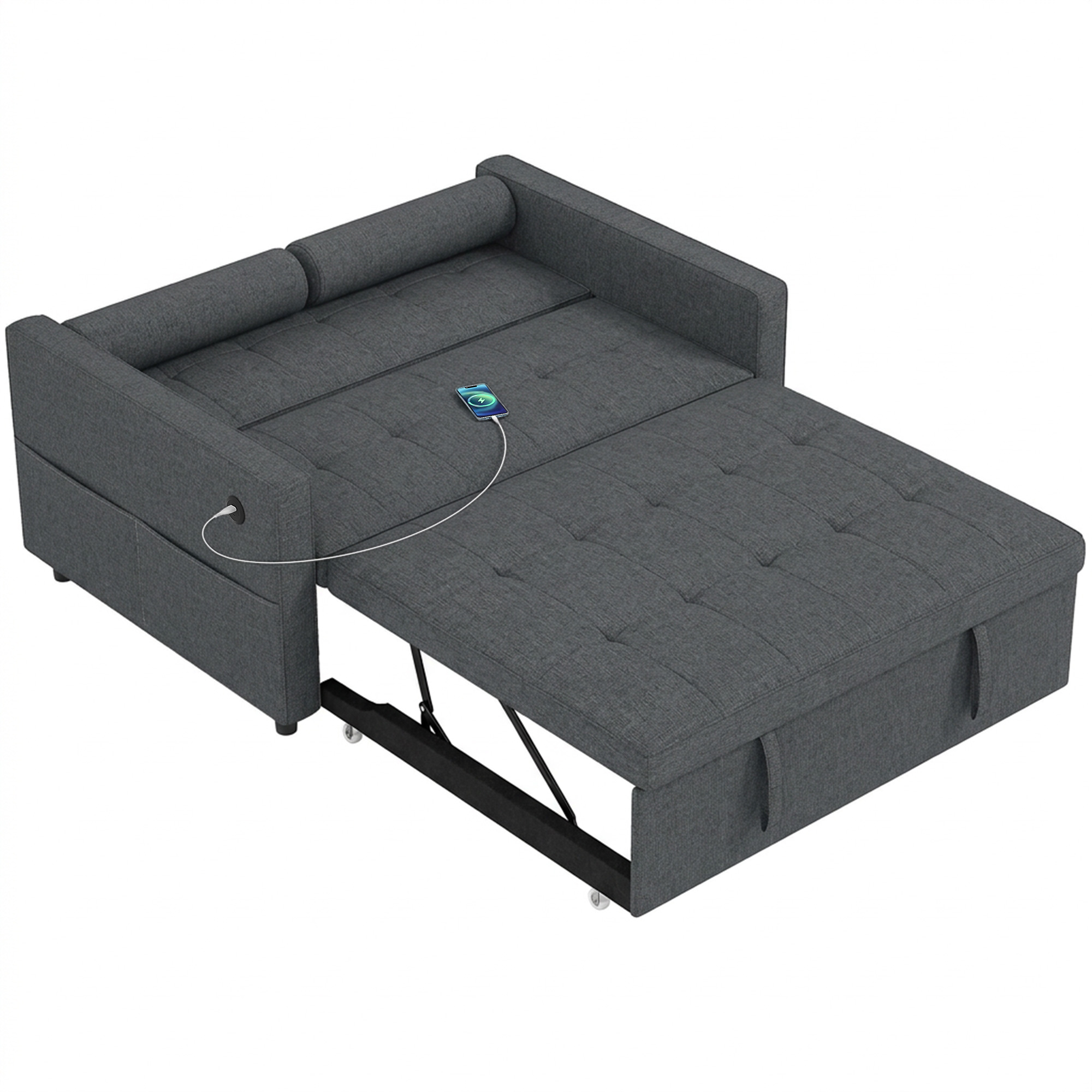
For sofa and upholstered chair frames
The same principle applies. Quality upholstered frames use kiln-dried hardwood — beech, maple, and oak are standard in quality pieces. Kiln-drying removes moisture so the wood doesn’t warp, crack, or shrink over time, which is particularly important in Canada where the swing between humid summers and dry, heated winters is severe.
Red flags in sofa frames:
- Softwood frames (pine) — acceptable in low-stress pieces, not ideal for primary seating
- Particleboard or MDF frame components — poor screw retention means joints loosen quickly
- Plastic corner blocks instead of wood — a reliable indicator of budget construction
- Frames that are only stapled at joints — staples alone loosen quickly under regular use
The tilt test: Lift one corner of the sofa slightly off the floor. A quality frame should feel completely rigid — no flex, no twist, no creak. Any movement or sound at this stage will only get worse with use.
Part 2: Joints and Joinery — Where Cheap Furniture Falls Apart First
A frame is only as strong as how its pieces connect. Joinery is the most overlooked quality indicator in furniture — invisible when new, catastrophically obvious when it fails.
What good joinery looks like
Double-dowel joints: Two wooden pegs connecting two pieces of wood, glued in place. Strong, reliable, resistant to racking (side-to-side movement). Standard in quality case goods (dressers, cabinets, shelving).
Mortise and tenon joints: A projection on one piece fits into a cavity on another — one of the oldest and strongest woodworking joints. Found in quality dining chairs and tables where stress is high.
Corner blocks: Small triangular or square blocks glued and screwed into internal frame corners. They prevent the frame from racking and dramatically increase joint strength. Visible inside cabinet corners and under sofa seats. Their presence is a quality signal; their absence is a warning.
Dovetail joints: Interlocking trapezoidal cuts most commonly seen in quality drawer construction. A drawer with dovetail joints at the front corners is built to last. Drawers held together with staples or simple butt joints are not.
How to check joints in person
Open every drawer in a piece and look at the front corners where the drawer face meets the sides. Dovetail joints — a series of interlocking wedge shapes — indicate quality construction. Simple butt joints (one flat piece against another) held by staples are the budget alternative.
Push and pull on joints, arms, and legs. There should be zero movement. A dining chair arm that wiggles slightly when new will be fully loose within a year of regular use. A sofa arm that flexes when you push it will creak constantly within months.
Look at how legs attach to tables and chairs. Quality pieces use hardware that goes through the leg and locks into the frame. Budget pieces use corner brackets that loosen over time. Legs that are simply glued on without mechanical fastening are a significant red flag.
How to check joints online
Ask the retailer directly. A quality retailer should be able to describe the joinery in their pieces. If they can’t or won’t, that’s information. Look for product descriptions that mention specific joinery terms — double-dowel, corner blocks, mortise and tenon — rather than generic phrases like “sturdy construction” or “strong frame.”
Part 3: Cushion and Fill Quality — What's Actually Inside
For sofas, armchairs, ottomans, and any upholstered seating, the fill determines daily comfort and how well the piece holds its shape over years of use. This is where budget pieces consistently underinvest.
Foam density: the number that matters
Foam quality is measured by density — the weight per cubic foot of the foam material. Higher density means more material, which means better support and slower compression over time.
| Foam Density | Quality Level | Expected Longevity |
|---|---|---|
| Under 1.5 lbs/ft³ | Poor | Noticeable sagging within 1–2 years |
| 1.5–1.8 lbs/ft³ | Acceptable | 3–5 years with regular use |
| 1.8–2.2 lbs/ft³ | Good | 5–8 years with regular use |
| 2.2–2.5 lbs/ft³ | Very Good | 8–12+ years with regular use |
| 2.5+ lbs/ft³ | Premium | 12+ years, used in high-end pieces |
Most budget sofas use foam under 1.5 lbs/ft³. Most mid-range quality sofas are in the 1.8–2.2 range. Ask any retailer for the foam density rating before you buy — a quality retailer will know it. If they don’t or can’t find out, treat that as a red flag.
The press test: Push your hand firmly into the seat cushion and release. Quality high-density foam springs back immediately and fully. Low-density foam recovers slowly and incompletely — which is exactly what it will feel like to sit on in two years.
Down, fibre, and foam combinations
Pure down fill is luxuriously soft but requires constant fluffing and loses its shape fastest. High-density foam alone is supportive but can feel firm. The best everyday combination is a high-density foam core wrapped in a polyester fibre layer — structured support with a softer outer feel that holds its shape well over time.
Cushion zippers: Removable cushion covers are a quality signal. They allow you to wash covers, replace fill, and extend the life of the piece. Budget sofas with fixed, non-removable cushion covers are a one-strike piece — when the fill goes or the cover stains permanently, the piece is done.
Spring systems
Beneath the cushions, the spring system is the second layer of support — and the one that determines how a piece feels structurally over time.
Eight-way hand-tied coil springs: The highest quality option. Individual coil springs tied to each other eight ways, creating a fully interconnected support web. Distributes weight evenly, lasts decades, and is the standard in high-end and heritage furniture. Ask specifically for this in any piece over $2,000.
Sinuous (serpentine) springs: S-shaped steel springs running front to back across the frame. Reliable and common in quality mid-range sofas. Look for springs spaced no more than 5 cm apart — wider spacing leads to sagging over time.
Webbing only: The most basic support structure. Fine in occasional-use pieces, inadequate for primary seating that gets daily use.
Part 4: Fabric and Upholstery — Durability Beyond Appearance
Fabric choice is where most buyers focus their attention and where quality is most misunderstood. A fabric can look beautiful and perform terribly — or look unremarkable and hold up for a decade.
The rub count standard
Every commercial upholstery fabric is tested for durability using a standardized abrasion test (Martindale or Wyzenbeek) that measures how many cycles of rubbing the fabric withstands before showing wear. This number — the rub count — is the single most useful fabric quality indicator.
| Rub Count | Suitable For |
|---|---|
| Under 15,000 | Decorative use only — not for regular seating |
| 15,000–25,000 | Light residential use — adult-only households, occasional seating |
| 25,000–50,000 | General residential use — families, regular guests |
| 50,000+ | Heavy use — households with children, pets, high traffic |
Ask any retailer for the rub count on upholstery fabric. If they don’t know it, that’s a meaningful data point. Quality retailers know their fabric specifications.
Fabric types and what they actually deliver
Performance fabrics (microfibre, performance velvet, Crypton, Sunbrella) are engineered specifically for durability and stain resistance. They’re the most practical choice for Canadian families — they handle the wear and tear of daily life without sacrificing feel or appearance.
Woven polyester and polyester blends are the most common mid-range upholstery choice. Durable, affordable, and reasonably easy to maintain. Look for a tight weave — hold the fabric up to light. A tight weave lets through very little light; a loose weave lets through more and will pill and wear faster.
Genuine leather is durable, easy to wipe clean, develops a patina over time, and is worth the premium for buyers who want longevity. Full-grain leather (the outermost layer of the hide, with the natural grain intact) is the highest quality. Top-grain leather (sanded to remove imperfections) is slightly less durable but more uniform in appearance.
Bonded leather is the one to avoid — scraps of leather fibre bonded together with polyurethane. It looks like leather when new and peels and cracks within two to three years, particularly in Canada’s dry winter interiors. If a product is described as “bonded leather” or “reconstituted leather,” treat it as faux leather with a worse durability profile.
Buffalo leather, used in several Furniture Flip pieces including the Harbour Green Bench and the Tan Buffalo Leather Footstool, is a natural full-grain leather known for its durability and character. It’s tougher and more textured than standard cowhide — a genuinely quality material at a mid-range price point.
Part 5: Hardware and Finishing Details — The Devil Is in the Details
The quality of a furniture piece’s finishing details tells you a great deal about the overall care that went into its construction. These are the things most buyers don’t notice in a showroom — and the things that separate pieces that age gracefully from pieces that look tired within a few years.
Drawer hardware
Open and close every drawer slowly. Quality drawer slides operate smoothly with no catching, grinding, or lateral wobble at any point in the travel. Soft-close mechanisms — where the drawer slows and draws itself closed in the last few centimetres — are a quality indicator in mid-range and above pieces.
Look at how the drawer bottom is attached. Quality drawers have a solid base panel set into grooves in the sides. Budget drawers have thin panels stapled to the bottom of the sides — these fail with any significant weight inside the drawer.
Door and hinge quality
Cabinet doors should hang perfectly level and close flush with the cabinet face. Any gap, lean, or misalignment when new will only worsen with time and use. Open and close the door repeatedly — the hinge should feel solid with zero wobble or play.
Quality hinges are concealed (European-style) and adjustable. Visible surface-mounted hinges are fine aesthetically but indicate a lower construction budget.
Finish quality
Run your hand over every surface. Quality furniture has a smooth, consistent finish with no rough patches, brush marks, uneven colour, or visible grain filler. Check inside drawers and along the back edges of pieces — areas that receive less finishing attention in budget production.
Look at edges and corners. Quality solid wood furniture has cleanly finished edges — sometimes rounded, always smooth. Veneer over engineered wood shows its quality at edges, where the veneer either wraps cleanly around the corner or reveals the engineered core material underneath.
The Metallic Rope Side Table is a good example of finishing quality done well — 100% solid mango wood with a consistent metallic finish and cleanly executed rope-design legs. The kind of detail work that separates a quality piece from a mass-produced one.
Back panels
Look at the back of case goods — dressers, cabinets, bookshelves. A quality piece has a proper solid back panel recessed into grooves or attached with fasteners. A budget piece has a thin hardboard panel stapled to the back of the frame. The back panel matters structurally — it prevents racking (the frame twisting side to side) and determines how solid the piece feels in use.
Part 6: How to Assess Quality Online
Shopping in person gives you the advantage of direct testing. But most Canadians buy at least some furniture online — and quality assessment online requires a slightly different approach.
Read the material specification, not the marketing copy. “Crafted with care” tells you nothing. “Handcrafted from 100% solid mango wood with sinuous spring support and 1.8 lbs/ft³ high-density foam” tells you everything you need to assess the piece against the standards above.
Check exact dimensions against your space. Quality online retailers list precise measurements — width, depth, height, and often seat height and arm height for seating pieces. If dimensions aren’t listed precisely, that’s a signal about the retailer’s attention to detail across the board.
Read negative reviews specifically. One-star and two-star reviews consistently reveal real quality issues — what failed, how quickly, and what the service experience was. Five-star reviews are useful but less diagnostic. Look for negative reviews that mention specific structural issues: “frame cracked,” “drawer fell apart,” “cushion completely flat after six months.”
Ask questions before ordering. A quality retailer answers questions about foam density, frame material, joinery type, and fabric rub count. If customer service can’t answer those questions or gives vague non-answers, that tells you something important about what you’re buying.
The Quality Checklist: What to Verify Before Every Purchase
Use this as a literal checklist before buying any significant furniture piece:
Frame and Structure
- Frame material confirmed (solid hardwood species, not just “wood”)
- Kiln-dried confirmed for upholstered pieces
- Joints checked — no wobble, no movement, no creak
- Corner blocks present in upholstered frames
- Back panel is solid, not stapled hardboard
For upholstered pieces
- Foam density confirmed (minimum 1.8 lbs/ft³ for primary seating)
- Spring system confirmed (sinuous minimum, eight-way hand-tied for premium)
- Fabric rub count confirmed (minimum 25,000 for regular household use)
- Cushion covers are removable and washable
- Press test passed — foam springs back immediately
Hardware and Finish
- Drawers open and close smoothly with no wobble
- Doors hang level and close flush
- Surface finish is smooth and consistent — no rough patches or uneven colour
- Edges are cleanly finished — no veneer peeling or core material visible
- All hardware is tight — no loose knobs, hinges, or leg connections
Warranty and Accountability
- Warranty terms are clearly stated — what’s covered and for how long
- Retailer has a physical presence or verifiable Canadian contact information
- Return policy is clearly stated before purchase
Where to Find Quality Furniture in Canada
Knowing what to look for is only useful if you know where to find pieces that meet the standard.
At Furniture Flip, every solid wood piece is built from 100% verified solid mango wood — a sustainably sourced hardwood that’s specified in every product listing, not implied. Browse the coffee tables collection, bedroom furniture, storage furniture, and seating — all with exact dimensions, material specifications, and real product descriptions that tell you what you’re actually buying.
For broader guidance on quality standards across the Canadian furniture industry, the Canadian Home Furnishings Alliance publishes consumer resources covering what manufacturers are required to disclose and what quality benchmarks look like at different price points.
Also worth reading: How to choose a sofa that lasts — the full deep-dive on sofa-specific quality indicators.
Take a look at these picks!