Sectional vs. Sofa: Which Is Right for Your Canadian Home?
It’s one of the first and most consequential decisions in any living room: sectional or sofa?
Get it right and your living room works — the seating fits, the layout flows, the space feels intentional. Get it wrong and you spend the next several years working around a piece of furniture that’s either too large, too small, or facing the wrong direction with no good fix.
The honest answer is that neither option is universally better. The right choice depends on your room size, your lifestyle, how many people you’re seating, and what you need the room to do. This guide covers every factor so you can make the call confidently — before you spend anything.
What's the Actual Difference?
Before the comparison: a quick definition, because the terminology gets loose.
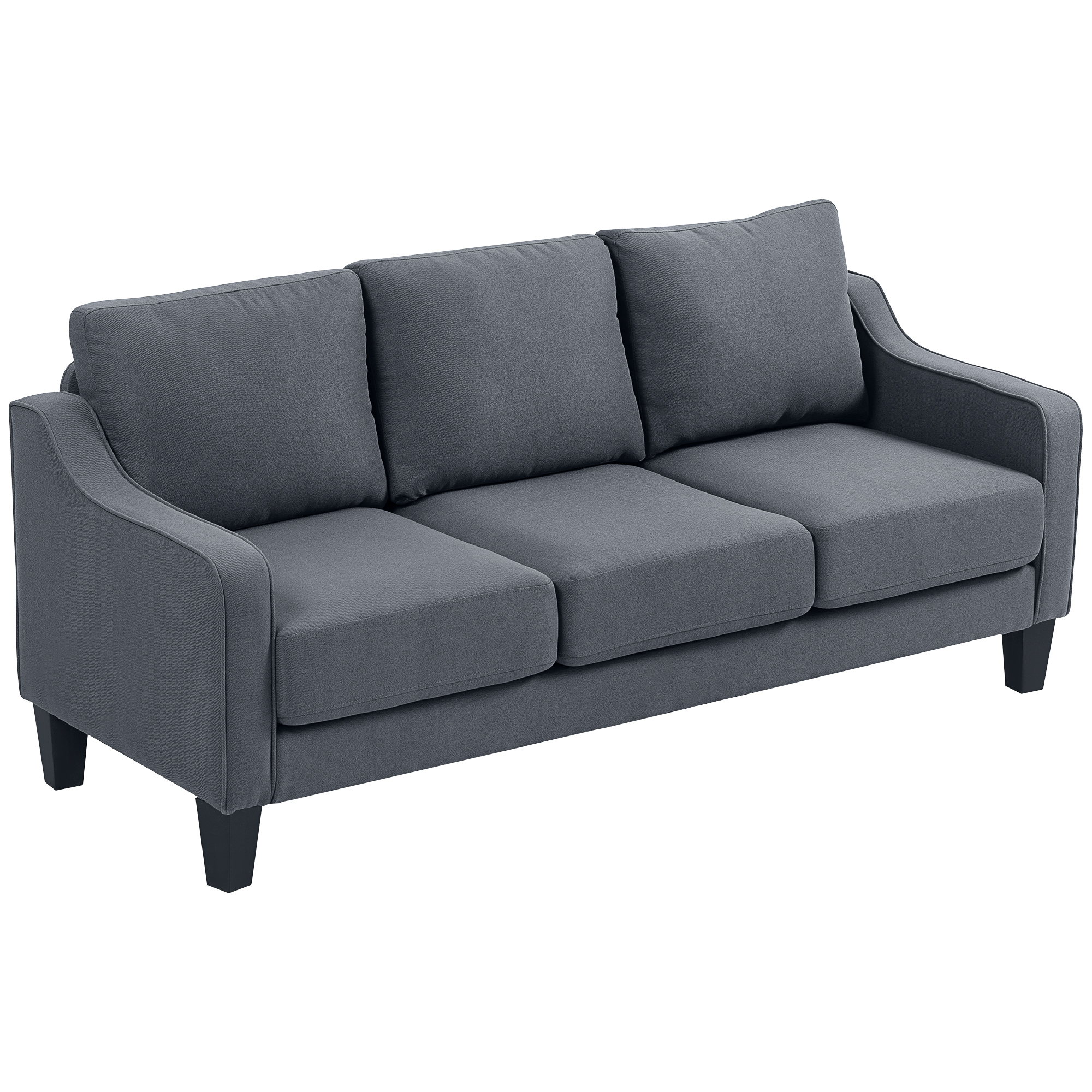
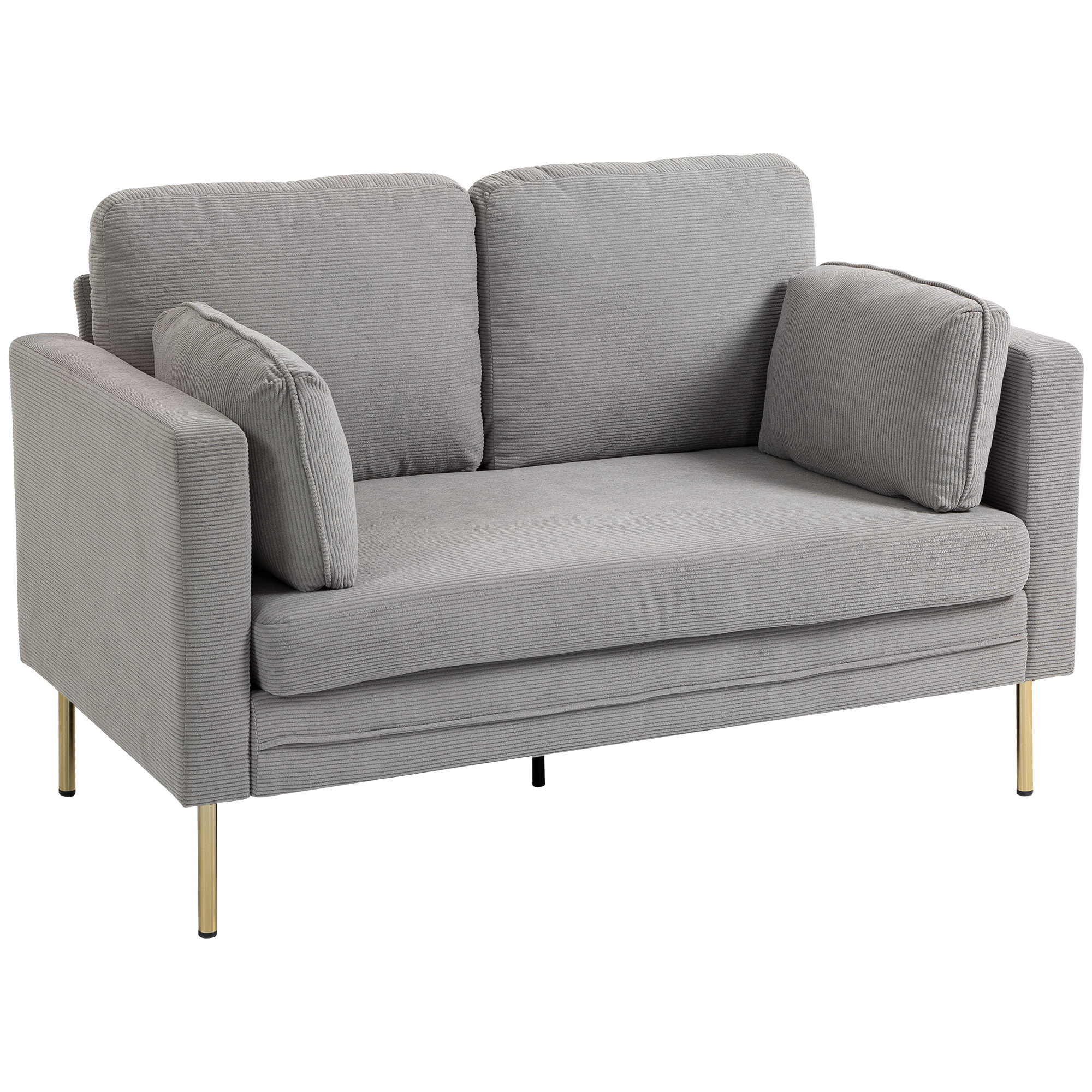
A sofa (also called a couch) is a single upholstered unit, typically seating two to four people, with two arms and a back. It sits against a wall or floats in a space. Standard widths run from about 150 cm (a loveseat) to 240 cm (a large three-seater).
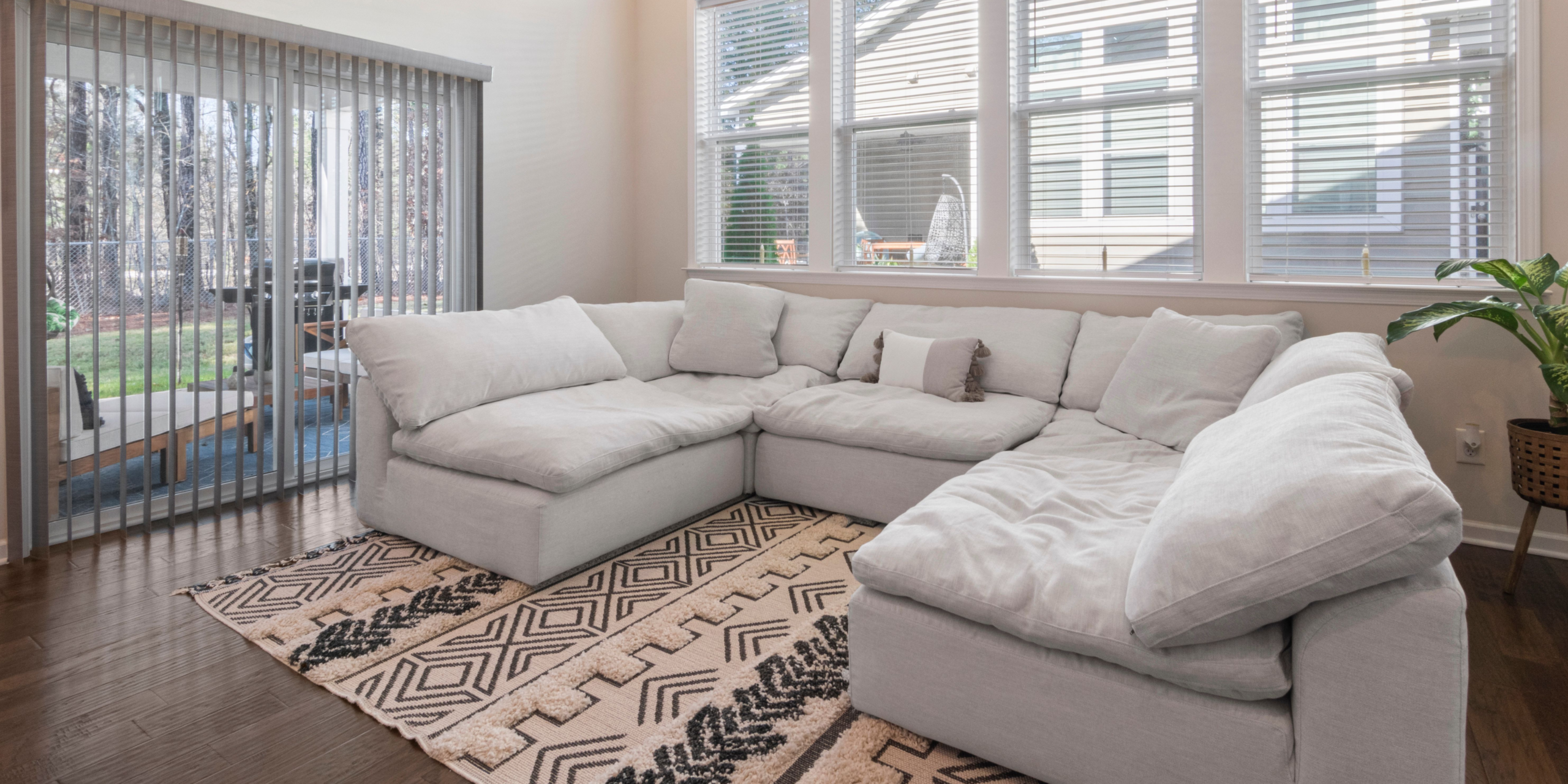
A sectional is a sofa made of multiple connected pieces — typically an L-shape or U-shape — that wrap around a corner or anchor a larger seating area. The chaise end (the extended piece you put your legs on) is what distinguishes most sectionals from a standard sofa with a side table next to it.
Both do the same core job. The question is which one does it better in your specific space.
The Case for a Sofa
1. It works in almost any room size
A sofa’s single-unit format makes it the more universally adaptable choice. It can go against a wall, float in the middle of a room, sit in a bay window, or be paired with accent chairs to build a full seating arrangement. A sectional needs a specific amount of space and a specific layout to work — a sofa is far more forgiving.
For Toronto condos, apartments, and smaller Canadian homes under about 100 square metres, a sofa is almost always the smarter starting point. If you’re working with a genuinely small living room, our dedicated guide on sectional vs. sofa for small living rooms breaks down the exact square footage and layout thresholds that tip the decision one way or the other. The 2/3 rule applies directly: a sofa that takes up two-thirds of the wall it sits against, with room for a coffee table in front and clear walkways on both sides, works in rooms that a sectional would overwhelm.
Knowing your exact room dimensions changes everything.
2. It gives you layout flexibility
A sofa can be repositioned. You can angle it, float it away from the wall, pair it with different chairs, or move it to a different room entirely when your needs change. A sectional is committed to its corner. Once it’s in and arranged, rearranging the room means rearranging a very large L-shaped piece of furniture — which most people never do.
For renters in particular — which covers a significant portion of Canadian city dwellers — a sofa travels from apartment to apartment without the layout constraints a sectional brings. Not every new place will have the right corner for a sectional.
3. It’s easier to pair with accent chairs
A sofa plus one or two accent chairs almost always looks more designed than a sectional alone. The mix of seating heights, scales, and orientations creates visual interest and a room that looks considered rather than defaulted to. Browse our accent chairs collection for options that pair well alongside a standard sofa in a Canadian living room.
4. It’s easier to get through a door
This is a genuinely Canadian-specific concern. Older Toronto homes, narrow stairwells, tight hallways in condo buildings — getting a sectional into some spaces requires either disassembly or a miracle. A standard sofa typically comes in one piece and needs only a doorway wide enough and a path clear enough to navigate. If your building has a narrow elevator or a tricky staircase, factor this in seriously before buying a sectional.
5. Better for smaller budgets
A quality sofa at the mid-range — $800 to $1,500 — is more accessible than a comparable-quality sectional, which typically starts at $1,200 and climbs quickly for anything with good construction. If budget is a constraint, a quality sofa outperforms a budget sectional almost every time.
When a sofa is the right choice:
- Living rooms under approximately 4 x 4.5 metres
- Renters who move regularly
- Open-plan spaces where flexibility matters
- Budgets under $1,500
- Rooms with narrow doorways or tight delivery access
- Spaces where a sofa + accent chair combination makes sense
Shop at Furniture Flip:
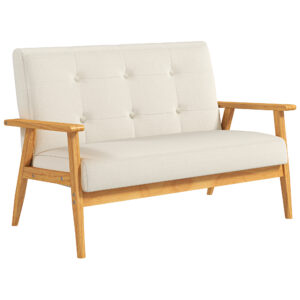
- Classic White Fabric Sofa — Clean-lined, plush cushions, versatile white upholstery that works in almost any living room palette
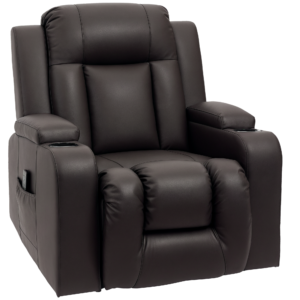
- Luxury Black Leather Recliner Sofa — Premium black leather with cup holders and reclining function. A strong choice for media rooms and family living rooms
- Browse the full sofas and seating collection
The Case for a Sectional
1. It seats more people without feeling crowded
This is the sectional’s core advantage. A standard three-seater sofa seats three people comfortably. A sectional seats five, six, or seven — with the chaise providing a genuinely comfortable lounging position rather than the awkward half-seat at the end of a sofa that nobody wants.
If you regularly have people over, have a family with kids, or just want a living room where multiple people can actually relax rather than perch, a sectional delivers what a sofa fundamentally cannot.
2. It anchors a larger room
In a larger living room — anything over about 4.5 x 5 metres — a standard sofa can get lost. The room feels underfurnished, the seating area feels unanchored, and adding chairs to compensate creates a cluttered look that never quite gels. A sectional fills and defines a larger space in a way that a sofa plus chairs rarely matches.
Open-plan Canadian homes and newer condo layouts with combined living/dining areas particularly benefit from a sectional’s ability to define the “living zone” without walls. The L-shape creates a visual boundary between the seating area and whatever’s beside it — dining table, kitchen, hallway — without needing a room divider.
3. The chaise is genuinely better than a sofa end
Nobody’s favourite seat on a three-seater sofa is the armrest end. The chaise on a sectional replaces that dead-end position with the best seat in the house — a fully extended surface where you can actually lie down, read, or stretch out while the room is still being used. For families, for movie nights, for everyday lounging, the chaise is a meaningful upgrade in daily quality of life.
4. Multi-functional sectionals solve multiple problems at once
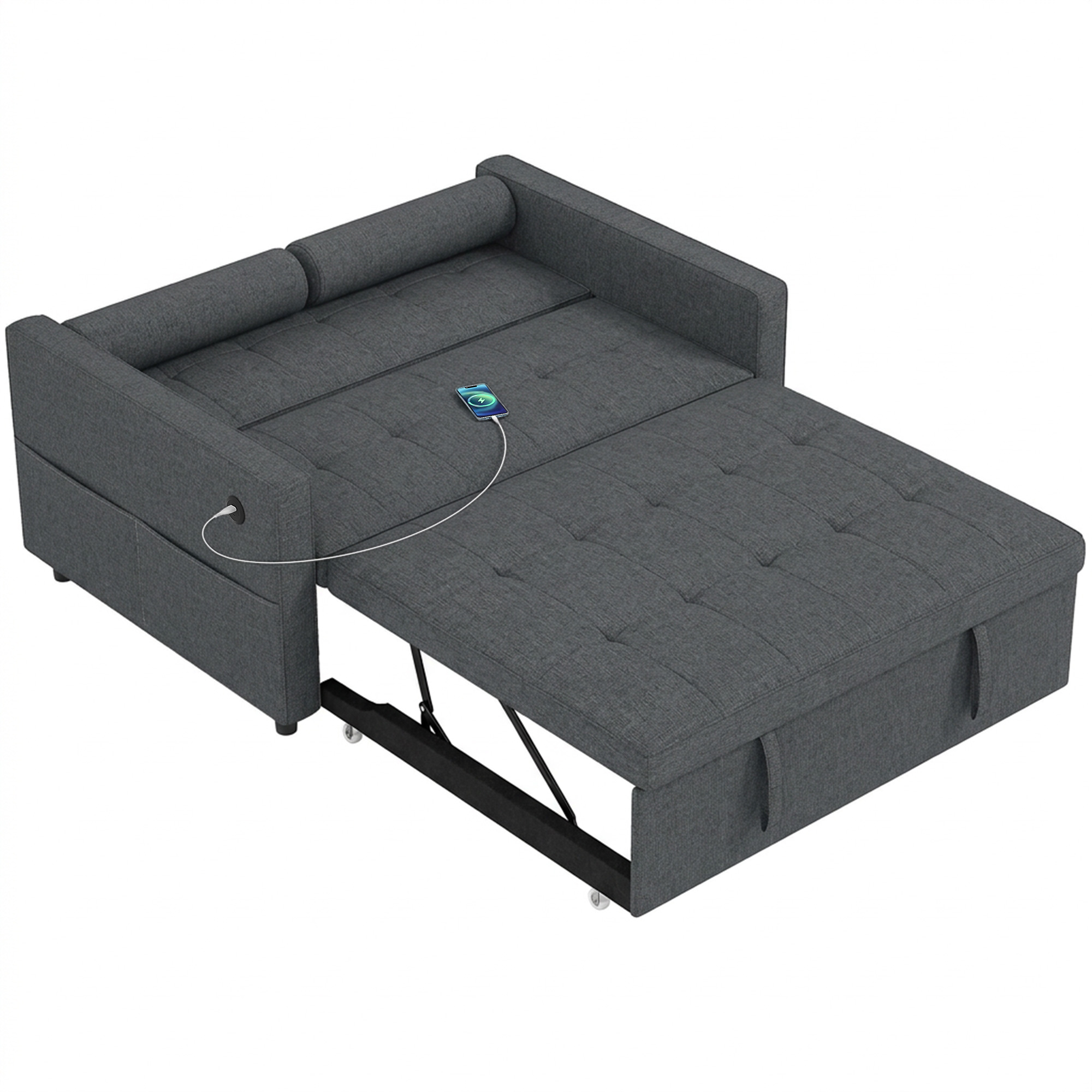
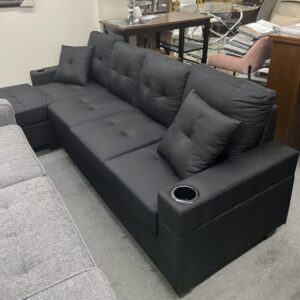
Many sectionals — particularly in the mid-range — now come with built-in storage in the chaise, cup holders in the armrests, and sleeper function for guests. That combination is hard to beat in a Canadian condo where space is limited and every piece needs to do more than one job.
The Black Fabric Sectional Sofa with Chaise Storage & Cup Holders at Furniture Flip is a strong example — hidden chaise storage, built-in cup holders, and it converts to a sofa bed for overnight guests. Three functions in one footprint is genuinely compelling for a small-space buyer.
5. It can eliminate the need for additional seating
A well-sized sectional in the right room means you don’t need accent chairs, additional loveseats, or supplementary seating pieces. That consolidation can actually save money and floor space compared to buying a sofa plus the chairs required to seat the same number of people at comparable quality.
When a sectional is the right choice:
- Living rooms of approximately 4.5 x 5 metres or larger
- Families or households that regularly seat four or more people
- Open-plan layouts that need visual zone definition
- Anyone who prioritizes lounging and everyday comfort over formal seating
- Buyers who want built-in storage, sleeper function, or cup holders
- Homeowners (not renters) who won’t need to move the piece frequently
The Decision Framework: 5 Questions to Ask Yourself
If you’re still undecided after the above, work through these five questions. They’ll land you in the right camp almost every time.
Question 1: What are your room dimensions?
Measure your living room before you read another word of this guide. The decision is often made for you by the numbers.
- Under 3.5 x 4 metres: sofa only — a sectional will dominate
- 3.5 x 4.5 metres: sofa is safer, small sectional possible with careful planning
- 4.5 x 5 metres and above: sectional becomes the natural anchor choice
Always leave at least 80–90 cm of clear walkway around any seating piece. If a sectional’s footprint leaves less than that on any navigable side, it’s too large for the room.
Question 2: How many people do you regularly seat?
- 1–3 people daily: a sofa is sufficient
- 4–5 people regularly: a large sofa or small sectional
- 5+ people regularly or frequently hosting: sectional
Question 3: Do you rent or own?
Renters: lean sofa. You’ll thank yourself at the next move.
Owners: sectional becomes more viable — you’re buying for the long term in a space you control.
Question 4: What’s your layout — against a wall or floating?
- Sofa against a wall: works perfectly for a standard sofa, less naturally for a sectional
- Floating in the middle of a room: both work, but a sectional creates a better anchored arrangement in larger spaces
- Corner placement available: this is where a sectional shines — it fills a corner naturally and elegantly
Question 5: What’s your budget?
- Under $1,000: sofa — a quality sofa exists at this price point; a quality sectional generally does not
- $1,000–$2,000: both are viable; a mid-range sectional with solid construction is accessible here
- $2,000+: both categories offer excellent options; choose based on space and lifestyle rather than budget
The Option Most People Overlook: Sofa + Chaise Lounge
There’s a third option worth mentioning that solves the core problem many buyers face: wanting the chaise comfort of a sectional without the full sectional footprint.
A standard sofa paired with a separate chaise lounge or a large storage ottoman gives you the lounging function of a sectional at a smaller total footprint and with more layout flexibility. The two pieces can be positioned together or separated depending on who’s in the room and what’s happening. It’s a particularly smart solution for rooms that sit between the “too small for a sectional, too large for just a sofa” zone.
Sizing Either Choice Correctly
Whichever you choose, sizing it correctly for the room is non-negotiable. The most common living room mistake — with both sofas and sectionals — is buying the wrong size.
For a sofa: Target two-thirds of the wall it sits against. A 3.6-metre wall calls for a sofa around 240 cm wide. A 3-metre wall calls for something closer to 200 cm. Going significantly smaller makes the room feel underfurnished; going larger makes it feel cramped.
For a sectional: The L-shape needs to fit the room with at least 80–90 cm of clear walking space on the open sides, and at least 40–50 cm between the chaise end and any coffee table. Tape out the footprint on your floor before ordering — it takes ten minutes and prevents a very expensive mistake.
What About Quality? Sectional or Sofa, the Construction Rules Are the Same
The sectional vs. sofa decision is about fit and function. The quality decision is entirely separate — and equally important.
Whether you’re buying a sofa or a sectional, the same construction standards apply: kiln-dried hardwood frame, sinuous spring or eight-way hand-tied support system, high-density foam cushions (at least 1.8 lbs per cubic foot), and a fabric with a rub count appropriate for your household’s use. Our detailed guide on how to choose a sofa that lasts covers every quality indicator to check before buying — it applies equally to sectionals.
The biggest quality risk with sectionals specifically is the connection hardware between sections. Cheap sectionals use thin metal clips that loosen over time, causing sections to separate during normal use. Ask how sections connect before you buy, and look for interlocking hardware rather than simple clips.
The Bottom Line
Choose a sofa if: your room is under 4.5 metres wide, you rent, you move regularly, you’re working with a tighter budget, or you want the flexibility to pair seating with accent chairs and rearrange over time.
Choose a sectional if: you have the room for it (genuinely — measure first), you regularly seat four or more people, you own your home and plan to stay, or you want the lounging comfort of a chaise without compromise.
Either way, buy quality construction over attractive pricing, get your measurements right before you order, and don’t rush the decision. Your living room seating is the piece of furniture you’ll interact with more than any other in your home. It’s worth getting right.
Browse the full sofa and seating collection at Furniture Flip — sofas, sectionals, and accent chairs with exact dimensions listed so you can match every piece to your space before buying.
For independent guidance on Canadian consumer rights when buying large furniture pieces online or in-store, the Office of Consumer Affairs Canada publishes free resources covering warranties, returns, and what retailers are required to disclose.
Also worth reading: How to choose a sofa that lasts — once you’ve decided which format is right, here’s how to make sure you’re buying one built to last. And for a closer look at this exact decision in tighter square footage, see our guide on sectional vs. sofa for small living rooms.
Take a look at these picks!