How to Mix Wood Tones in Your Home Without It Looking Like a Mistake
Most people treat mixing wood tones as a mistake to avoid. They spend months hunting for dining chairs that match their table exactly. They pass on a dresser they love because the finish is slightly off from their bed frame. The result is a home that is technically consistent but somehow feels flat and a little lifeless.
Here is the reality: mixing wood tones is not the mistake. Mixing them without intention is the mistake. The rooms that look the most considered and the most layered almost always have multiple wood tones working together. The difference between a room that looks designed and one that looks accidental comes down to a few straightforward principles.
Why Perfect Matching Usually Backfires
When every wood surface in a room is the same tone, the eye has nothing to move between. There is no contrast, no depth, and no visual interest. Beyond aesthetics, perfect matching across different furniture pieces is nearly impossible in practice. Wood is a natural material and stain formulas vary between manufacturers. Two pieces both labelled walnut from two different stores will not look identical in your home.
Near-miss matching — where two pieces are clearly trying to match but falling slightly short — looks worse than intentional mixing. Deliberate contrast reads as a design decision. An almost-match reads as an error.
The Core Rule: Spread the Contrast
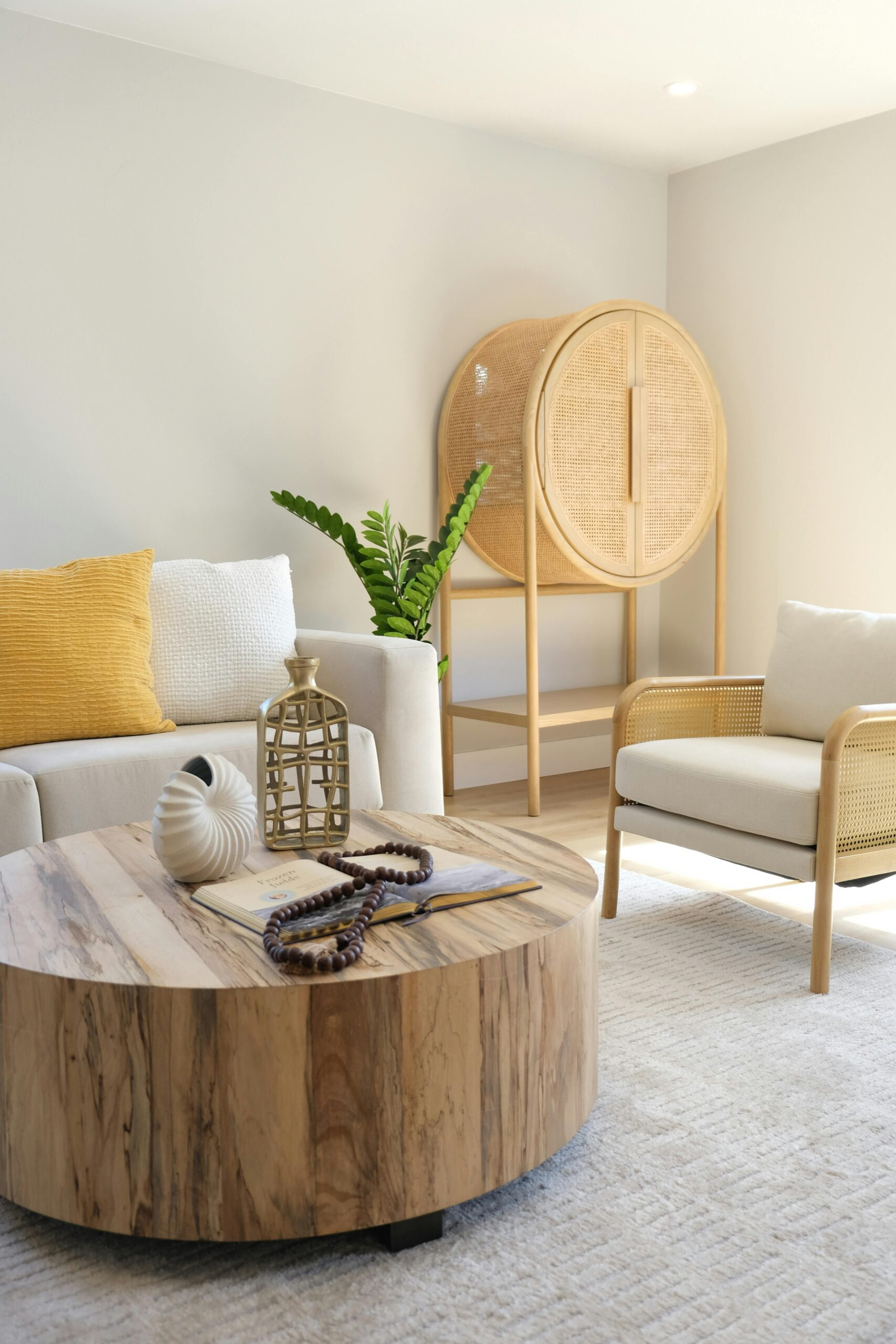
The most important principle when mixing wood tones is to distribute contrast rather than concentrate it. If two different wood tones sit directly beside each other with nothing in between, the difference between them becomes the focal point of the room. Spread them across different zones and let neutral elements — rugs, upholstery, walls — sit between them, and the eye reads the room as a composed whole.
A practical example: a light oak dining table paired with dark walnut chairs sitting right on top of it creates an uncomfortable contrast. That same light oak table paired with a walnut sideboard across the room reads as intentional layering because there is visual breathing room between the two tones.
How Many Wood Tones Work in One Room
Two to three distinct wood tones is the range that works best for most rooms. One tone tends to feel flat and four or more start competing with each other. Within your palette, aim for clear contrast rather than close similarity — a light, a medium, and a dark tone read as a composed range, while two tones that are close in value will read as a near-miss match rather than an intentional pairing. As covered in Studio McGee’s guide to mixing wood tones, using only one wood tone throughout a space can make the design fall flat and lack the dimension that a balanced mix of tones brings.
Undertones Matter More Than You Think
Wood tones have undertones the same way paint colours do, and undertones have more influence on whether pieces feel harmonious than the overall light-to-dark value does. The main divide is warm versus cool — warm-toned woods like honey oak, teak, and golden maple carry yellow, orange, or red in them, while cool-toned woods like grey-washed oak and whitewashed pine carry grey or blue. As noted in Room and Board’s wood mixing tips, combining woods that share a warm or cool undertone is one of the most reliable ways to keep a space feeling unified even with multiple finishes in play.
What to Do With Your Floors
Your floors are the largest wood surface in most rooms and they set the undertone baseline for the entire space. The most useful thing you can do when mixing wood tones is stop trying to match your furniture to your floors. Your floors are not going to change. The furniture you add should contrast with them in a complementary way rather than replicate them.
Dark floors pair well with lighter furniture tones. Light floors pair well with medium-to-dark furniture. Medium floors — the most common in Canadian homes — work with both lighter and darker furniture as long as there is clear contrast between floor and piece.
A medium honey oak floor with a medium honey oak dining table is the scenario that causes the most frustration. The pieces are not quite matching but too similar to read as intentional. The fix is to move the furniture tone clearly in one direction — lighter or darker — until the contrast is deliberate.
Practical Combinations That Work
These pairings consistently produce cohesive results across a range of Canadian home styles. Light oak and dark walnut is the highest contrast warm-family combination and one of the most versatile — keep the light oak as the larger piece and walnut as the accent or anchor. For walnut-finish accent pieces that work well as contrast anchors in mixed-tone living rooms, browse the coffee tables at Furniture Flip. Honey maple and medium walnut is a slightly warmer and softer combination that suits homes with natural wood floors well. Whitewashed oak and espresso suits more modern interiors but requires neutral upholstery and textiles between the two pieces to prevent the room from feeling stark.
The Unifying Elements That Hold It Together
Mixed wood tones need something else in the room doing the work of unification. Rugs, upholstery, textiles, and wall colour are what pull different wood tones into a single cohesive room. A warm cream or oatmeal rug under a mixed-tone living room setup creates a neutral base that lets different wood tones sit within the same visual frame. For upholstered pieces in neutral tones that bridge mixed wood finishes in living rooms and open-plan spaces, browse the sofa collection at Furniture Flip.
The Bottom Line
Mixing wood tones is not a risk to manage. It is a design decision to make with intention. Choose two to three tones with clear contrast. Keep them within the same undertone family where possible. Spread the contrast across the room rather than concentrating it in one spot. And let the neutral elements — rugs, textiles, upholstery — do the work of pulling everything into a cohesive whole.
Done right, a room with mixed wood tones looks more layered, more considered, and more like a home than a room where every piece was chosen to match.
Take a look at these picks!