Console Tables That Work Hard: Entryway, Living Room & Hallway Ideas for Canadian Homes
A console table is one of the most underestimated pieces of furniture you can put in a Canadian home. It’s narrow enough to fit almost anywhere, functional enough to do several jobs at once, and versatile enough to move from room to room as your needs change.
And yet most people either overlook it completely or treat it as a purely decorative afterthought — a surface to pile things on that eventually becomes a dumping ground for mail and takeout menus.
Done right, a console table is one of the hardest-working pieces of furniture in your home. This guide covers exactly how to use one in every key location — entryway, hallway, and living room — with practical ideas, styling tips, and real products available right now at Furniture Flip.
What Makes a Console Table Different From Other Tables
Before getting into placement, a quick clarification: a console table is defined by its proportions. It’s shallow (typically 30–45 cm deep), standing height (75–85 cm tall), and designed to sit against a wall rather than float in the centre of a room. That narrow footprint is the whole point — it adds function and presence to a space without eating floor area.
Unlike a side table (too small, too low) or a dining table (too large, too deep), a console table occupies a specific niche: the wall-hugging, room-defining, multi-purpose workhorse that most rooms are better for having.
Sizing guidance before you buy:
- Width should be proportional to the wall — ideally no more than 2/3 of the wall length (see our furniture sizing rules guide for the full breakdown)
- Depth should be under 40 cm in hallways and entryways to keep traffic flowing
- Height should align with the back of your sofa (if used as a sofa table) or sit just below shoulder height for visual comfort in open spaces
Use 1: The Entryway Console Table
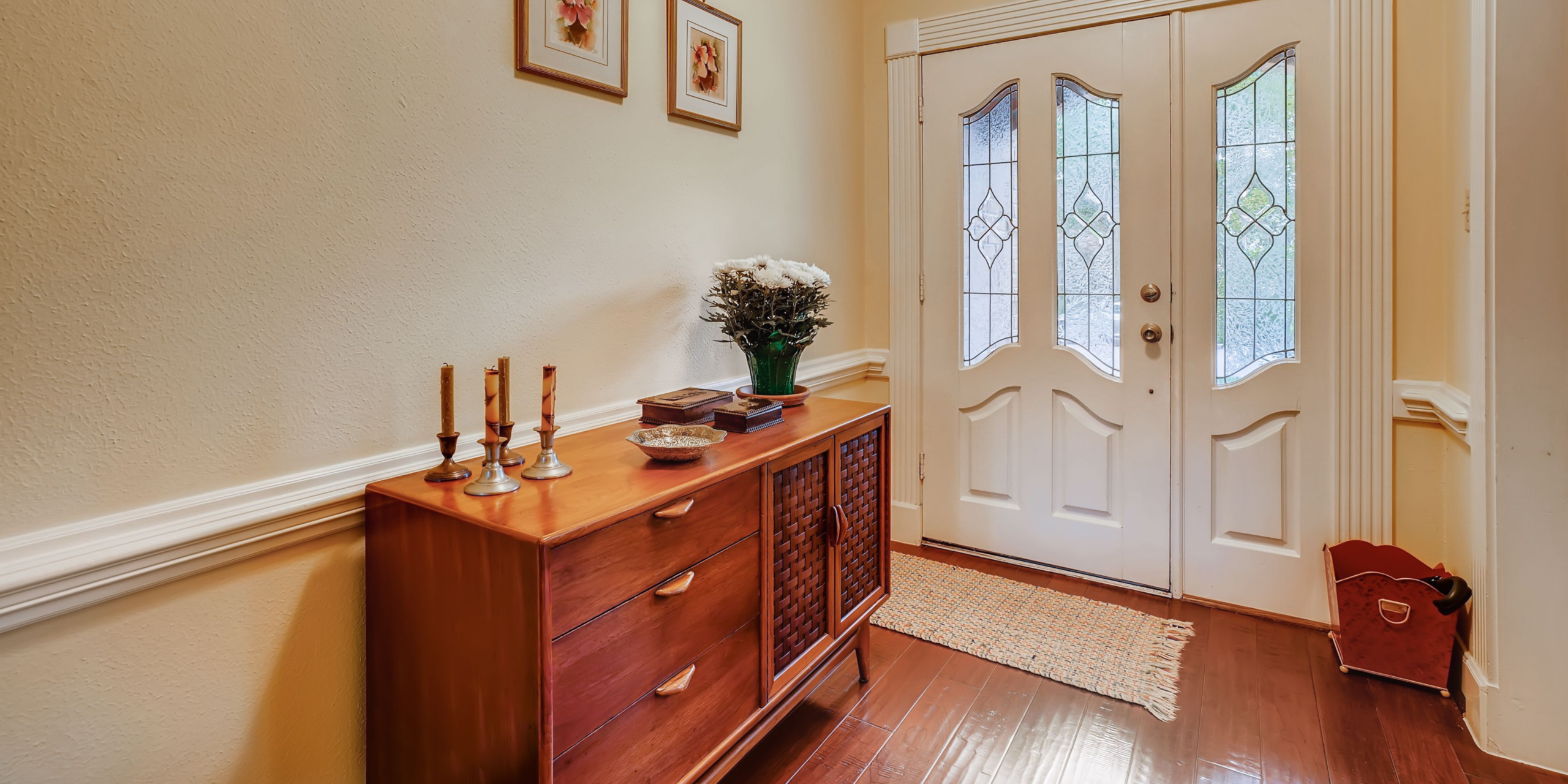
The entryway is the first and last thing you interact with every time you leave or come home. In most Canadian homes — particularly condos, townhouses, and apartments — it’s also a chokepoint: a narrow strip between the front door and the rest of the living space where everything accumulates.
A console table solves this immediately. It gives the entryway purpose, creates a landing zone for the things that would otherwise pile up on the floor or the kitchen counter, and — critically — signals to guests that this is a considered home, not a hallway with furniture pushed against the walls.
What to put on an entryway console table:
A lamp or wall sconce above it for ambient evening light. A small tray or bowl for keys, transit cards, and earbuds. A mirror above it (a mirror in the entryway makes the space feel larger and lets you check yourself before heading out). One or two plants if the light allows. A small basket or drawer below for everyday bag storage.
What NOT to do: Don’t let it become a dumping surface. If your entryway console doesn’t have storage — a drawer or a shelf — it will fill up with clutter within a week. Choose one with at least a lower shelf or a single drawer.
The Canadian-specific consideration: Canadian entryways handle more than most. Winters mean wet boots, heavy coats, scarves, and mitts. If your entryway console is in close proximity to where outerwear lands, pair it with a storage bench in front and hooks above — turning the whole wall into a functional mudroom zone without dedicating a room to it.
Shop at Furniture Flip:
The Odyssey Console Table is a standout entryway choice — handcrafted from 100% solid mango wood in a warm chestnut finish, with a smooth circular design, brass knob drawer for hidden storage, and a lower shelf for basket storage or display. At $416.99 (on sale), it’s solid wood construction at a mid-range price that will hold up to daily entryway use for years. Dimensions: 70 x 40 x 80 cm — narrow enough for tight Canadian entryways.
Browse the full console table collection at Furniture Flip — in solid wood, modern, and transitional styles.
Use 2: The Hallway Table
A long, narrow hallway is one of the trickiest spaces in any home to furnish. Too much furniture makes it feel like an obstacle course. Too little makes it feel cold and institutional — a corridor rather than a part of the home.
A slim console table placed midway down a hallway does something powerful: it breaks the tunnel effect, creates a focal point, and makes the hallway feel like it belongs to the home rather than just connecting rooms. Paired with art above it or a mirror, it transforms a functional corridor into a designed space.
Key rules for hallway console tables:
Keep depth under 35 cm — you need at least 90 cm of clear walkway on either side of the table, and hallways are rarely wider than 120–150 cm. A table that juts out too far creates a bottleneck you’ll resent every day.
Keep the top styled but not cluttered. A hallway table is not an entryway landing zone — it’s a display moment. A vase, a candle, a small framed photo, or a single sculptural object. That’s enough. More than that and the hallway feels cramped.
Consider the view from both ends of the hallway. Unlike a living room where you approach furniture from one direction, a hallway table is seen from two angles. Make sure the table looks intentional from both.
Lighting matters more in hallways than anywhere else. Hallways in Canadian homes are often underlit — windowless or relying on a single overhead fixture. A lamp on the console table adds warm ambient light that completely changes the feel of the space. If there’s no outlet conveniently placed, a battery-operated lamp or a plug run discreetly along the baseboard works.
Shop at Furniture Flip:
The London Console Table brings a distinct character to a hallway — a piece with enough visual presence to be a focal point without overwhelming a narrow space. Check the exact dimensions on the product page to confirm fit before ordering.
For a more natural, warm hallway look, the Odyssey Console Table in mango wood and chestnut finish adds organic texture that works well in both modern and traditional Canadian homes.
Use 3: The Living Room Sofa Table
This is the console table use that most people don’t think of — and the one that delivers the most design impact in an open-plan space.
A console table placed directly behind your sofa (with 5–10 cm of clearance between the sofa back and the table edge) creates something a sofa floating in the middle of a room almost never achieves: a visual anchor. The sofa stops looking like it was pushed randomly into the space. It looks placed. Intentional. Like part of a considered layout.
Beyond aesthetics, a sofa table behind the couch is genuinely functional:
A lamp on either end creates warm flanking light that fills the room far better than a single overhead fixture. A row of books, plants, or candles adds a layered backdrop to the seating area. The surface catches remotes, reading glasses, and drinks — without requiring you to reach all the way to a side table.
In open-plan Canadian condos where the living room, dining area, and kitchen share one continuous space, a console table behind the sofa also creates a physical and visual dividing line between the “living zone” and whatever’s behind it. It’s a room divider that takes up virtually no floor space.
Sizing for a sofa table: Match the width of the console table to roughly the width of your sofa. For a 200 cm sofa, a 150–180 cm console table looks intentional. Going significantly narrower looks like a mismatch; going wider creates visual clutter. Height should be at or just below the sofa back — typically 75–85 cm.
Shop at Furniture Flip:
The Odyssey Console Table works beautifully as a sofa table — the mango wood construction is solid enough to hold lamps without wobbling, the lower shelf provides display space for books or baskets, and the warm chestnut finish pairs with a wide range of sofa upholstery colours. Confirm the width fits behind your specific sofa before ordering.
How to Style a Console Table in Any Room
Regardless of where you place it, the styling principles for a console table are consistent:
Work in odd numbers. Three objects on a console table almost always look better than two or four. The asymmetry creates visual interest without looking chaotic.
Vary height. A tall lamp, a medium-height vase, and a low tray or book gives the eye a path to travel. Everything at the same height looks flat.
One statement, two supporting. Lead with one strong focal piece — a lamp, a piece of art, a large plant — and let two smaller pieces support it rather than compete.
Leave breathing room. A console table that’s fully loaded from edge to edge looks cluttered. Leave at least a third of the surface empty. White space is part of the composition.
Use a mirror or art above it. A console table without something above it looks unfinished. The classic choice is a mirror — particularly in hallways and entryways, where it adds depth and light. In a living room, a piece of art or a gallery wall above the sofa table creates a full vignette.
Choosing the Right Console Table for Your Canadian Home
Not all console tables are equal — and in Canada, where homes range from heritage brick townhouses in Toronto to west coast open-plan condos to newer suburban builds, the right table depends on your specific context.
Material: Solid mango wood is our top recommendation for its durability, sustainability (mango is harvested from trees that no longer produce fruit), and the warm, characterful grain that improves with age. Read our guide on solid wood vs. wood-like furniture before buying if you’re unsure what you’re getting.
Style: For modern and transitional Canadian interiors, a clean-lined piece with tapered legs and minimal hardware keeps the visual weight light. For warmer, more traditional spaces, a chestnut or walnut finish with brass hardware reads as more established and considered.
Storage: For entryways especially, choose a table with at least one drawer or a lower shelf. A purely decorative console is a liability in high-traffic spots — it will collect clutter regardless of your best intentions.
Depth: The most common sizing mistake with console tables is buying one too deep for the space. In a hallway or entryway under 150 cm wide, stick to tables under 35 cm deep. In a living room used as a sofa table, 35–45 cm is comfortable.
The Bottom Line
A console table is one of the most efficient pieces of furniture you can put in a Canadian home. It earns its footprint in the entryway, transforms a hallway, and anchors a floating sofa arrangement — all without taking up meaningful floor space.
The key is choosing the right one for the right location, sizing it correctly, and styling it with some intention rather than letting it become a surface for whatever lands on it first.
Browse the full console table collection at Furniture Flip — 14 options in a range of styles, materials, and price points, all with exact dimensions listed so you can match them to your space before buying.
For more small-space furniture ideas, read our guide on 10 multi-functional furniture pieces every small-space dweller needs and our post on how to furnish a Toronto condo without it feeling cramped.
For independent styling inspiration, Architectural Digest’s entryway design guide is one of the most comprehensive free resources available for Canadian and North American homes.
Also worth reading: The 2/3 rule for furniture and 5 other sizing rules every Canadian renter should know — so you buy the right size the first time.
Take a look at these picks!