Best TV Stands and Media Consoles for Canadian Living Rooms
Most Canadians spend more time choosing what goes on the TV stand than choosing the TV stand itself. That’s backwards.
The stand holds your most expensive living room purchase, sits at eye level in the most-used room in your home, and defines the visual anchor point of the entire space. A TV stand that’s the wrong width, wrong height, or built from materials that deteriorate in two years makes itself known every single day.
This guide covers what to look for, how to size correctly, and the best options available at Furniture Flip right now across different styles and budgets.
What to Look for Before You Buy
Width — Bigger Than You Think
Your media console should be wider than your TV — at minimum 15 cm on each side. A 65″ TV measures approximately 145 cm wide. That means a console of at least 160–175 cm. A TV overhanging its stand looks visually unstable and practically is — it shifts the weight distribution in a way that creates real risk.
If you’re unsure, measure your TV width first. Then look for a console that comfortably exceeds it.
Height — Eye Level When Seated
The centre of your TV screen should sit at approximately 100–110 cm from the floor when you’re seated. Most media consoles sit between 45–55 cm tall. On a 55 cm console with a 65″ TV (screen height approximately 82 cm), the screen centre lands at about 96 cm — right in the target range.
Wall-mounting a TV above a fireplace is the most common setup mistake in Canadian homes. It puts the screen 30–40 cm too high for comfortable viewing and causes neck strain over any extended watching session.
Storage — More Than You Think You Need
Every household has more media-adjacent clutter than it admits to: gaming consoles, streaming sticks, soundbar remotes, charging cables, game cartridges, DVD collections that nobody’s watched in five years but nobody will throw out. A console with a mix of enclosed cabinet storage and open shelving handles all of it without the living room looking like a tech depot.
Closed doors hide what needs hiding. Open shelves display what’s worth displaying. The best media consoles offer both.
Cable Management
Rear cable management holes are non-negotiable. Without them, every cable between your TV, soundbar, streaming device, and console runs visibly down the back of the unit and across the floor. A console with properly positioned cable channels keeps everything routed cleanly.
Construction
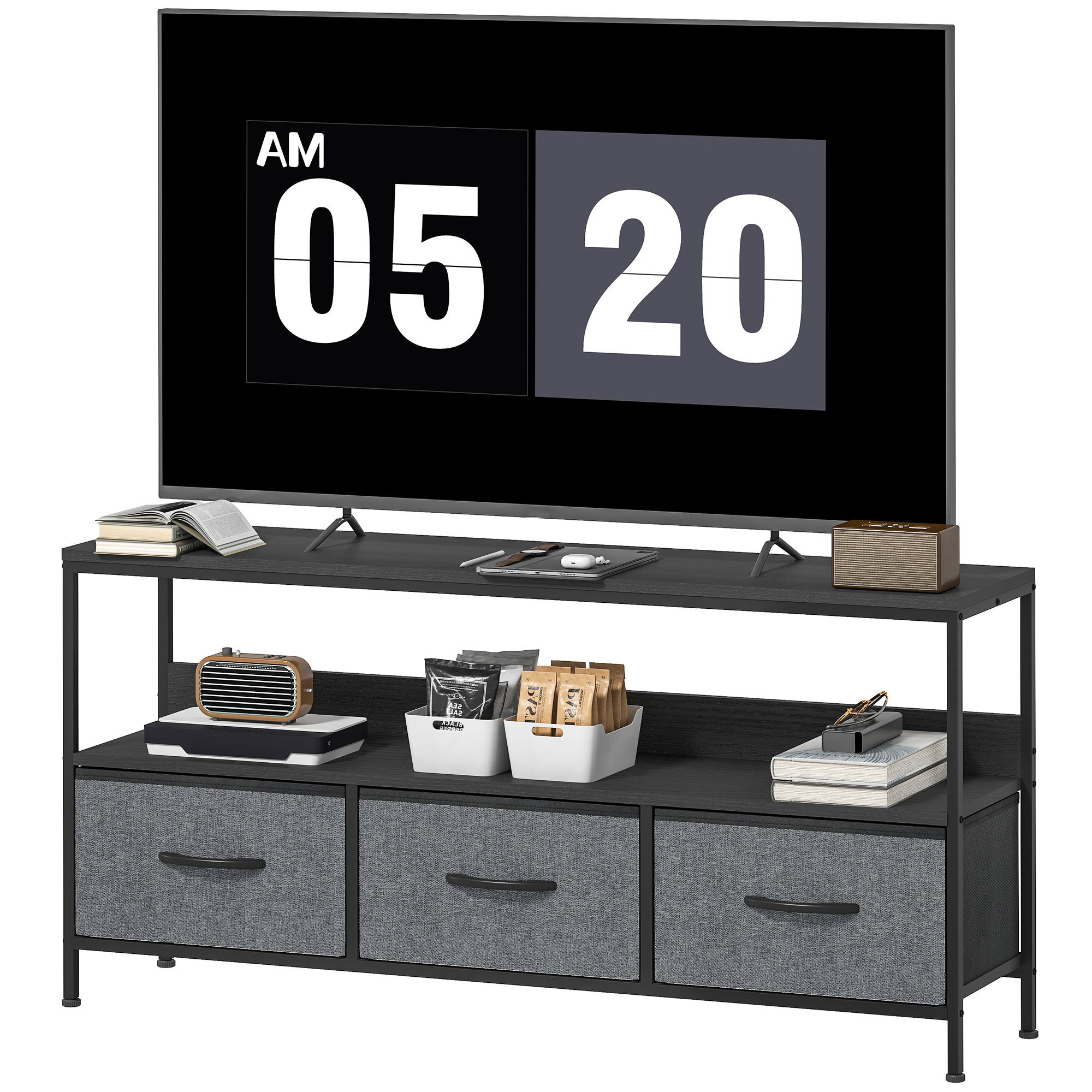
At mid-range prices, most media consoles use engineered wood — MDF, particleboard, or plywood — with a laminate, veneer, or solid wood surface. That’s fine. What matters is the quality of the surface material and the edge finishing. Thick edge banding prevents the chipping and peeling that’s the most common failure mode in budget media units. Soft-close drawers and hinges signal quality construction that will hold up to daily use.
For the full quality assessment framework that applies to any furniture purchase, read our guide on how to tell if furniture is actually good quality before you buy it.
TV Stand vs. Media Console vs. Entertainment Centre — Which Do You Need?
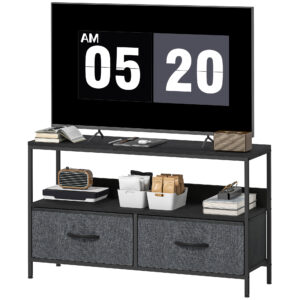
TV stand: A basic unit designed primarily to hold the TV, with minimal storage. Fine for secondary rooms and smaller setups where storage isn’t the priority.
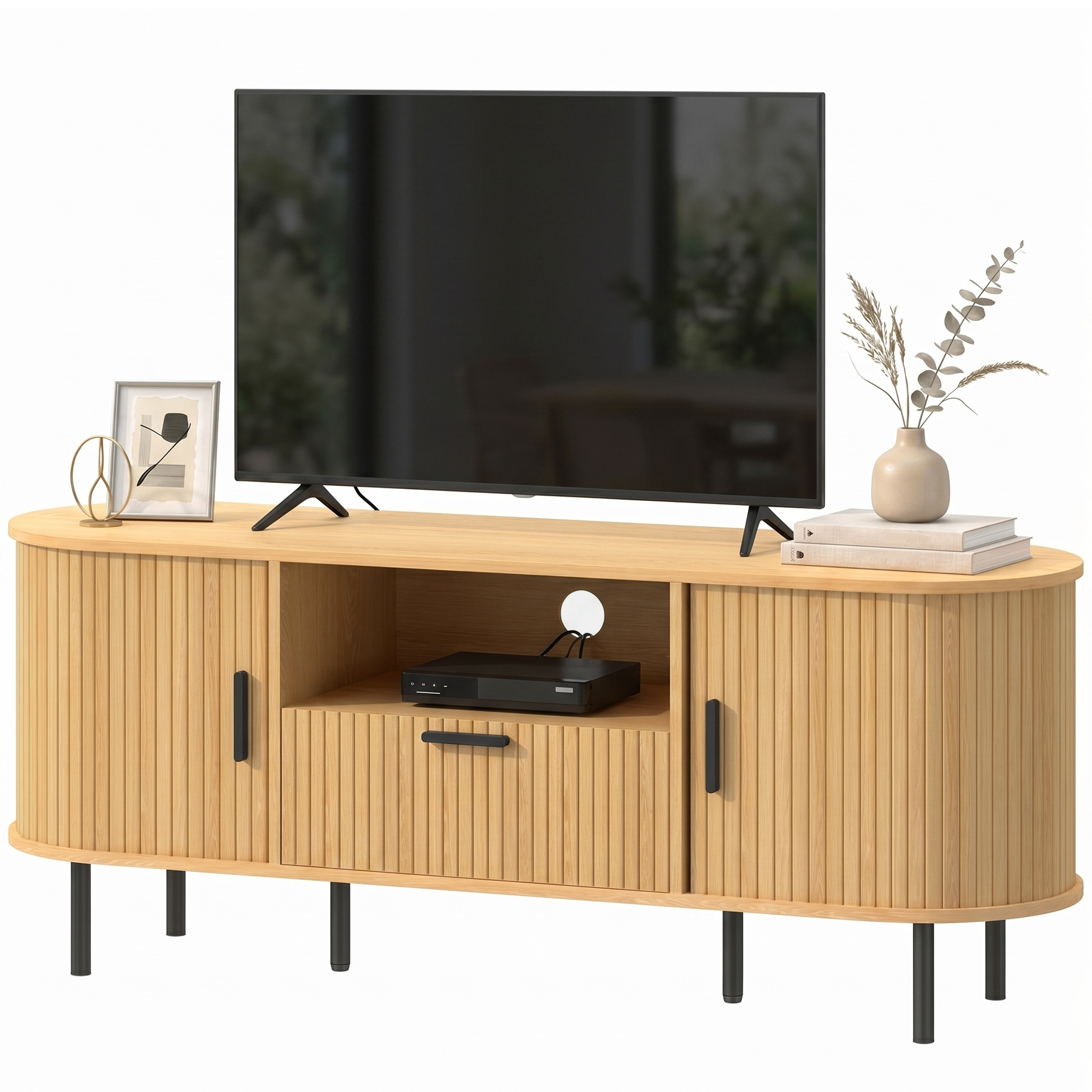
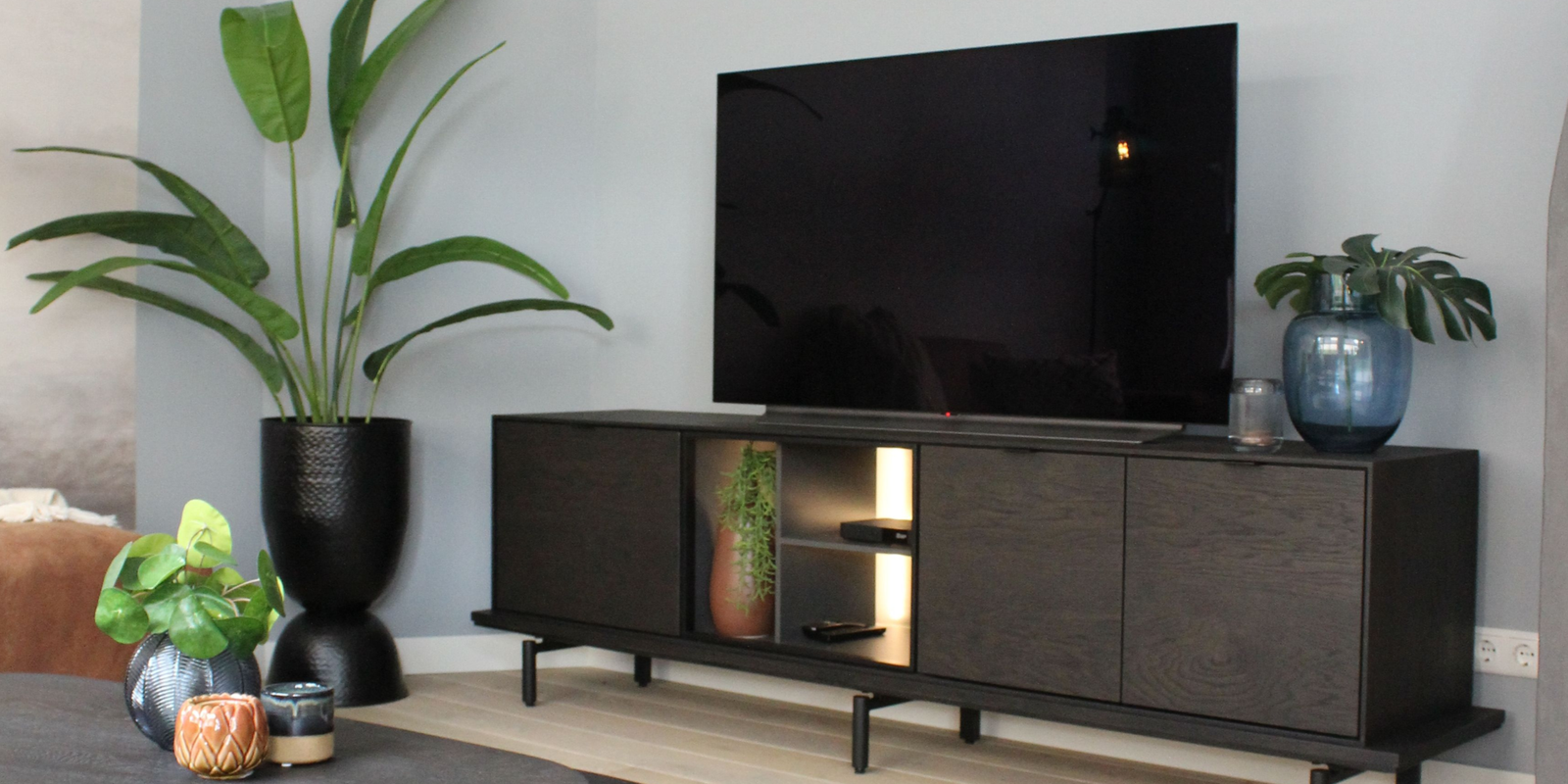
Media console: The sweet spot for most Canadian living rooms. Lower profile, longer width, mix of open and closed storage. Designed to anchor the room visually while organizing everything that goes with the TV.
Entertainment centre: A full-width wall unit with the TV housed in a central bay surrounded by shelving and cabinet storage on both sides. Best for large living rooms where storage capacity and visual impact are both priorities. Takes up significant wall space — confirm your room can accommodate the footprint before buying.
The Best Media Consoles and TV Stands at Furniture Flip
For Most Canadian Living Rooms — Media Consoles
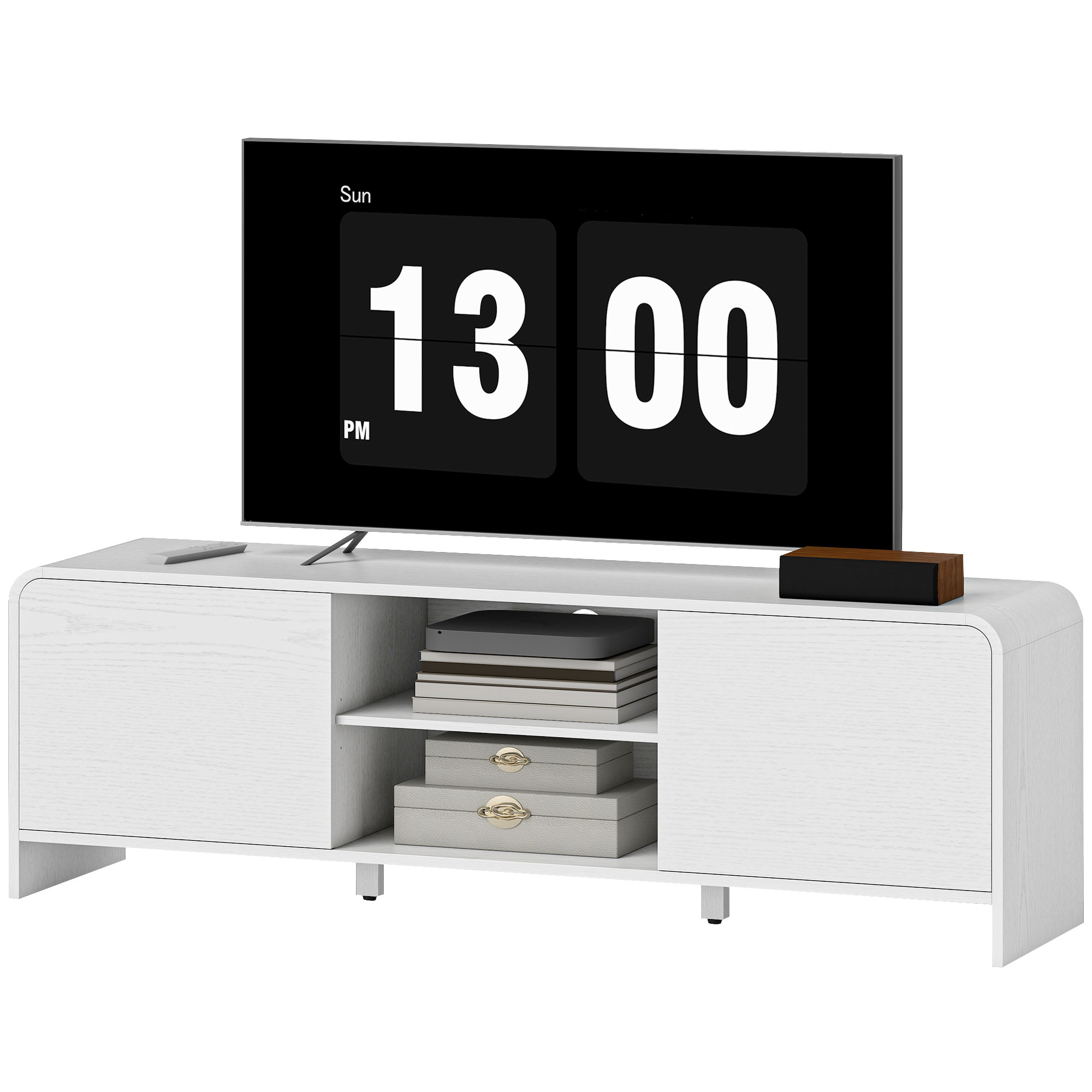
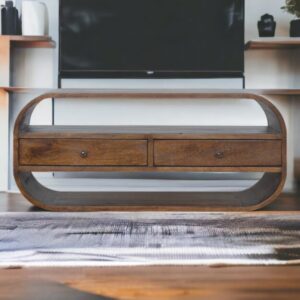
Furniture Flip’s media console collection covers seven options across a range of styles — from clean contemporary profiles to warmer wood-tone finishes suited to transitional and MCM-influenced living rooms.
Every listing includes exact dimensions so you can verify width against your TV and wall space before ordering. For most Canadian condo and apartment living rooms where one wall is dedicated to the TV setup, a properly sized media console from this range is all you need.
What to check on each listing: width relative to your TV, the mix of open versus closed storage, and whether rear cable management is included. These three things determine daily functionality more than any aesthetic consideration.
Browse the media console collection
For Larger Living Rooms — Entertainment Centres
If your living room can carry a full wall entertainment centre — typically rooms with a dedicated TV wall of 3 metres or wider — Furniture Flip’s entertainment centre collection provides the storage capacity and visual presence that a standalone media console can’t match at scale.
An entertainment centre works best when the TV wall is the clear focal point of the room with no competing architectural features — no windows flanking it, no doorways interrupting the wall run. In that context, a full entertainment centre makes the living room feel resolved rather than assembled.
Before ordering, confirm the total width fits your wall with at least 30 cm of clearance on either side. An entertainment centre that runs wall to wall in a tight space looks cramped rather than considered.
Browse the entertainment centre collection
Getting the Setup Right Around the Console
The media console is the anchor. What surrounds it determines whether the whole wall looks finished.
TV proportions. Your TV should be sized for comfortable viewing distance — multiply the screen size in inches by 2.5 for the minimum comfortable distance in inches. A 65″ TV needs at least 163 cm between screen and sofa. If the room is tighter than that, a smaller TV produces a better viewing experience than a larger one that fills your peripheral vision.
What belongs on the surface. A TV, a soundbar centred below it, and two considered objects on either side — a small plant, a candle, a framed photo. A console surface crowded with remotes, cables, and random objects competes with the TV and makes the whole wall look unmanaged.
Bias lighting. A warm LED strip behind the TV against the wall reduces eye strain during viewing and makes the setup look dramatically more intentional. One of the highest-impact, lowest-cost living room upgrades available — and it works with any console setup.
The rug connection. In open-plan Canadian living rooms where the sofa and TV face each other across a shared space, a properly sized rug under the seating arrangement visually connects the sofa to the media wall. Without it, the two pieces float independently rather than reading as one designed zone. Our rug sizing guide covers exact dimensions for every living room layout.
Also worth reading: Sectional vs. sofa: which is right for your Canadian home? — your sofa and media console need to work together as a pair in the room layout. And how to tell if furniture is actually good quality before you buy it — the construction checks that apply to media consoles just as much as sofas.