How to Style an Entire Living Room Around One Statement Sofa
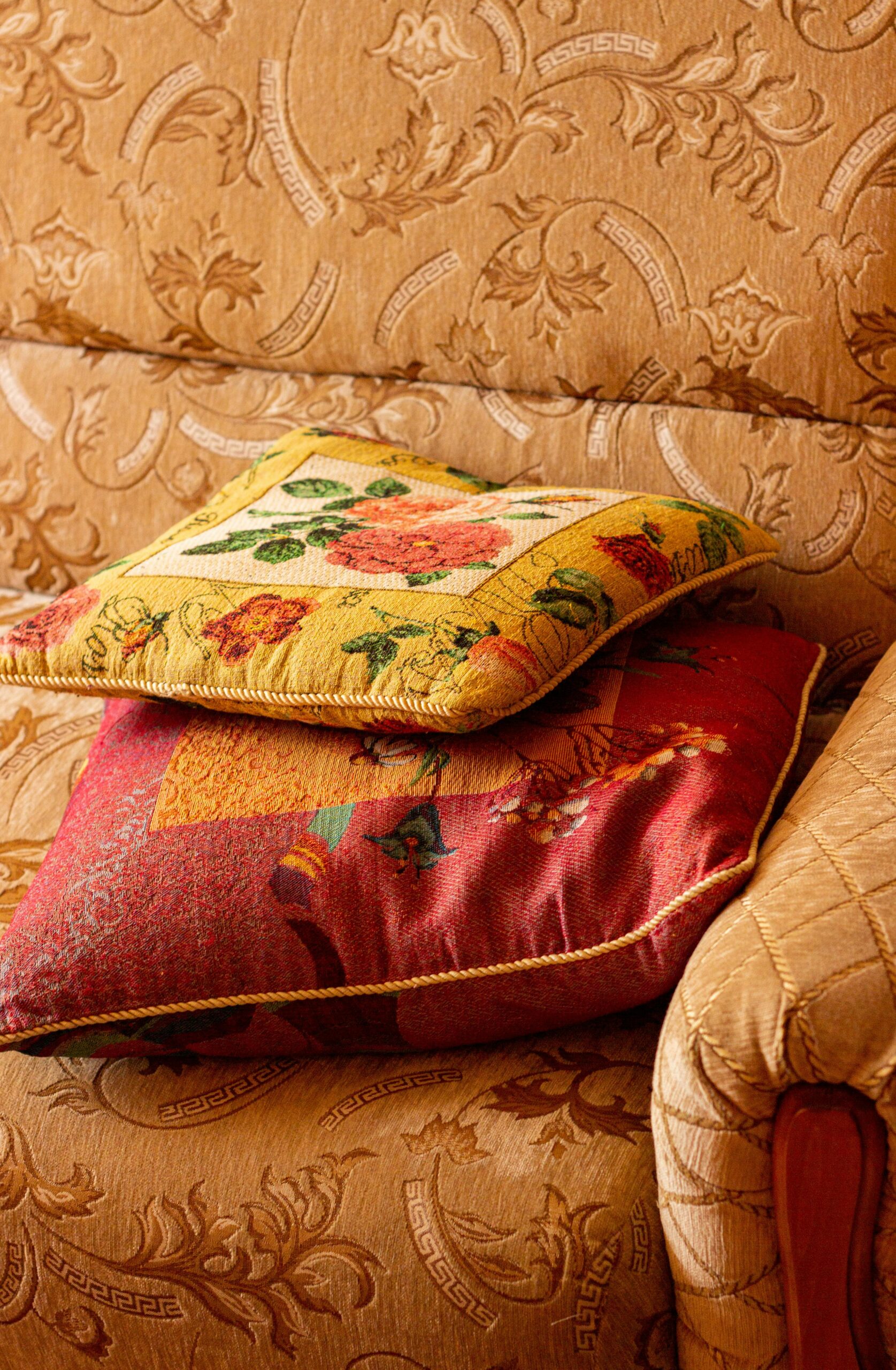
A statement sofa changes the rules of a room. When the sofa is the piece that stops people in their tracks, the deep teal velvet, the oversized rust linen, the low slung leather that looks like it belongs in a magazine, the rest of the living room has to answer to it. That is not a design problem. It is actually the most reliable way to create a living room with a clear point of view rather than a collection of pieces that never quite cohere.
The challenge most people run into is not picking the sofa. It is figuring out how to build around it without either flattening its impact or creating a room that feels chaotic. This guide gives you a clear framework for styling a complete living room around a statement sofa, from the rug under it to the art above it, in the right sequence.
Understand What Your Sofa Is Already Saying
Before you shop for a single supporting piece, spend time understanding what your statement sofa communicates on its own. Every sofa has a character defined by three things: its colour, its silhouette, and its material.
Colour is the most obvious signal. A deep jewel toned sofa, emerald, sapphire, rust, ochre, is assertive and warm. It calls for restraint everywhere else and rewards neutral companions. A pale or off white sofa is quieter in colour but often makes its statement through silhouette or texture, which means it can handle slightly more visual activity in the surrounding pieces without becoming overwhelmed.
Silhouette is the shape language. A low profile sofa with tapered legs and a tight back reads as mid century modern or Scandinavian and calls for pieces with a similar clean geometry. A deep, curved sofa with a high back and wide arms reads as maximalist or contemporary and wants pieces that share its generosity of form rather than competing with delicate lines. A Chesterfield or rolled arm sofa is inherently traditional and grounds well with antique adjacent pieces, warm wood tones, and layered textiles.
Material tells you about the register of the room. Velvet reads as formal and luxurious. Linen and cotton read as relaxed and approachable. Leather reads as durable and tends to feel most balanced when the surrounding textiles are soft. Understanding all three before you buy any other piece saves you from choosing a coffee table that fights rather than supports the main event.
The Rug: Ground the Sofa Before Everything Else
The rug is the first purchase after the sofa, not the last. It performs a structural role. It defines the living zone on the floor, grounds the sofa visually, and sets the tonal foundation for every other piece that sits on or near it.
For a statement sofa, the rug has one main job: complement without competing. The safest and most durable approach is a rug that is significantly lower in visual temperature than the sofa. A deep jewel toned sofa sits best on a rug that is neutral or earthy, warm ivory, sand, taupe, soft terracotta, charcoal. The contrast between the sofa and the rug is what makes both pieces read clearly rather than blurring together.
Texture is where you can add interest without adding colour competition. A flatweave jute rug brings organic warmth under a velvet sofa. A plush wool rug in warm grey adds softness under a leather sofa. A kilim style rug with geometric patterning in muted tones can work under a solid statement sofa without fragmenting the room, because the pattern reads as texture at a distance rather than as a competing focal point.
Size matters more than most people account for in Canada, where apartment living rooms often max out at 12 by 14 feet. At minimum, the front two legs of the sofa should sit on the rug. For a statement sofa, a 6 by 9 or 8 by 10 rug is almost always the right scale, large enough to anchor the full seating group, not just the sofa itself.
The Coffee Table: Shape and Material Over Style Matching
The coffee table mistake most people make around a statement sofa is looking for something that matches or goes with it. The better instinct is to look for a coffee table that contrasts well, different in material, similar in spirit.
A velvet sofa in a jewel tone sits beautifully with a natural wood coffee table, a marble top table on a metal base, or a rattan piece. The contrast between the soft upholstered sofa and a harder surface material creates the kind of layering that makes living rooms feel considered rather than showroom assembled. What to avoid is a coffee table in the same material family as the sofa. A plush upholstered ottoman coffee table under a plush sofa can work, but requires strong contrast in colour or shape to avoid making the whole grouping feel amorphous.
Shape contrast works similarly. A sofa with a strong rectangular silhouette benefits from a round or oval coffee table, which softens the geometry of the grouping and creates breathing room. A curved or sectional sofa can handle a rectangular coffee table because the sofa itself already provides the softness. Round tables also have a practical advantage in smaller Canadian living rooms: they occupy less perceptual space and allow easier movement around the seating group.
Browse the coffee table collection at Furniture Flip for round, oval, and rectangular options in wood, metal, and mixed materials suited to Canadian living rooms of every scale.
The Supporting Seating: Agree on Register, Not on Style
A statement sofa does not need matching chairs or a coordinated sectional. What it needs is supporting seating that agrees with it on register, the overall level of formality, luxury, or casualness, without mimicking its exact style.
A velvet jewel toned sofa is high register. The chairs that accompany it should be high register too, tight upholstery, structured form, quality fabric, but they do not need to be velvet or the same colour. A pair of linen armchairs in a complementary neutral, or a single accent chair in a coordinating pattern, will support the sofa without either fading into the background or competing with it.
A casual oversized linen sofa is lower register, comfortable and approachable. The chairs around it can be relaxed too: a pair of rattan chairs, a leather club chair, a simple slipcovered armchair. The key is that nothing in the grouping should feel more formal or precious than the sofa, or the room will feel tonally inconsistent in a way that is hard to articulate but immediately felt.
In a smaller Canadian living room where there is only room for one additional chair beside the sofa, an accent chair in a complementary pattern or texture is your opportunity to introduce the second material story of the room without overwhelming a space that already has a strong focal point.
Colour: Build Outward From the Sofa in Decreasing Intensity
The most reliable colour strategy for a living room anchored by a statement sofa is to treat the sofa colour as the peak intensity in the room and step everything else down from there.
If the sofa is deep teal, let teal be the only fully saturated colour in the space. Pull a muted, desaturated version of that colour into a throw or a couple of cushions. Use the complementary colour family, warm terracotta, amber, or rust if the sofa is a cool jewel tone, as accents in small doses. Let the rug, walls, and large adjacent pieces stay neutral.
This approach works because it gives the eye a clear hierarchy. The sofa reads first, the accent colour reads second, and the neutrals recede to provide relief. When every piece in the room operates at the same colour intensity as the statement sofa, nothing reads as a statement anymore. The room becomes visually exhausting rather than visually interesting.
For walls in a Canadian rental or owned space, a warm off white or pale warm grey is almost universally correct behind a statement sofa. It provides contrast for dark sofas, warmth for cool toned sofas, and a clean background that never competes. A deep wall colour behind a statement sofa is possible but requires more care. You are layering two strong statements, which works when the tones harmonize and fails noticeably when they clash.
Lighting: Layer Three Sources Above and Beside the Sofa
Overhead lighting alone flattens any living room and undermines a statement sofa by removing the shadow and depth that makes upholstered furniture look its best. A living room styled around a statement piece needs at least three light sources at different heights to show the sofa and the grouping around it properly.
A floor lamp beside or just behind one end of the sofa provides the warm ambient light that makes upholstered furniture feel the best. Brushed brass and matte black are the two finishes that coordinate broadest across sofa styles, brass with warm toned and jewel toned sofas, matte black with cool or neutral sofas. The floor lamp should be tall enough that the shade clears the sofa back by at least a few inches.
A table lamp on a console, sideboard, or end table beside the sofa grouping adds a second warm source at a lower level. This creates the layered light effect that makes a room feel like a designed space rather than a lit room. The lamp base is a secondary design opportunity. A ceramic or stone base in a complementary colour or a sculptural brass form reads as a deliberate detail rather than an afterthought.
Overhead lighting should be on a dimmer wherever possible. The ambient overhead combined with two warm lamp sources at lower levels is the configuration that makes statement furniture read at its best in the evening, which is when a Canadian living room is most used.
Wall Treatment: One Anchor Piece, Hung at the Right Height
The wall behind or above a statement sofa is the backdrop for the whole arrangement. Most people either ignore it entirely or overfill it with a gallery wall that competes with the sofa for attention. The stronger choice for a room anchored by a statement piece is one large format artwork or mirror hung at the right height.
A single piece of art or a large mirror centred above the sofa gives the sofa a backdrop that frames it without fragmenting the wall into multiple competing focal points. The bottom of the piece should sit roughly 6 to 8 inches above the sofa back. Any higher and it floats disconnected from the sofa. Any lower and it feels cramped.
Scale matters more than style. A piece that is too small above a full size sofa looks like a placeholder, not a design choice. The art or mirror should be at least two thirds the width of the sofa behind it to read as intentional. For a standard 84 inch sofa, that means a piece at least 56 inches wide. For a statement sofa in a bold colour, artwork above it works best in a quieter register, abstract forms, muted tones, organic shapes, to give the eye somewhere to rest after the sofa.
A large floor leaning mirror is an alternative that works especially well in smaller Canadian living rooms. It does not require wall anchoring, it reflects light and depth into the space, and its vertical format draws the eye upward in rooms with lower ceilings.
Cushions and Throws: The Finishing Layer, Not the Starting Point
Cushions and throws are where most statement sofa styling goes wrong. The instinct is to use them to bring the sofa to life with pattern and colour, but if the sofa is already the statement, cushions should support rather than amplify.
For a jewel toned or strongly coloured statement sofa, the most effective cushion approach is restraint: two to four cushions maximum, in a combination of a complementary neutral and a single repeating accent from the sofa colour family. A deep teal sofa reads best with warm ivory or natural linen cushions and one or two cushions in a muted version of the teal or a warm ochre complement. Adding six cushions in four different patterns is the fastest way to make a statement sofa look like a retail floor display rather than a considered room.
A throw draped naturally over one arm or corner of the sofa adds texture and approachability without adding visual noise. The throw should feel different in material from the sofa, a chunky knit or woven cotton throw over a velvet sofa, a soft cashmere throw over a linen sofa, and should land in a neutral or complementary tone rather than matching the sofa exactly.
Browse the sofa collection at Furniture Flip for statement sofa options across a range of sizes, silhouettes, and fabric choices suited to Canadian living rooms.
A Practical Note on Sequencing for Canadian Buyers
Styling a living room around a statement sofa works best when the sofa comes first and everything else follows in the right order. The sequence is: sofa, then rug, then coffee table, then supporting seating, then lighting, then wall art, then cushions and accessories.
Buying the rug or the coffee table before the sofa is the single most common and costly mistake because you end up choosing the sofa to match pieces that were bought to anchor the room, which inverts the logic entirely and rarely produces a room that feels deliberate.
For a broader perspective on how statement furniture choices land in Canadian apartment and condo spaces specifically, Arrow Furniture’s Toronto condo shopping guide covers scale, proportion, and multi functional piece selection in ways that apply directly to building a living room around a single hero piece in a smaller Canadian home.
For a realistic Canadian breakdown of what a complete living room furnishing costs across different quality tiers, Surplus Furniture’s Canadian apartment furnishing cost guide gives room by room budget ranges worth reviewing before you set your total spend.
The Mistakes That Undermine a Statement Sofa
Buying too many other strong pieces. A statement sofa needs supporting players, not co stars. If the rug is bold, the coffee table is sculptural, the chairs are patterned, and the art is large and colourful, the sofa stops being a statement and becomes part of a visual argument the room is having with itself.
Choosing the wrong rug size. A rug that is too small for the sofa and seating grouping floats in the middle of the room and makes even a beautiful sofa look out of proportion. Always size the rug to the full seating group, not just the sofa.
Treating the cushions as the design decision. Cushions are a finishing layer, not a foundation. A statement sofa styled with cushion restraint looks more intentional than the same sofa covered in an abundance of prints and colours that fight the upholstery.
Rushing the process. The best living rooms styled around a statement sofa are built over months, not in a single weekend shopping session. Buy the sofa, live with it for a few weeks, and let the right rug and table reveal themselves before committing. The clarity that comes from patience saves more money than any discount.
Take a look at these picks!