Sectional vs Sofa: Which Is Actually Better for a Small Living Room?

It is one of the most common furniture decisions Canadian homeowners face and one of the most argued about. Should you get a sectional or a regular sofa for your living room? Walk into any furniture store and you will get a different answer depending on who you ask.
The truth is there is no universal right answer. There is only the right answer for your specific room, your household, and how you actually use the space. This guide cuts through the debate and gives you a clear framework for making the decision without second guessing yourself six months later.
Why This Decision Is Harder in a Small Living Room
In a large living room the sectional vs sofa debate is mostly about preference. Both options have enough room to breathe and neither will dominate the space in a way that makes the room feel wrong.
In a small living room the decision becomes much more consequential. A sectional that is even slightly too large for the space will make the room feel like it exists purely to hold the sofa. A regular sofa that is too small for the room will look like it got lost. Getting this right matters more when the room is smaller because there is less margin for error on either side.
For Canadian homeowners in Toronto condos, apartment units, or smaller detached homes, this is not an abstract question. It is a decision that will shape how the most used room in the house feels every single day.
What a Regular Sofa Does Well in a Small Living Room
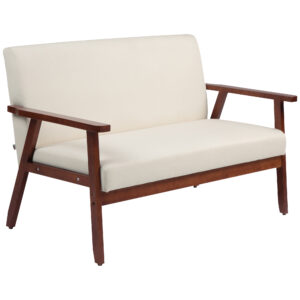
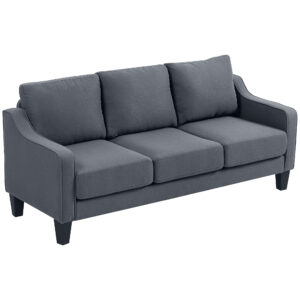
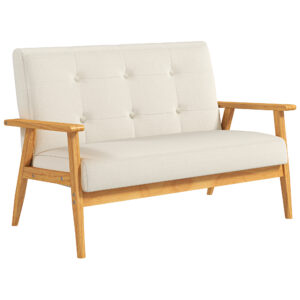
A regular sofa is a single straight framed seat, usually two to three cushions wide, sitting on one continuous frame. In a small living room it has several genuine advantages that are worth understanding before dismissing it as the boring option.
Flexibility is the biggest one. A regular sofa can be positioned against a wall, floated in the centre of a room, angled in a corner, or paired with an accent chair on the opposite side to create a conversation arrangement. That flexibility means it adapts to your room rather than demanding your room adapt to it. If you move to a different space with a different layout, the sofa comes with you without issue.
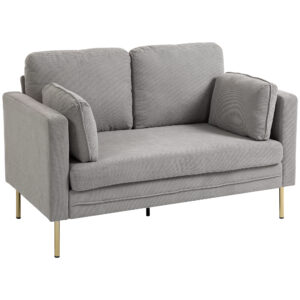
Visual lightness is the second advantage. A regular sofa takes up a defined portion of one wall and leaves the rest of the room open. In a small living room that openness is what makes the space feel liveable rather than cramped. A sofa with exposed legs and a slim profile can sit in a small room and feel like it belongs there without consuming all available visual attention.
The delivery reality is also worth noting. In Canadian condo buildings with narrow hallways, tight elevator dimensions, and single stairwell access, a regular sofa is significantly easier to get into your unit than a sectional. Sectionals can require disassembly at the building entrance and reassembly inside, which is not always possible depending on the specific configuration.
What a Sectional Does Well in a Small Living Room
Here is where the conversation gets more nuanced than most people expect. The instinct is to assume sectionals only belong in large rooms. That is not always true.
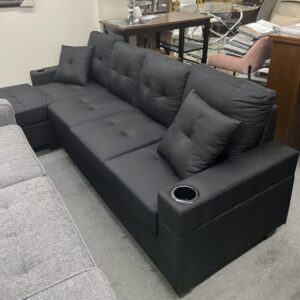
A well chosen sectional in a small living room can actually maximize seating capacity within a compact footprint in a way a regular sofa cannot. A 100 inch by 100 inch L shaped sectional tucked into a corner of a small living room uses corner space that would otherwise be dead space behind a regular sofa and a side table, and gives you significantly more seating along both walls simultaneously.
The key phrase is well chosen. A sectional that works in a small room is a compact scaled one, typically under 105 inches on the long side and under 65 inches on the short side for a small Canadian living room. Anything larger than that in a room under 180 square feet starts to consume the space rather than serve it.
Sectionals also work particularly well in open concept condo layouts where the living area needs a strong visual anchor to separate it from the kitchen and dining zone. A sofa floating in the middle of an open plan does this adequately. A sectional does it definitively, creating a clear boundary between the living zone and the rest of the open floor plan with no ambiguity.
The Four Questions That Give You the Answer
Rather than giving you a blanket recommendation, here are the four questions that will tell you which option is right for your specific situation.
How big is your room and where are the traffic paths? If your living room is under 150 square feet or has multiple doorways that require open traffic paths through the seating area, a regular sofa almost always serves the space better. Its linear shape preserves clearance and keeps walkways open in a way that an L shaped sectional cannot.
Do you move often or stay put? If you are in a condo or rental situation where you may move to a different unit in the next few years, a regular sofa travels with you to virtually any layout. A sectional that fits perfectly in your current living room may be completely wrong for your next one. Regular sofas offer more flexibility when life changes.
How do you actually use the room day to day? If your living room is primarily where your household watches television together in the evenings and you want maximum lounging comfort for the people who live there, a sectional delivers that better than a regular sofa. If your living room is also where you host guests, have conversations, and want the seating to feel elevated rather than purely casual, a regular sofa paired with an accent chair tends to create a more versatile and polished arrangement.
What is the room shape? Sectionals work best in square or rectangular rooms where the L shape fits naturally into a corner. If your living room has awkward angles, architectural features, a fireplace on a side wall, or an irregular footprint, a regular sofa adapts to those conditions far more gracefully than a sectional ever will.
The Small Room Verdict
For most small Canadian living rooms under 150 square feet, a regular sofa is the safer and more versatile starting point. It keeps the room feeling open, adapts to changing layouts and future moves, and leaves room for an accent chair or ottoman that rounds out the seating without overwhelming the space.
For small open concept condo living rooms where you want a strong visual anchor and you are settled in the space for the foreseeable future, a compact scaled sectional with a short side under 65 inches can be the right call. The corner placement maximizes the dead space behind where a regular sofa would sit and gives you more total seating within the same room footprint.
The mistake to avoid in either direction is buying on emotion rather than measurement. Bring your room dimensions to the store. Tape out the footprint on your floor before you commit. A piece that looks right in a showroom and wrong in your actual room is one of the most common and most expensive furniture mistakes Canadian homeowners make.
Browse the sofa collection at Furniture Flip to find both regular sofas and compact sectional options suited to Canadian condo and apartment living rooms. If you are still working through the layout before committing to either option, the seating furniture collection includes accent chairs and ottomans that can help you round out a regular sofa arrangement without needing a full sectional footprint.
For a broader perspective on how interior designers approach this exact decision, Decorilla’s sectional vs sofa guide walks through the space calculation and lifestyle considerations that professional designers use when advising clients on this choice, and is worth reading before you finalize your decision.
For a practical Canadian condo specific take on sofa sizing and layout, Two Hands Interiors offers an honest breakdown of when sectionals work and when a regular sofa paired with accent seating outperforms them, written from real project experience in residential spaces similar to most Canadian living rooms.
Don’t Ignore Build Quality
A chair gets used daily. Cheap materials don’t hold up.
Watch for:
- Weak plastic bases
- Thin padding that compresses quickly
- Loose armrests after a few months
A slightly higher upfront cost usually saves you from replacing the chair in a year.
Choosing the Right Chair for Your Setup
The best chair depends on how you work, not just how it looks.
If you’re working long hours, prioritize ergonomics and adjustability. If your workspace is smaller, look for a compact design that doesn’t overwhelm the room.
Browse options designed for Canadian home offices here: Furniture Flip Office Furniture
And if you’re building out your full setup, make sure your desk and chair work together: Office Furniture
The Bottom Line
A good office chair supports your body without you thinking about it. A bad one slowly creates problems you’ll have to fix later.
If you work from home full time, this is one of the few furniture decisions where cutting corners actually costs you more in the long run.
Buy based on function, not just appearance. Your back will notice the difference long before you do.
Take a look at these picks!