How to Choose Outdoor Patio Furniture That Survives a Canadian Winter
Most patio furniture guides are written for mild climates. Canada is not a mild climate. Between freeze thaw cycles in spring, intense UV exposure all summer, heavy rain in fall, and months of snow and cold, Canadian backyards put outdoor furniture through conditions that would destroy pieces built for gentler environments.
The result is that a lot of Canadian homeowners end up replacing their patio furniture every two or three years, not because they bought cheap, but because they bought without understanding which materials actually hold up in a Canadian climate versus which ones just look good in a showroom.
This guide fixes that. Here is exactly what to look for before you buy.
Why Canadian Climate Is Uniquely Demanding on Outdoor Furniture
Canada’s seasonal range, from plus 35 degrees Celsius in August to minus 20 in February, is one of the widest temperature swings of any country where large numbers of people live in permanent homes with outdoor living spaces. That range matters because most materials expand and contract with temperature changes and the more extreme the range, the faster those stress cycles degrade joints, finishes, and structural integrity.
Freeze thaw cycles are particularly destructive. Any moisture that gets into a crack, a joint, or a porous material during fall freezes and expands in winter, widening the damage with every cycle. By spring, furniture that looked fine in October can be visibly warped, split, or structurally compromised. Choosing materials that resist moisture absorption in the first place is the most important single decision in Canadian patio furniture buying.
Frame Materials: What Holds Up and What Does Not
The frame is the structural foundation of any patio set and the material it is made from determines how many Canadian winters it will survive.
Powder coated aluminum is the top performing frame material for Canadian conditions. Aluminum does not rust, handles freeze thaw cycles without cracking or warping, and requires almost no maintenance year to year. The powder coat finish adds UV and chip resistance that keeps the frame looking clean across multiple seasons. Lightweight enough to move and store easily but sturdy enough to handle Canadian wind and snow loading, powder coated aluminum is the material most Canadian outdoor furniture experts recommend as the default starting point.
Teak is the premium wood option for Canadian outdoor furniture. Its naturally high oil content makes it resistant to moisture, rot, mold, and insect damage without requiring chemical treatment. A quality teak set left outside through a Canadian winter will survive without structural damage, though it will weather to a silver grey patina over time if left untreated. Applying teak oil once a year maintains the original warm brown colour and extends the life of the finish significantly. Teak is more expensive than aluminum but on a per year cost basis it is one of the most durable investments available in outdoor furniture.
Steel is strong but requires powder coating to resist the rust that Canadian moisture and humidity accelerate quickly. The critical thing to check with steel furniture is the coating quality and the condition of the finish at welds and joints, which are the points where moisture penetrates first. A quality powder coated steel frame is a reasonable choice. A steel frame with thin or inconsistent coating will show rust within one or two Canadian seasons.
Resin and plastic are completely weatherproof and require no maintenance. They will not rust, rot, or absorb moisture. The trade off is UV degradation over time, which causes fading and brittleness in lower quality versions. Look for high density polyethylene, commonly listed as HDPE, which handles UV exposure significantly better than standard polypropylene and is the material used in premium all weather resin furniture.
Avoid untreated wood and natural rattan entirely for Canadian outdoor use. Natural rattan cracks in dry winter air and deteriorates rapidly with moisture exposure. Untreated wood absorbs moisture, swells, and splits through freeze thaw cycles in a way that makes it unsuitable for year round Canadian outdoor conditions without consistent and intensive maintenance.
Fabric and Cushions: The Part Most People Get Wrong
Frame material gets most of the attention in outdoor furniture buying but cushion fabric is where a lot of Canadian homeowners lose money unnecessarily.
Standard polyester outdoor fabric fades quickly under Canadian UV exposure and absorbs moisture in a way that leads to mildew and odour within a season or two. The upgrade that makes a meaningful difference is performance fabric, with Sunbrella being the most widely recognized standard in the Canadian market. Sunbrella and equivalent solution dyed acrylic fabrics are engineered to resist UV fading, moisture absorption, and mildew in a way that standard polyester simply cannot match. On a quality patio set you plan to keep for five or more years, the cushion fabric upgrade is worth every dollar.
Regardless of fabric quality, cushions should be stored indoors or in dedicated weatherproof storage bags through Canadian winters. Even the best performance fabrics last longer when not subjected to months of snow loading and freeze thaw exposure. A breathable storage bag, not a plastic one which traps moisture and promotes mildew, is the right solution for off season cushion storage.
What Type of Patio Set Suits Your Outdoor Space
Beyond materials, the configuration of your patio set needs to match how you actually use your outdoor space.
Dining sets work best for homeowners who primarily eat and entertain outdoors. A four to six person dining table with chairs is the most versatile outdoor configuration for a standard Canadian backyard or large deck. Look for a table with a powder coated aluminum frame and a top in teak, tempered glass, or high pressure laminate, all of which handle Canadian conditions well.
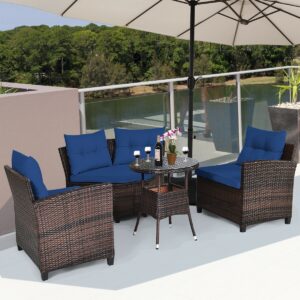
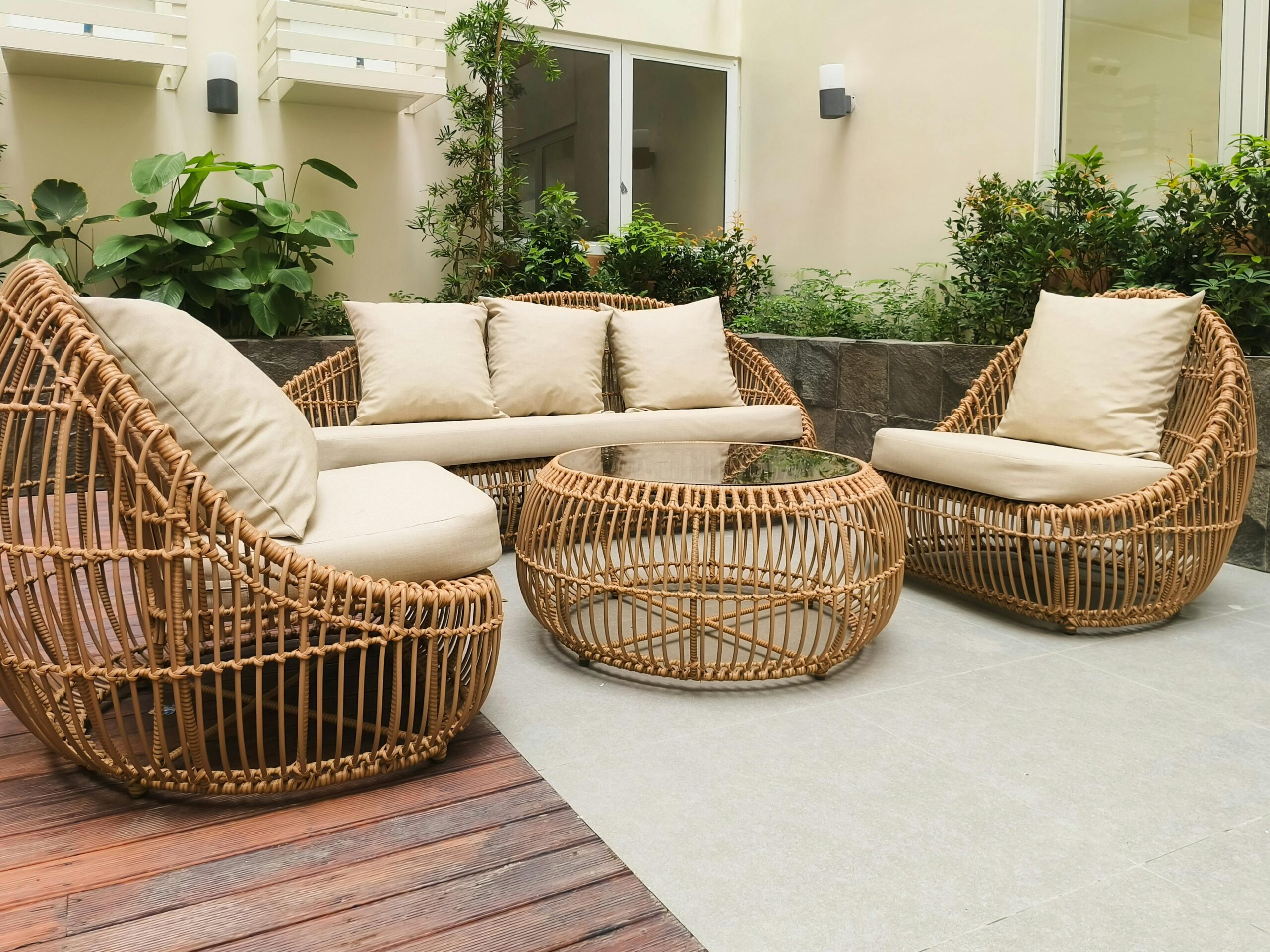
Conversation sets are the right choice for homeowners who use their outdoor space primarily for relaxing and socializing rather than dining. A conversation set typically includes a sofa, two chairs, and a coffee table arranged for comfortable seated conversation. These sets work particularly well on smaller decks, patios, and condo balconies where a full dining set would be too large.
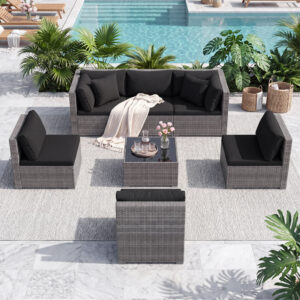
Sectional patio sets offer maximum seating flexibility and work well in larger outdoor spaces. The same sizing principles that apply indoors apply outdoors. A sectional that overwhelms an indoor room will overwhelm an outdoor space equally. Measure your deck or patio before selecting a configuration and leave at least 36 inches of clearance on all traffic sides.
For condo and apartment owners with balconies, compact bistro sets and foldable chairs that store flat against a wall when not in use are the most practical outdoor furniture options, as balcony square footage is typically too limited for anything larger.
How to Store and Protect Patio Furniture Through a Canadian Winter
Buying the right furniture is only half the equation. How you store and protect it through winter determines how long it actually lasts.
For aluminum and steel furniture that you plan to leave outside through winter, breathable furniture covers are the right protection. Breathable fabric covers allow moisture to escape while blocking snow loading and UV exposure during the off season. Avoid plastic tarps which trap moisture against the frame and accelerate corrosion at joints and welds.
For teak furniture, the choice is yours. Quality teak can be left outside through a Canadian winter without structural damage. The trade off is the silver grey weathering patina that develops with UV and moisture exposure. If you want to preserve the original colour, store teak pieces in a garage or shed and apply teak oil before the season begins each spring.
For all cushions regardless of fabric quality, bring them inside or store them in breathable bags for the winter months. This single habit extends cushion life by years in a Canadian climate.
When to Buy for the Best Selection and Value
Patio furniture in Canada follows a predictable retail calendar. The best selection is available from March through May when retailers bring in their new season inventory. Late August through September offers the best pricing as retailers discount current season stock to make room for fall and winter inventory. Buying in September or October means you will not use the furniture until spring, but the savings on quality pieces can be significant.
For a comprehensive breakdown of which patio furniture materials perform best specifically in Canadian conditions, Toja Living’s Canadian patio furniture guide is one of the most detailed Canadian specific resources available and covers frame materials, fabric performance, and winter protection in depth.
For additional material comparisons with specific Canadian climate context, Aosom Canada’s outdoor furniture material guide breaks down the lifespan and maintenance requirements of every major frame material side by side, which makes it easy to compare before you commit to a purchase.
Browse the outdoor furniture collection at Furniture Flip for patio sets suited to Canadian backyards, decks, and condo balconies. And if you are furnishing a full outdoor living space, the tables collection includes outdoor dining options that pair well with conversation and lounge seating for a complete backyard setup.
The Bottom Line
Canadian winters are not forgiving to outdoor furniture that was not built for them. Powder coated aluminum and teak are the two frame materials that consistently outperform everything else in Canadian conditions. Performance fabric cushions stored properly through winter will last years longer than standard polyester left to weather every season. And buying during late summer clearance rather than peak spring season gets you the same quality for meaningfully less money.
Get those decisions right and your patio furniture will be a ten year investment rather than a two year replacement cycle.
Take a look at these picks!