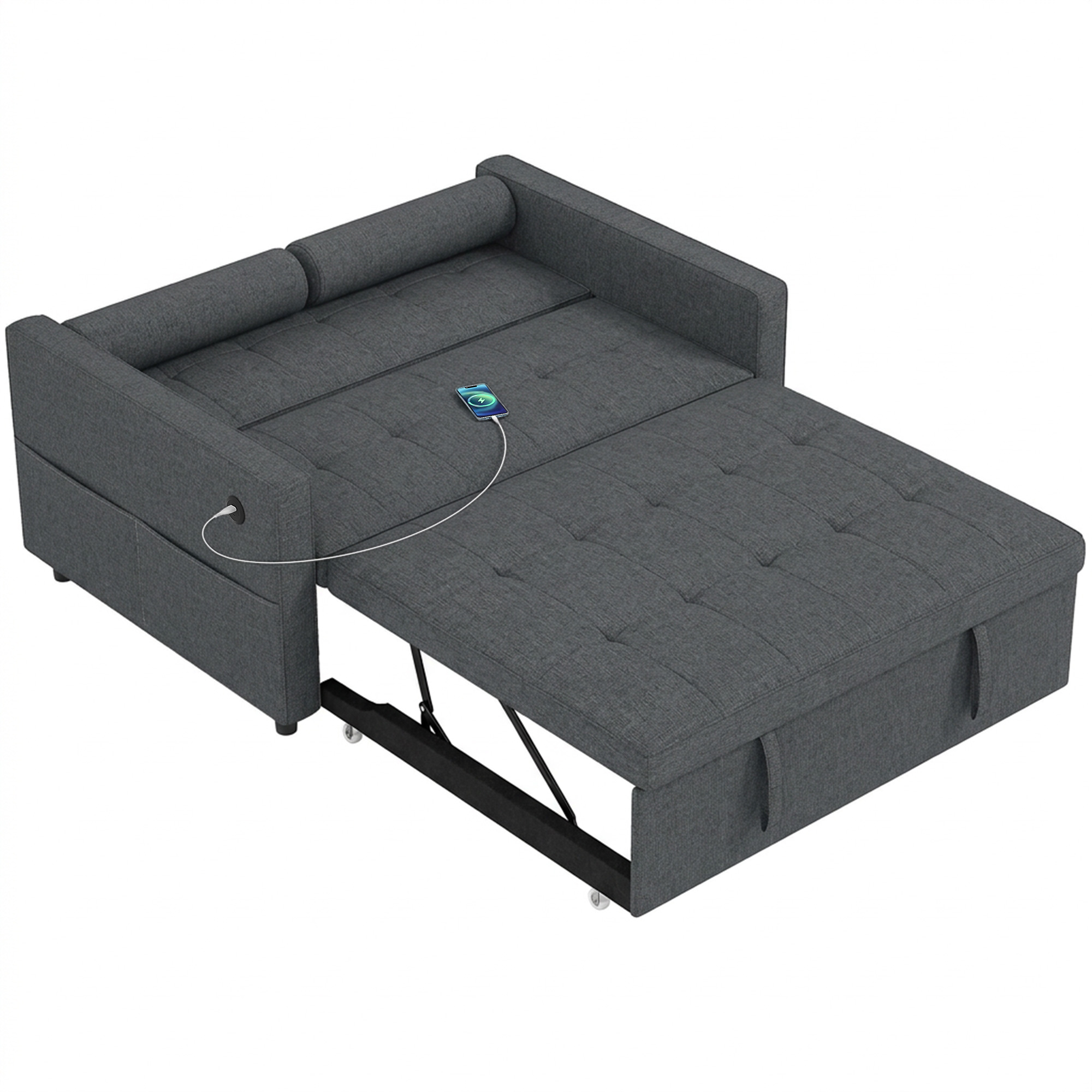
How to Choose a Sofa That Lasts: What to Look for in Fabric, Frame & Fill
Buying a sofa is one of the biggest furniture decisions you’ll make. It’s the centrepiece of your living room, the place where your family gathers, and — if you’re honest — where you spend most of your evenings. Get it right and it’ll last a decade. Get it wrong and you’ll be shopping again in three years.
The problem? Most people walk into a store, sit on a cushion for 30 seconds, and pick whatever looks good. That’s not a sofa-buying strategy — that’s how you end up with a sagging frame and pilling fabric by year two.
This guide breaks down exactly what to look for in frame construction, fabric, and fill so you can buy a sofa that actually lasts — whether you’re furnishing a condo in Toronto, a house in Calgary, or a first apartment anywhere in Canada.
1. Start With the Frame: The Skeleton of Your Sofa
The frame is everything. You can reupholster a sofa, replace cushions, and swap legs — but if the frame fails, the whole piece is done. This is where cheap sofas cut corners most aggressively.
Solid hardwood is the gold standard. Look for kiln-dried hardwood — maple, beech, ash, or oak are the best choices. Kiln-drying removes moisture from the wood so it won’t warp, crack, or shrink over time. Canadian winters and heated indoor air are notoriously dry, which means a poorly cured frame will shift and creak within a few years.
What to avoid:
- Particleboard or MDF frames — they’re heavy, prone to cracking, and don’t hold screws well
- Softwood frames (pine can be acceptable in low-stress pieces but isn’t ideal for sofas)
- Plastic corner blocks — a red flag for cheap construction
Good frames use double-dowel joints, corner blocks, and are glued and screwed at stress points. A frame that’s only stapled together will loosen within months of regular use.
Quick tip: Lift one corner of the sofa off the floor slightly. A well-built frame should feel rigid — no twisting, no flex, no creaking.
2. The Support System: Springs vs. Sinuous Wire vs. Webbing
Beneath the cushions, your sofa has a support system that determines how it feels and how long it holds up.
Eight-way hand-tied coil springs are the best you can get. Coil springs are individually tied to each other eight ways, creating an interconnected web that distributes weight evenly and lasts for decades. Sofas with this construction are typically higher-priced — but worth it if you’re buying something meant to last 10–15 years.
Sinuous (S-shaped) springs are the most common type found in mid-range sofas. They’re reliable and offer good support when properly tensioned. Look for springs spaced no more than 5 cm apart — wider spacing leads to a saggy feel over time.
Webbing is the most basic support method. It’s found in budget sofas and wears out fastest. If a sofa uses webbing alone, expect to feel the difference within a few years.
3. Cushion Fill: What's Actually Inside Your Sofa
High-density foam is the best budget-to-mid-range option. Look for foam with a density rating of at least 1.8 lbs per cubic foot — anything lower will compress and lose its shape faster. Higher-density foam (2.0–2.5 lbs) costs more but holds up noticeably better over time.
Down and feather blend is incredibly soft and luxurious, but requires regular fluffing and won’t hold a structured shape. Best for people who prioritize that sink-in feel over clean aesthetics.
Foam core with fibre wrap is the sweet spot for most buyers. A high-density foam core wrapped in polyester fibre gives you structure and softness in one. This is what you’ll find in most quality mid-range sofas — a great all-around choice for Canadian households.
One more thing: Look for cushions with zippers. Removable and reversible cushions can be flipped and restuffed, dramatically extending the life of your sofa.
4. Fabric: Choosing the Right Upholstery for Canadian Homes
Every upholstery fabric is tested using a rub count — the number of times the fabric can be rubbed before showing wear. For a household sofa, you want:
- 15,000–25,000 rubs: Light use (adult-only households, occasional seating)
- 25,000–50,000 rubs: Everyday use (families, frequent guests)
- 50,000+ rubs: Heavy use (kids, pets, high-traffic living rooms)
Polyester and polyester blends are the most practical choice for most Canadian homes. Affordable, resistant to pilling, and easy to maintain with regular vacuuming and spot cleaning.
Performance fabrics (microfibre, performance velvet, Crypton, Sunbrella) are engineered for durability and stain resistance — excellent for homes with kids or pets. They repel moisture and resist staining without sacrificing softness.
Linen is beautiful and breathable but not very forgiving. It wrinkles, can snag, and isn’t pet-friendly. Best for low-traffic spaces or adult-only homes.
Leather and faux leather: Genuine leather is durable, easy to wipe clean, and develops a rich patina over time. Faux leather (PU) is more affordable but can peel and crack in dry Canadian winters — if you go faux, choose high-quality PU, not bonded leather.
Velvet is surprisingly durable if it’s a high-pile woven velvet. It hides pet hair well and shows less wear than flat-weave options, but needs regular brushing.
5. Size and Proportion: Getting the Fit Right
A general rule: your sofa should occupy roughly 2/3 of the wall it sits against. Too small and it floats awkwardly; too large and it overwhelms the room.
Key measurements to take before you buy:
- Width of the wall where the sofa will sit
- Distance from sofa to coffee table (allow at least 40–50 cm of walking space)
- Height of the sofa back relative to your windows
- Doorway, hallway, and stairwell dimensions for delivery
For Toronto condo dwellers and small-space shoppers, a sofa between 180–210 cm wide typically works well in an open-plan layout. Browse our sofas collection for options suited to a range of room sizes.
6. Style: Matching Your Sofa to Your Home
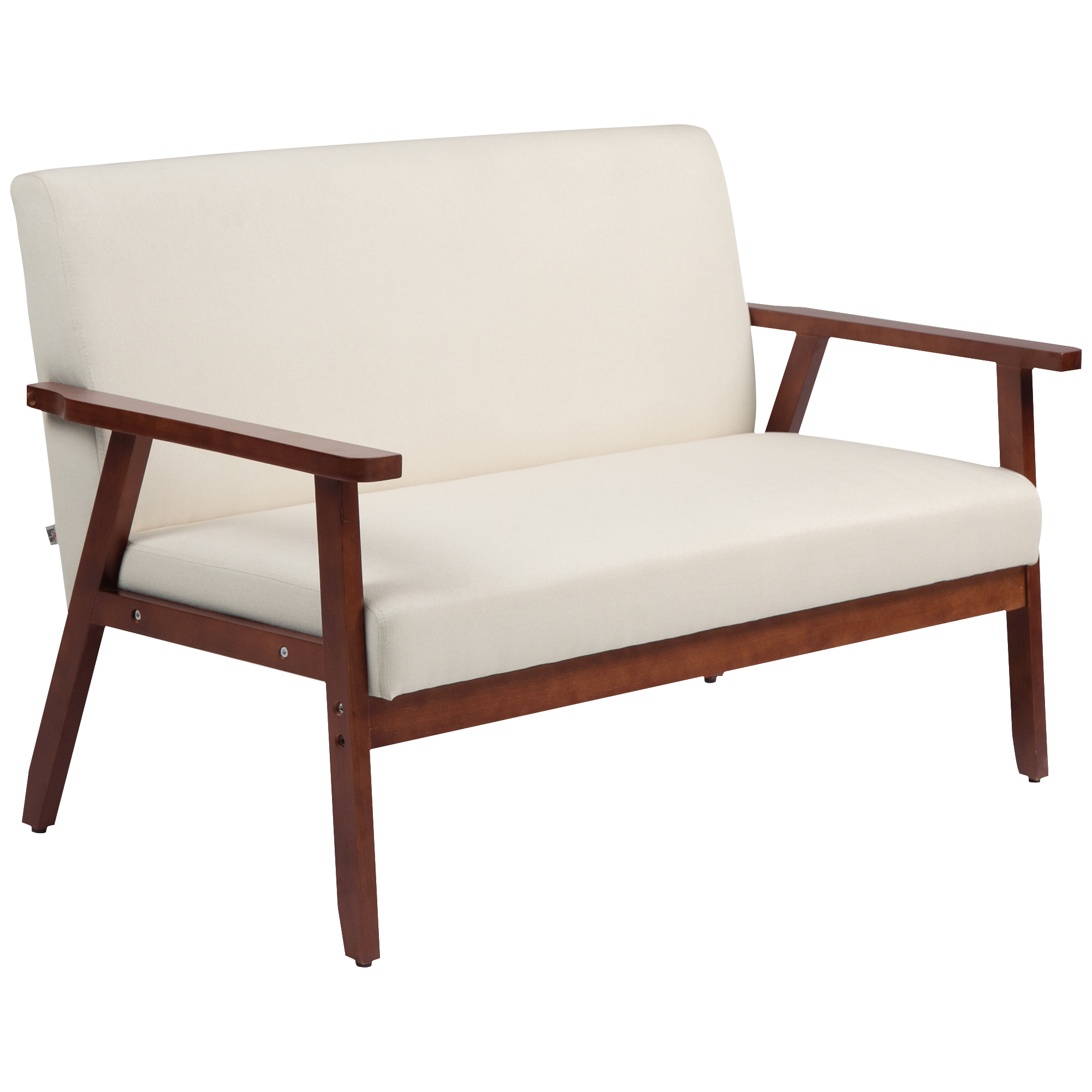
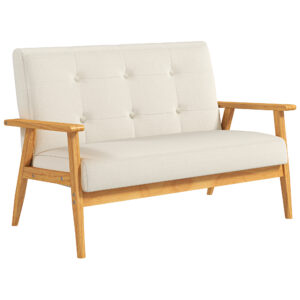
Mid-century modern: Low profiles, tapered legs, clean lines. Works beautifully in condos and open-plan spaces. Pairs well with our accent chairs for a cohesive look.
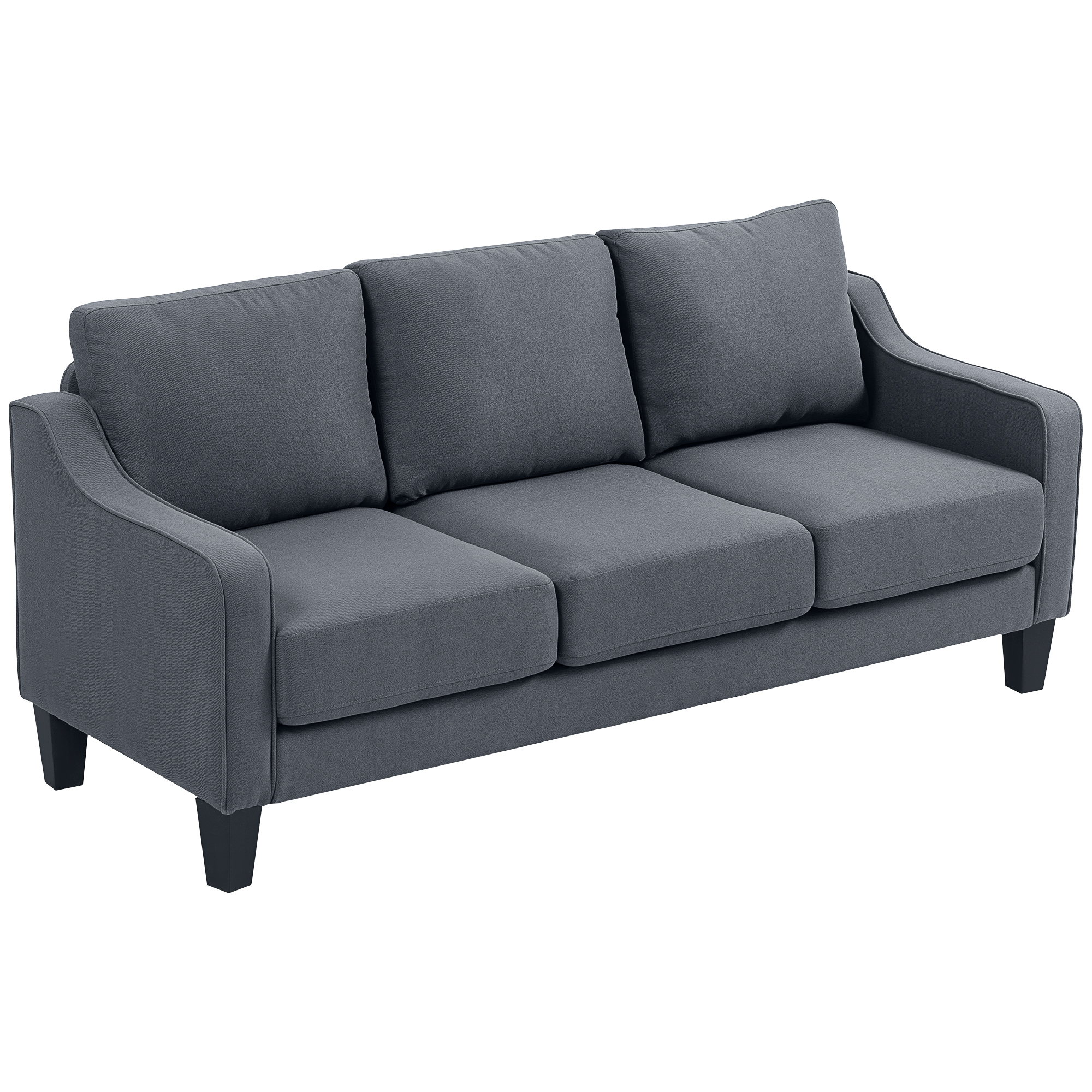
Contemporary/transitional: Slightly higher arms, neutral upholstery, versatile silhouettes. The easiest to style around and the most popular choice for Canadian families.
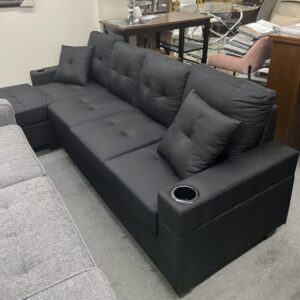
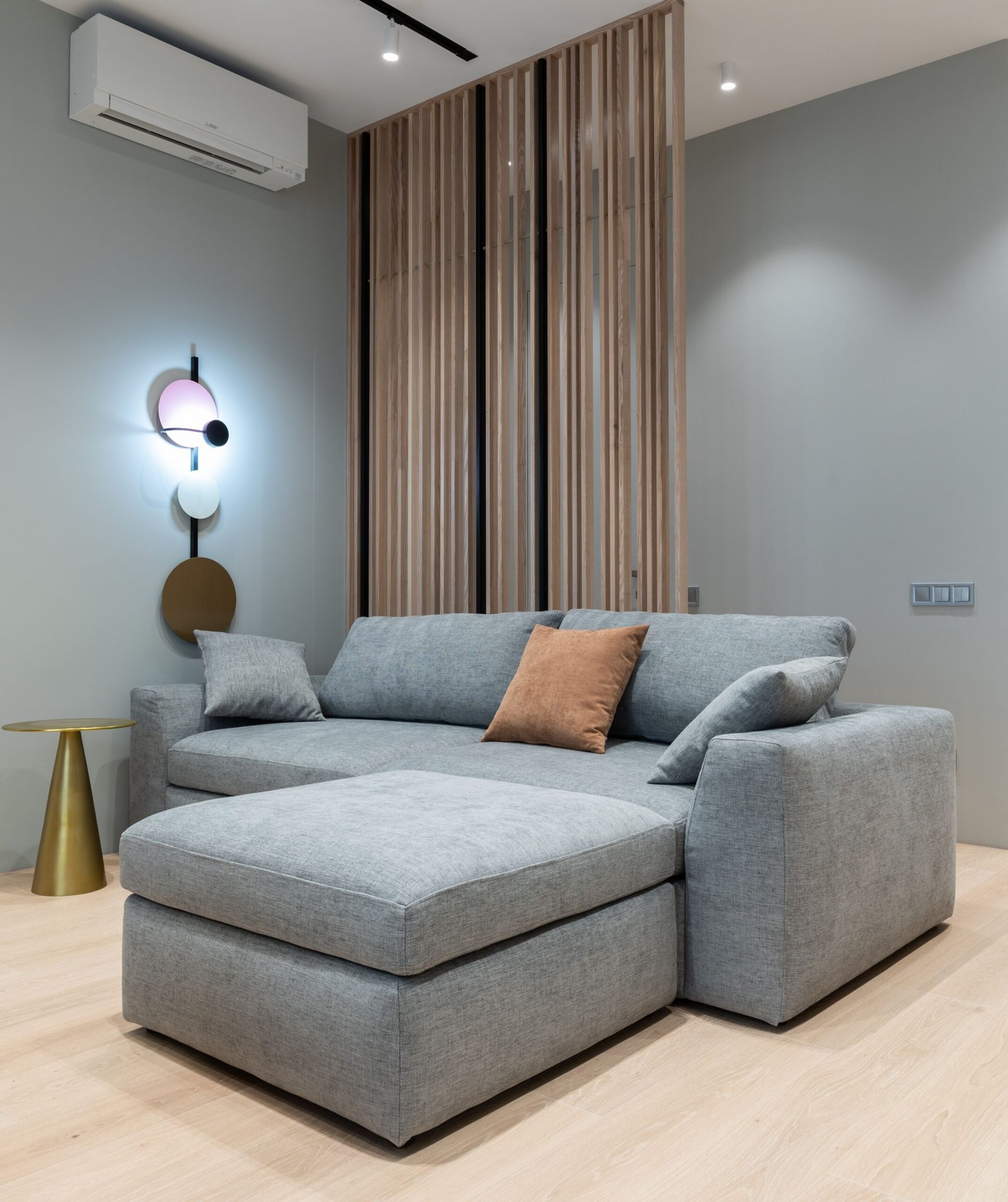
Sectionals: Great for larger rooms or open-plan layouts, but make sure to account for how traffic flows around them.
Colour tip: Neutral tones — warm greys, beiges, off-whites — are the most forgiving over time. If you want colour, bring it in through accent chairs or throw pillows rather than the sofa itself.
7. Questions to Ask Before You Buy
Whether you’re shopping online or in-store, ask these before committing:
- What is the frame made of — and is it kiln-dried?
- What type of spring or support system does it use?
- What is the foam density rating in the seat cushions?
- What is the fabric’s rub count?
- Are the cushion covers removable and washable?
- What does the warranty cover — and for how long?
A reputable retailer should be able to answer all of these. If they can’t — that tells you something.
8. Online vs. In-Store: Does It Matter?
Buying a sofa online has gotten significantly better. Most quality Canadian furniture retailers now offer detailed specs, clear measurements, and generous return policies. The key is knowing what to look for before you shop — which is exactly what this guide is for.
If you’ve never sat on a particular style before (especially if you’re deciding between different seat depths or firmness levels), visiting a showroom first is worth it. Our guide on buying furniture online walks you through what to watch for when shopping from home.
9. How Much Should You Spend?
| Budget | What to Expect |
|---|---|
| Under $600 | Basic support, lower-density foam, entry-level fabric. Fine for occasional use or a guest room. |
| $600–$1,200 | Hardwood frames becoming common, better foam density, improved fabric. The sweet spot for most households. |
| $1,200–$2,500 | Solid construction, quality upholstery, longer warranties. Worth it if you plan to keep it 10+ years. |
| $2,500+ | Heirloom-level — eight-way hand-tied springs, top-grain leather, bespoke options. |
Spending under $500 on a primary sofa is almost always a false economy in Canada — you’ll replace it faster and spend more in the long run.
Take a look at these picks!