Wayfair vs. Amazon Furniture: Which Is Better for Canadian Shoppers?

Both Wayfair and Amazon sell furniture online in Canada. Both ship to most Canadian addresses. And on the surface, both platforms often carry identical or near-identical products from the same suppliers at similar prices.
The difference is in how they work — and understanding that difference tells you exactly when to use each one.
What Each Platform Actually Is
Wayfair is a home goods specialist. Over 18 million items from 11,000+ suppliers, all organized around furniture and home décor. The search filters are genuinely useful — you can filter by frame material, fabric type, and dimensions. Their in-house brands (AllModern, Birch Lane, Joss & Main) offer consistent mid-range quality. Wayfair’s house brands consistently score higher in quality reviews than Amazon’s equivalent Rivet and Stone & Beam lines.
Amazon is a general marketplace where furniture is one of 30+ departments. The strength is speed, price competition from third-party sellers, and a review volume that makes quality assessment easier. The weakness is inconsistency — third-party marketplace sellers range from excellent to disposable. Amazon does not vet furniture suppliers the way Wayfair does.
Price: Who's Cheaper?
Amazon wins on small décor items under $50, where marketplace competition drives prices 15–25% below retail. Wayfair is rarely the cheapest at full price but offers the deepest discounts during flash sales — 40–70% off — making it the cheapest option if you time your purchase right.
For sofas specifically, Wayfair’s average price beats Amazon by $23–$50 per comparable unit, partly because Wayfair runs more frequent furniture-specific promotions.
The Canadian caveat on Amazon: Third-party Amazon sellers shipping furniture to Canada sometimes trigger unexpected customs and import fees at delivery — costs that don’t appear in the cart. Always confirm the seller ships from Canada or that duties are included before ordering anything large. Wayfair Canada ships from Canadian warehouses on most items, avoiding this issue entirely.
Quality: What You're Actually Getting
Wayfair has more consistent quality — their house brands offer reliable mid-range quality comparable to Crate & Barrel at 30–50% lower prices. Amazon’s quality varies the most.
Wayfair doesn’t have the China knock-off issues that Amazon has — a meaningful distinction for furniture specifically, where counterfeit or misrepresented materials are harder to detect than in electronics or clothing.
For furniture construction specifically, Wayfair often wins on long-term durability for daily use because their supplier vetting process filters out the lowest-quality manufacturers that regularly appear on Amazon’s open marketplace.
The practical rule for Amazon furniture: Always filter for 500+ reviews and 4+ stars. Below that threshold, quality is genuinely unpredictable.
Returns: The Part Most Canadians Miss
This is where both platforms have significant limitations that aren’t obvious at point of purchase.
Wayfair: 30-day return window. Assembled furniture is non-returnable — once you put it together, you’ve lost your return option. Return shipping costs on large furniture run anywhere from $50 to over $200, plus a potential restocking fee that isn’t always disclosed upfront. If the item arrived damaged, returns are free. If you simply don’t like it, you’re paying to send it back.
Amazon: Return policy varies by seller on the marketplace. Amazon’s own inventory typically has a 30-day return window with more straightforward logistics. Third-party seller returns can be significantly more complicated — some require international return shipping to the original supplier, which can cost more than the item itself.
The shared limitation: Neither platform is forgiving about furniture returns the way a physical store is. Measure your space carefully, verify dimensions against your room, and use Wayfair’s room visualization tool before ordering anything large. Our furniture sizing guide covers every measurement worth taking before you buy.
Category by Category: Which to Use
| Category | Better Platform | Why |
|---|---|---|
| Sofas and sectionals | Wayfair | Better selection, flash sale pricing, house brand quality |
| Accent tables and mirrors | Either | Compare prices on identical items |
| Small décor under $50 | Amazon | Marketplace competition drives prices down |
| Solid wood furniture | Neither — see below | Quality verification is harder on both |
| Rugs | Amazon | Dominant selection and pricing in this category |
| Dining chairs | Wayfair | Better supplier vetting at mid-range |
| Lighting | Either | Large selection on both, compare directly |
| Office furniture | Amazon | Prime speed useful, Basics line is reliable |
The Gap Both Platforms Share
Neither Wayfair nor Amazon is well-suited for buyers who want verified solid wood construction, Canadian supplier accountability, or genuine material transparency. Both platforms carry thousands of pieces described as “wood” or “solid wood” that are particleboard or MDF with a wood-effect surface — and neither platform makes it easy to verify the difference.
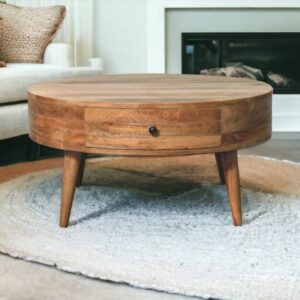
This is where a locally curated platform like Furniture Flip fills a gap that neither Wayfair nor Amazon can. Every solid wood piece on Furniture Flip specifies the wood species — handcrafted from 100% solid mango wood, not “manufactured wood in a walnut finish.” Real Canadian supplier relationships with real accountability. Browse coffee tables, sofas, bedroom furniture, and storage — all with exact specifications listed.
For any furniture purchase on Wayfair or Amazon, apply the quality verification framework in our guide on how to tell if furniture is actually good quality before you buy it before clicking buy. The same questions that reveal poor quality in a showroom reveal it in a product listing too.
The Short Answer
Use Wayfair for primary furniture — sofas, dining sets, bedroom pieces — particularly during flash sales when prices drop significantly. Better supplier vetting, better house brands, and more furniture-specific search tools than Amazon.
Use Amazon for small décor, accent pieces under $50, and anything where Prime speed matters. Stick to Amazon’s own inventory or sellers with 500+ reviews and 4+ stars.
Use Furniture Flip when solid wood construction and Canadian supplier accountability matter — the piece you’re buying for the long term, not the piece you’ll replace in three years.
Also worth reading: The Brick vs. online furniture stores — how Canada’s biggest physical furniture chain compares to the online alternatives. And how to tell if furniture is actually good quality before you buy it — the quality checks that apply on every platform.
Take a look at these picks!